Showing posts with label Liminal Horror. Show all posts

Saturday, February 21, 2026

Cataloging the Indie RPG by Style and Genre

 As I sit here, I am supposed to be studying for some rather onerous testing exams for licensing (work stuff), but it's taking dozens of hours to get through the study process, a thing I have not had to do in some time now, and at my age its just damned tedious. So I am taking a few minutes' break to clear my mind and chill a bit. In doing so I am staring at a giant stack of various indie RPGs, loads of which are pamphlet sized, and almost all of which are 5X9 format in some form or another. 

My plan to write about this in February has been curtailed so it will bleed in to March now, and maybe even April if my busy non-fun RL schedule keeps up. But I can say this: indie RPGs really do seem to fall into a few distinct style categories, and those categories have some characteristics worth noting if you're trying to figure out what style suits your taste. 

The first style category I'll call "utility," which is to say: the book's author(s) value utility and function over everything else. Both Shadowdark and Old-School Essentials are excellent examples of this category. Some other games manage to fit this bill as well, though it may not be so obvious. Old Skull's publications (such as Screams Amongst the Stars and Running Out of Time) are also very utility driven, with the goal being to get the most useful content to you in the limited pages available. Less indie but definitely worthy of mention for this category is Savage Worlds.

Main Traits of Utility Games: ease of use; clear and concise rules; no authorial overtone or assumptions about expected behavior in play

Best Example of A Utility Game: As I wrote a few weeks back, Old-School Essentials is just amazing for its pragmatic, utilitarian approach to codifying the definitive OSR experience. A close runner up deserves to be given to the insanely no-nonsense Shadowdark. 

The second style category I'll call "Atmosphere;" this means the game is focused heavily on conveying its world, thematics or genre to you, and the rules are focused on conveying the atmosphere with as much energy and effort as can be afforded. Such systems are usually loaded with mechanics designed to build out on a specific style of genre. Mothership is a quintessential example, with its atmosphere being SciFi Horror, usually on haunted ships and space stations. Mork Borg is eschatonic fantasy steeped in the graphical interface of Swedish death metal. Orbital Blues is all about replicating a highly distinct blend of Firefly meets 1970's aesthetic style science fiction. Death in Space is about a collapsing spacefaring society that is grimy, dirty and maybe also facing an eschatonic end times. Heroes of Cerulea is about an NES 1988 era fantasy world ripped straight from the earliest era of JRPGS. 

Main Traits of Atmospheric Games: rules built to enforce the rules of the game's universe/genre; thematics designed to enhance and promote the tropes and expectations of the setting

Best Example of an Atmospheric Game: Mothership, of course! With Orbital Blues coming in a close second.

The third style category is a big one, and I will call it, "experiential;" for lack of a better word. These games are providing you with a set of rules and a setting, often closely tied together, with the intent of providing you a unique experience or take on otherwise well-trod genres. Such games are noteworthy for diving in to corners of fantasy or weirdness, often going a bit off the rails, and it can be clear at times that the gameplay loop involves heavy improvisation on the part of both the player and GM (if the game even supports a GM!) Land of Eem, Into the Odd, Outcast Silver Raiders, Troika!, Ultraviolet Grasslands, maybe Liminal Horror and Cairn, can all be said to fit this category. Such games might feel a bit like roller-coasters riding through strange worlds. Some are settings only, such as the Painted Wastelands, Ronin or Vast Grimm which hack other systems into their own weird universes.

Main Traits of Experiential Games: a strong focus on the weird/unusual, emphasis on random generation and improvised play; often focused on very niche and sometimes cartoonish imaginings of their universes

Best Example of an Experiential Game: So many choices, but I feel I have to give this to Troika!, a game which defies easy interpretation for many, while still being so interesting I can't stop trying to figure it out. Runner up could go to any, but I feel the Painted Wasteland (my current favorite OSE setting) has earned it.

The final style I will label "Graphical;" any game in which it appears that the artist is as important to the process as the author or anyone else. Indeed, you might find that the game itself is less of the point than purchasing the cool book full of neat art. Not quite indie, but sort of in this ballpark I feel you could put The Electric State, along with some noteworthy titles like Ultraviolet Grasslands, the Painted Wastelands, CBR*PNK, Cy-Borg, Mork Borg for sure and all its other spin-offs, and amazingly weird and difficult to parse out products like Ballads of Oread. If Exalted Funeral published it, then it might have some lineage in this department. Don't confuse, "Looks cool," for being in this category, though; I would suggest a key component of games in this category is that you might better imagine them as coffee table books than something you can actually figure out how to play!

Main Traits of Graphical Games: they are really interesting tomes to look at (assuming they come in a conventional book format); they are often hard to decipher, or you can tell that the author was playing second fiddle to the artist

Best Example of a Graphical Game: Mork Borg!!! It's a puzzle to decipher for many. Runner up: Ultraviolet Grasslands

Okay! So with all that out of the way, time to get back to some real work. I'll finally (hopefully) talk about some of the newer games I've picked up here in the next few weeks soon.

Wednesday, July 9, 2025

Reinvigorated! Or maybe Reanimated?

 Well I am feeling less burnout this week! But also sometimes more burnout. I did a deep dive into various systems and found that I was definitely starting to sense a pattern in my interests. Here's what I realize now; noting that this isn't a unchanging constant; just what my tastes seem to be running to in the moment:

Verisimilitude Over Abstraction: I prefer somewhat more simulationist systems, which favor verisimilitude over "rule of cool" as a natural recourse. I liken this to the difference between a movie where our hero drops 10-15 feet and seems to take injury or has trouble getting up from such a fall, vs. other movies (Marvel films come to mind) where same hero seems able to drop 30-50 feet and is unphased, even without having super soldier serum to explain his massive invulnerability.

This means systems like BRP, GURPS, Mothership, Call of Cthulhu, Traveller, Cyberpunk Red and Dragonbane are standing out to me because they provide meaningful engagement levels with some sort of baseline "reality" but some other systems....even ones I like....aren't feeling too good to me at the moment because I am not presently "vibing" with the idea that the abstractions on the character sheet and in the system are really just numbers and have more to do with "did this look cool?" than anything else. That rules our D&D 5.5, Cypher System, Fantasy AGE, Tales of the Valiant, and no doubt others.

Pragmatic Character Info: I'm preferring systems which communicate clearly what you rcharacter is about, without a lot of rule-flipping and holistic interpretation. Pathfinder 2E is not a good example of this; it is laden with weird feats, obscure conditionals, and a balanced mechanical process which means skill sets are very "meh" in figuring out how your character looks different from another similar character. Contrast with BRP, which narrows the character generation to a set of common baselines defined by genre expectations for powers (if used), but in general you can look at a character sheet and understand what it means to run that PC without having to crack the book open constantly. 

The System Respects Theater of the Mind: lots of games these days lean in to the popular desire for maps and minis, and I get it; those can be fun (I suppose). But I have run RPGs for most of my life without such gimmicks, and the sorts of stories I want to convey through gaming these days (and most days) work better when the players aren't focused on the ancient wargame element that remains embedded in conventional takes such as D&D. Admittedly GURPS, as an example, supports elaborate hex-based movement and suggests this can be useful; I have played in GURPS games where the GM used this to effect, and I get it. But I have also run (and played) in countless GURPS games where it was all theater of the mind, and the experience was always more creative and superior. So systems which either implicitly or explicitly support TotM play are preferred.

No Authorial Overtones: I won't single anyone out, but if the system has a heavy authorial overtone which tries to tell you how to play, either explicitly or implicitly, that can be a real turnoff. The author does not trust you to play the game the right way for you, the end-user, and that is just not cool. I can be in 100% agreement with the game writer's viewpoint and this will still piss me off because it is an attempt by the author to control the narrative on the end user experience.* 

There are quite a few RPGs on the market today that like to talk about how their source of inspiration was, shall we say, a racist person in his time, and then denigrate his works, even as they then proceed to write an entire system around said works, implying there was still merit to the man's creations, enough for them to exploit for money. Hypocrisy! It makes it very hard to take such works seriously. Either you acknowledge that you are, indeed, inspired by the creative works of said author which means you feel his imaginative developments have merit and inspiration beyond the unpleasant bits you did not like (okay, yeah, I'm talking about Lovecraft here) and will expand upon his vision despite your dislike of his century-old racist attitude, or you maybe should decide that its ethically better for you to go write a different game and leave well enough alone. I'm looking at you, Age of Cthulhu and Arkham Horror. 

Sometimes it feels like these games were written by authors fearful that their audience would get mad at them for not appearing cognizant of these perceived injustices or social issues. The best head-scratching example I can provide is in Liminal Horror, which has a paragraph about how its not cool to play cops, authority figures or people with wealth or means. This, of course, is actual nonsense; part of the point of RPGs is the ability to explore roles beyond most people's grasps....and horror as a medium is excellent at skewering all sorts of professionals and the wealthy with equal aplomb; its not merely the purview of the poor and downtrodden to be murdered by eldritch cults. But if you were writing this game a few years ago when there was a strong push on social media to "strike back at the man" or you are a younger author (spiritually or physically) enmeshed in antiauthoritarian counter cultural values, then this might feel like a sensible paragraph to put in, no matter how utterly stupid and counterfactual to the actual genre of horror it is. 

Important: despite this minor rant, I really like Liminal Horror as a mini-system; it occupies a unique concept space and I look forward to the Kickstarter backed future edition coming out soon. Also, I find that entire rant ironic given that the best module produced for Liminal Horror so far, the Bureau, is entirely about a fictional authority organization inspired by the Bureau of Control from the eponymous video game. So one of the system's first modules directly contradicts this angry little countercultural paragraph that demonstrates a woeful lack of imagination and genre understanding right off the bat. 

Okay, rant off! Tonight I plan to close out the D&D 5.5 game, and am proposing we tackle Dragonbane or Mothership next (because that's what I packed for).


*Note that I am not talking about games which have advice on "know your audience," sections, or talk about the use of the X card. Those are just practical advice (don't run a game for 9 year olds with Kult, m'kay? or if you are running for a diverse crowd of Gen Z players, an X card may be quite revealing if you are not good at reading a crowd as a GM). Admittedly, if a game tells me to "remove the spiders if a player is offended" my internal advice is: don't run a game with spiders for someone who is scared of imaginary spiders, you know? Maybe find different players?

Wednesday, July 26, 2023

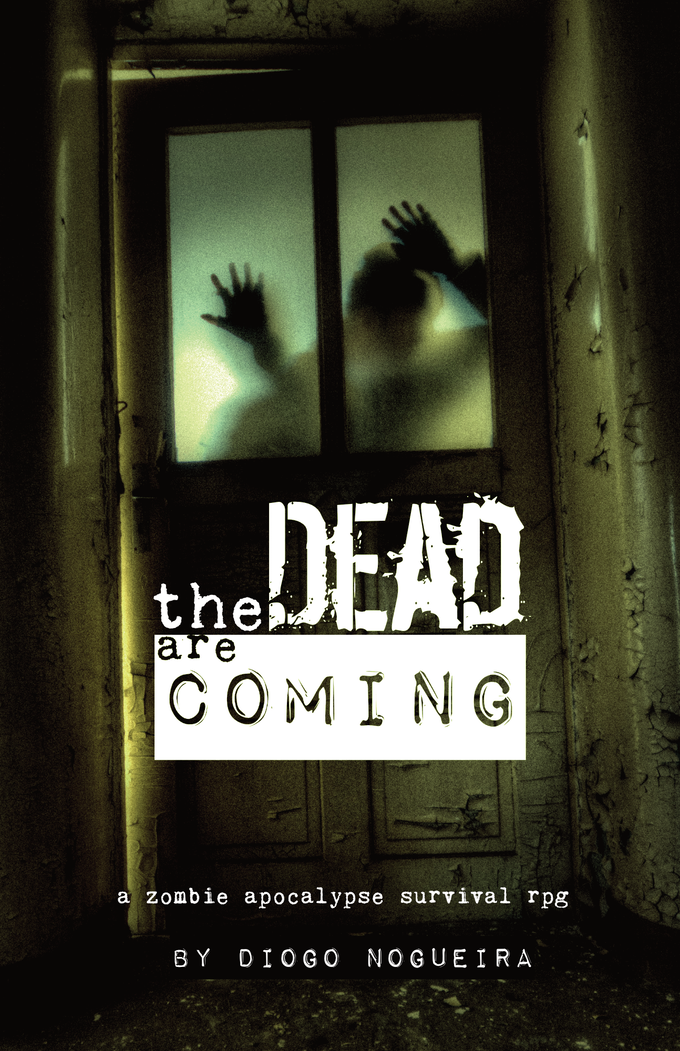
The Indie/Zine RPG Review Part IX: The Dead are Coming


The Dead are Coming (Old Skull Publishing/Gallant Knight Games)


What it is: Although this has been a general review of slim lite system indie zine RPGs, one could be forgiven for thinking this is a review series on "Into the Odd Powered games" or "games by Diogo Nogueira." Diogo has made no less than five of the games on my review list, and there are more I just don't happen to own. The Dead are Coming is a slim take on The Walking Dead and the broader survival horror zombie apocalypse genre, with an emphasis on the post-apocalypse, though I think you could tweak it a bit to start a game at the beginning of the apocalypse.

The System: The Dead are Coming equips you with the Into the Odd-derived mechanics necessary to make an excursion into a world overrun with the undead. Clocking in a bit shorter than Screams amongst the Stars at about 46 pages, its a tight focus on the subject at hand. The game morphs the rules in genre-specific ways: scars are critical injuries, and its a suitably gruesome table. Stress events are when you take critical damage on willpower, but its not really different from Screams. There are food, fuel, bullets and water you must track as depletable resources. A zombie bite that deals direct strength damage means you are infected, and three saves are necessary to live. 

In the spirit of the system there are rules on building up a band of survivors and turning them in to communities. This, along with the potential for some bonuses on critical checks on the scar and stress tables are the only potential for character improvement, so TDaC is a bit closer to Liminal Horror in this respect.

In terms of the game, the mechanics are otherwise very much the same as Into the Odd and Screams amongst the Stars. You get three stats, roll saves against them, have hit protection, and all combat starts with rolling damage and taking potential damage immediately. The book includes lots of spot rules for genre appropriate stuff, including the aforementioned depletable resources as well as vehicles, burst fire in combat, exploration and foraging rules, and more. 

The Setting: The implied setting is some time after the fall of humanity to a zombie plague. The game supports this with an array of useful charts and table for encounters and locations, as well as an array of possible foes: 9 zombie types that anyone familiar with video game zombies will recognize the origins on including spitters, exploders, zombie dogs, and so forth, along with 10 creepy living human survivor types to deal with including death cultists, raiders, cannibals, opportunists and more.

The many charts for the GM to roll stuff on the fly include a "What are they carrying" chart, a series of charts themed by area for landmarks, structures, findings and hazards, with sets for the countryside, small towns, and the big city. Finally we have an adventure idea chart and a D100 table of "things to do in the zombie apocalypse" which provides plenty of "Oh no, this happened, what will you do?!?!" events.

Overall there is enough here to run a nice mini-campaign or three in a zombie-ridden world. I don't know if it would hold up for much longer (in contrast to Screams Amongst the Stars which I think could sustain some meaningful campaigns), but you could also use this book for charts and inspiration while running a zombie apocalypse campaign using a more robust game system easily enough. I could easily see this book as a chart and idea resource for a BRP campaign, for example.  

Graphically the game is filled with evocative and decent imagery and art. A stylistic design on labels for titles and careful placement of text and font types makes the book interesting to look at but not painful to read. It's well organized and the location of information makes sense.

Supplements: like with the other Old Skull books, this one is stand-alone, but is fully compatible with other game systems. The monsters in this book could port to Into the Odd or Screams Amongst the Stars. The characters in The Dead are Coming could play with Liminal Horror PCs with almost no real need for conversion, just establish which setting rules take precedence (fallout vs. stress events, for example, and whether other spot rules such as resources, magic and such are mechanics you will need or not).

Who is this For? Its turning into a redundant question, but getting easier to answer every time. The Dead are Coming is for gamers who want a ultralight, portable rule system for zombie survival games. It's for gamers who do not like larger rule books but do like evocative and horror themed settings. It's great for anyone who has a Walking Dead campaign idea germinating. It's also useful as a resource for other game systems that can be easily subbed in, as most of the setting/inspirational content (mostly on the charts) is easily used without effort in other games.

All that said, it's still a zombie apocalypse simulator, and as a stand-alone book its usefulness is going to be limited to that specific subgenre. You could easily run this sort of campaign with other game systems with minimal or no effort, including Liminal Horror which this game is 100% cross compatible with. If you can only get one, I suggest Liminal Horror....but if you can get both, they will complement each other nicely.

Friday, July 21, 2023

Sidequest: The Role of Improv in Indie Zine RPGs

 While reviewing this various indie zine RPGs, I realized that an important component of this subgenre/style of RPG is the need for improv and emergent gameplay features. Most of the indie games I have explored in this style of game have a heavy focus on providing tools for unanticipated/unplanned gameplay elements, whether that be from randomized charts you roll on to programmed adventures which include very minimal detail to deliberately allow the GM to riff on the content. All of this leans in to the dominion of the field of improv, which of course goes beyond RPGs, but using improv with these kinds of games is facilitated by also aiming for simpler mechanics; fewer moving parts mean easier improvisation without rules causing a contradiction.

Improv is a necessity in any RPG, but for a lot of bigger name RPGs with more complexity in design and setting an emphasis is on providing a sandbox full of toys. While you can improv a random new monster design in D&D 5E by throwing out some stats real quickly, it's going to be mechanically harder to make it interesting than, say, concocting a new random monster in Mork Borg, Mothership or Into the Zone. 

Likewise, many pre-published modules for games like Pathfinder, Traveller, D&D and other big name RPGs are loaded with enough details that the GM often only needs to consult the module to get the needed answers, and we all are familiar with GMs who are not terribly good at thinking off the cuff and as a result tend to try and hedge the players in to "recognized" actions within the module. Honestly, not everyone is good at improv, and in my many years of gaming I can say that this is a key reason there are far fewer GMs than players out there. 

The indie zine scene modules are emphatically directed in the opposite direction, of course. I think part of this is because there's a large segment of the hobby that consists of gamers who do not actually find satisfaction in muti-hundred page tomes filled with elaborate and preset details. Improvisation in gaming can be immensely satisfying, and for many having a starting point from which to riff off of is much more satisfying than having to parse out an elaborate scenario where all variables are accounted for. I know this is what grabbed me when I ran the Haunting of Ypsilon 14, a tri-fold introductory module for Mothership 0E. The "aha" moment for me was realizing that the tri-fold was taking what amounted to exactly the same level of outlined module details I might make for my own game design, then repackaging it into a format that used the economy of design to improve its utility while necessarily requiring the GM to improv; a room might contain only one sentence with the key information you need to know about it, requiring the GM to elaborate as they see fit on extra details. The monster is basically described, primarily a stat block, so my version of the haunting creature is probably not exactly the same as another GM's would be. But the module goes even further in providing randomized events, including where the monster is in the complex in a given turn, who the next victim is, and so forth. It means that any time one runs the module, the play through will be different. In the end, a double-sided tri-fold module generated nearly four sessions of playtime for my group. I think the expectation is it will be good for one night of gaming....but between the sort of group I have and the level of improv I engaged with on it, the module lasted us much longer. 

In contrast, I tried running some Starfinder and Pathfinder Adventure Paths a while back and found them intensely limiting and restrictive. People complain about railroad type modules an gameplay, and unfortunately Adventure Paths tend to do this. Linear gameplay in this sort of module can be satisfying to a certain kind of player or GM, but it may not work well at all for players who are accustomed to having more directional control over their futures, or GMs who want to be surprised at what happens in play as opposed to preprogrammed narrators who might as well be reading from a pick-a-path programmed adventure book for all the lack of freedom the adventure path allows.

I guess what I am saying is that I can see why this new market of indie zine RPGs lean heavily into playstyles that actively encourage improv and emergent, unanticipated gameplay experiences. This is a market that I think has been underserved for a while now. It's not enough to say something is "OSR" anymore, as OSR gameplay, while it can encourage a certain level of improv and emergent gameplay is still also incredibly restrictive in that most OSR products are slaved to a specific feel and approach of the early hobby defined by original D&D or AD&D, and is why so many OSR games are just different reskins of the same OD&D rules interpretations. In the end, with an OSR game you're still dealing with orcs, goblins, elves, dwarves, magic missiles and any myriad of OGL compliant D&D tropes. The new indie zine RPG wants to build into spaces untouched by game setting convention, and the best of these indie zine RPGs do exactly that. 

Okay, next week I'll review Into the Zone, Screams Amongst the Stars and probably Death in Space!


Monday, July 17, 2023

The Indie/Zine RPG Review Part VI: Liminal Horror

Liminal Horror (Exalted Funeral with Goblin Archives) 

$12 at Exalted Funeral (Print+PDF)

Goblin Archives on itch.io

See it here (free archive of the core rules)

Liminal Horror happens to be one of my favorite finds so far, and is one which I am poised to run games for, as soon as I can figure out when and how to squeeze it in to the already busy game schedule I have going. It’s an amazingly handy mini RPG for being about 35 pages in length, yet it can handle just about any modern horror concept thrown at it. Especially interesting to me are its sourcebooks, one of which I am tempted to try adapting to CoC/BRP  if I can’t convince any of my players to try Liminal Horror as-is.

What it is: Like Into the Odd, Liminal Horror is part of a subset of one RPGs which use the same base system that is noted not only for being minimalist in design, but for having a unique “damage based combat system,” in which all attacks happen automatically, and your character’s ability to survive is dependent on hit protection scores and damage dice, rather than an ability to roll to dodge. The result is that the game system works best when the underlying genre or setting wants too discourage combat, which always leads to potentially disastrous results. Liminal Horror just happens to be especially suited to this approach, as its emphasis on modern horror tropes means combat should, of necessity, be both a last resort and potentially. disastrous. Evasion or escape is preferred.

The System: Liminal Horror doesn’t come with a programmed setting, but it does contain the seeds of a strong implied universe. The rules are centered around three stats: Strength, Dexterity and Control. You also have a hit protection score (generally 1D6) and roll or choose on several charts to determine equipment and character traits. An Example character can look like this, rolling purely at random:

Percy Walters - STR 16, DEX 13, CTRL 14, Hit Protection 4, Age: 50, Background: Athlete

The Abyss Stares Back: Percy’s first encounter with the unknown was when he witnessed something in the darkness

Ideology: Morality is black and white

Significant Person: an NPC; Contact: a specialist

Description: towering physique, disciplined virtue, chiseled face, rude (flaw), squeaky voice, cursed (misfortune)

Equipment: smart phone, $138 cash on hand, notebook, pen, magic access, laptop PC and printer, a small old figurine, improvised weapon (letter opener!)

There are two additional rolls you can do to determine party info, where they meet and inter-PC bonds. Other than that…you are good to go. Note that a lot of the process above generates descriptive information, and it is up to the player and GM (called the facilitator here) to establish what it means. Optional flaws and misfortunes, for example, have no inherent mechanical effects, but they should have story effects. 

The character I rolled got lucky and gained magic. Magic in Liminal Horror is two pages of descriptive effect rules with some very basic mechanical guidelines. The idea is to combine two sets of key words (you can randomly roll) and that is your spell: the exact nature of the effect, within the limits of advised mechanical effect, are negotiable. For Percy’s starting spell I rolled ethereal effect+physical element, and from those lists I choose: “Scrying Crystal.” Since I am playing both player and facilitator in this example, I rule that the scrying crystal spell can, when used, reveal useful information about the subject, and may be from the past or the future.

Spells can be retained sometimes, and you can have a chance of failure, which can lead to omens and catastrophes. It can also lead to the game’s most interesting unique mechanic: fallout. Fallout happens whenever the mental stability of the person erodes. The fastest way is to take stress damage which wipes out hit protection and then deals damage directly to control. The PC who then fails a damage save on Control suffers fallout, which is a deterioration of the mind and soul of the PC. It’s conceptually in the same space. As Call of Ctulhu’s sanity, but instead of emphasizing the mental erosion of investigators, Liminal Horror deals with spiritual, supernatural and existential erosion. A PC suffering from fallout could  experience something as modest as horrific nightmares on down to believing they are in a mirror universe of evil, develop an insatiable hunger for the unusual, neural superposition of other dimensional realms on your vision….some really evocative stuff which can lead to entirely distinct stories all on their own for the PC. 

The rest of the book includes some spot rules, monster stat blocks, scrolls and artifact information, spark and mystery tables to roll up story ideas, and a sample adventure. The monsters listed have some clear etymology….Plague of Frogs from the Hellboy series for the frog-men, Mother is most definitely based on Lady Dimetrisque from Resident Evil, and child of the spore is a cordyceps zombie from The Last of Us, for example. But hey, you get some simple but evocative stat blocks for 13 monsters.

The module is a blend of zine-style simplicity and a more conventional mystery approach, and introduces the idea of the doom clock, in which investigators have to work to try and avoid increasingly bad things happening over time. The introductory scenario is a neat one, worth playing.

The Setting: The implied setting is modern horror, with an emphasis on mystery and exploration. The risk of fallout from dealing with the horrors of the unknown mean that the likelihood is investigators will increasingly become paranoid, crazy, and out of touch with reality as they are consumed by the supernatural. Although the initial introduction suggests it does not rely on mental illness or trauma as a method of fallout, I don’t see how that can be avoided in a game of this subject matter, not to mention the fallout table is practically exploding with examples of both, so it seems like there may be some author expectations that are perhaps a bit unrealistic for the nature of the genre.

The game also does not provide for level/improvement mechanics at all. This means that the only way investigators can change is through what they do in play, and through what happens to them. This is not a bad approach, in that it means that every investigator is living on borrowed time before the Liminal Horror itself gets them in some way. 

The subsequent sourcebooks do a really good job of setting the stage for what the game is about, as we shall see momentarily.

The Supplements: So far I have tried collecting all the Liminal Horror supplements on Exalted Funeral. I've had some mixed success, as follows.

From Goblin Archives/Exalted Funeral:

The Bureau: This is a gem of a scenario and setting book, easily as critical to enjoying Liminal Horror as the core rules. Investigators are recent recruits into the mysterious title organization, which operates out of a vast complex called The Monolith. Something horrific has happened, and the Monolith is locked down, as an incursion from another dimension takes place. If you play video games then this may sound familiar as its the plot of the game Control. The Bureau calls out Control as well as a few other resources as inspiration....but Control is high on that list. That said, this is a fantastic modern horror/dungeon crawl with mysteries, puzzles and unnatural events in spades. There is also a mini set of the LH rules in this book, so you could run the game without the core book. This includes unique backgrounds and fallout effects that fit the themes of the module. 

The Mall: equally perverse and leaning in to inspiration ranging from urban explorer videos, Dawn of the Dead, The Void and a bit of The Thing mixed with Lovecraftian cosmic horror. A mixture of shapeshifting monsters, cults and factions trapped in a mall ripped out of time and space makes for another fine and perverse horror-crawl game. Like The Bureau, its got enough info to run the module without the core rules. 

Both of the above modules are fascinating enough that if I can't talk my group in to playing them under the Liminal Horror rules I will instead use the BRP or Call of Cthulhu rules, and just adapt the modules (using, as an example, the fallout tables in place of sanity effects). 

Other Third Party Products:

Tunnels in White: a haunted warehouse, mysterious mansion, being from beyond called The Sailor all tie in to a liminal horror tale with strong mythos thematics mixed with a bit of the Backrooms. 

Trapped in an Endless I-krala: Take a totally-not-Ikea business and turn it into a nightmare Backrooms scenario, and you have this module. The monsters remind me of mimics, but the book includes the base rules and provides a framework for exploring the many levels of the I-krala building. It's not as fancy as the prior three products, but it is worth looking in to for ideas.

The Fear Bundle: This monstrous folio contains about a dozen different zines, booklets, pamphlets and cards as well as character records and even odder stuff. About half of it is intended for use with Liminal Horror and the rest is generically compatible or coincidentally aligned with LH thematically. It's main issue is that the bundle costs a hefty $76 on Exalted Funeral, and the intrinsic value of the content, had it all been bound into a single book, would be closer to maybe $30-40 (if that). I suggest you get it if you're a habitual collector, otherwise see if you can find the parts and pieces separately, or as downloads on itch.io.

Who Should Get This? Well, if you like horror RPGs in general this is a no-brainer. Lminal Horror scratches an itch I learned I had after discovering Mothership, and that is game systems which lean heavily into minimalist but effective mechanical reinforcement of the underlying horror of the campaign setting. More over, it's shocking just how effective Liminal Horror is at capturing an effectively complete system in 35 pages, and how well it manages to evoke modern horror tropes from contemporary movies and games. For better or worse, the horror zine scene is the only place this stuff is thriving right now, as the big boys (CoC, Kult, WoD) are too focused on the highly elaborate and often overly monetized universes they cater to. You're not going to find something like The Bureau and The Mall anywhere else anytime soon for a more conventional RPG.   


Friday, July 7, 2023

A Brief Guide to Indie/Zine RPGs - Part I: Overview

My recent obsession with the zine scene has left me with lots of reading, pondering and contemplating how to introduce my graming groups to this weird corner of the hobby over which I am now almost entirely obsessed. I can't even think about running something as mundane as D&D 5E right now, it just feels so....tiring. Worn. Plebian? Been there and done that. The following games? Not at all.


The market for this weird indie corner of the hobby is a bit hard to describe. The term Zine RPG seems to fit best, because a nontrivial number of these games come from various Zine challenges over the last few years leading to ways for designers to create compact but full featured rulesets in limited page counts. Not all have been successful, but the ones that are really stand out. Some of these have devolved from zines to brochures...the trifold pamphlet corners a significant chunk of the scenario and expansion market on Exalted Funeral, for example, and about half of the supplements out for Mothership are in the form of these tri-folds. They are an interesting way of taking a tight space and making it work for what is needed, while also rethinking entirely what it takes for a module to be considered "good to go." 

While Zine RPGs have their roots in indie games, I hesitate to use that term to describe them because some of these systems have big budgets and big followings (or feel like it). Mork Borg is indie only in a spiritual sense, Into the Odd, Ultraviolet Grasslands....indie, sure, but they are also closer to "zine RPGs" than might be obvious. Into the Odd, for example, is the same mechanical system as you will find in Screams Amongst the Stars and several other RPGs that are definitely "zine RPGs." But....we'll lump these larger non-zine sized RPGs in to this group. One could also call these the "itch.io" genre but usually that's the fermenting ground for many, who then become popular enough to elevate to print products of greater value elsewhere.

Features all of these games tend to have in common include:

1. Brevity of Design - the game provides a very small footprint from "picking up the book" to "we are playing the game." These games often cut out anything even remotely looking or feeling like filler text and expository text, assuming the reader either knows all that stuff or doesn't want it to begin with.

2. Artistic Liberties unseen outside of music album covers; these games often feel like a guy with a vision for a game met a buddy with an artistic streak of madness and together they produce something that can be simultaneously brilliant and difficult to parse out. The end result can just be a very satisfying game that doubles as a coffee table art piece on down to something which appears to be a graphic designer's submission for graduation from art college, with words approximating a game hidden somewhere within.

3. Weird. Weird! REALLY WEIRD. These are all games that defy genre conventions by taking the established norms and inverting them in as many interesting ways as possible. Mothership takes the tried and true formula of a game like Traveller and recreates it as an Alien/Thing/Body Snatchers simulator. Mork Borg takes D&D fantasy and says what if Appendix N was actually just a list of heavy metal album covers and lyrics mixed with grim Catholic imagery. Liminal Horror grabs the contemporary zeitgeist of modern horror and shows how The Backrooms can be melded to a game like Control with themes from Hellboy, and turned into an even stranger, darker and grimmer experience than the classic Call of cthulhu. If you've got a weird take on a genre that kills all the darlings, it fits here.

4. High Concept and Low Budget. These are often quite gorgeous but the vast majority of the books are also print and staple affairs, and even the high budget games emulate the "We made this at Kinkos" look on purpose. Not all do this, but the deliberate melding of a brevity in design with highly atypical art styles gives all games in this weird subgenre a unique look. 

5. Advancement is through play and not the rules, and are also brutal in this process. Most of the games in this style of design are unflinching in providing grim worlds, worst case scenarios as a starting point, mechanics which encourage character strife and death or genre-appropriate behaviors, and almost without exception they tend to eschew the notion of playing heroic and successful types (at least to start). They are often built around rules that avoid advancement and improvement entirely, or make it very hard or make it something that happens entirely through emergent play. The key goal seems to be to move the game space away from carefully codified concepts (like D&D's classes and species) and to force everyone to think outside the box. If your sorcerer in Mork Bog misfires a spell and is liquefied into a living skeleton: that's a good thing! It builds character. If your Mothership character is now host to a race of alien parasites: we call that growth, in more ways than one. 


Okay! End part one. Next up we'll start looking at these games (or at least the ones I have). For reference, here's what we'll take a look at:

Fantasy Games:
Mork Borg
Into the Odd
A Grim Hack
Sharp Swords & Sinister Spells

Science Fiction Horror Games:
Mothership (along with several hundred supplements)
Death in Space
Screams Amongst the Stars
Vast Grimm
Zyborg Commando RPG

Cyberpunk Games:
Cy_BORG
Running out of Time
Dancing with Bullets Under a Neon Sun
NooFutra (Mothership cyberpunk hack)

Horror Games:
Dead Malls
Liminal Horror
Liminal (not the same as LH)
Into the Zone
The Dead Are Coming

Hard to Classify:
Ultraviolet Grasslands
Electric Bastionland
Solar Blades & Cosmic Spells (it's maybe space fantasy?)

There are a few games I debated including on this list, but ultimately left them off. If they didn't quite fit the following criteria I excluded them:
1. Did I look at the rulebook initially and go "I have no idea how to start reading this," and then an hour later said, "That can't be the entire ruleset, can it?"
2. Did the game have a two page summary of the entire ruleset buried somewhere within?
3. Is more than half the game random charts? 

If none of those qualified (see, for example: Ryuutama, Tri-Stat, Rogue Element, etc.) then I excluded them even if they definitely felt "indie." They just weren't "zine" enough for this list.

Although Old School Essentials and Dungeon Crawl Classics both feel in the spirit of this genre of games, I feel that they are too traditonal in their ways to count. That said...OSE and DCC both arguably have an influence in this genre. 

We'll start with Mork Borg and the other fantasy systems next!


Sunday, June 25, 2023

Grokking Mork Borg

 Recently I took time to pack up a lot of my books in anticipation of future moving, and in the process shuffled some of my collection to a stack of "must go" product. In the course of this, I reallocated precious shelf space to the myriad zinerpgs, chapbooks and other weird micro-indie-rpg products I have been slowly accruing, and among those lies Mork Borg.

I don't think it was specifically just Mork Borg which got me in to its strange blend of Dark Souls, Swedish Death Metal design and grim horror thematics. That stuff is cool, but not the reason. No, I think I have to blame some other artsy and weird RPGs for this moment of revelation in which the beauty of Mork Borg finally made sense to me: Mothership, certainly, but also Death in Space and Into the Odd, Screams Amongst the Stars, Into the Zone and Liminal Horror.* All great games, all with their own interesting design quirks and a desire to aim for minimalist mechanical design in hopes of exploiting inherent creativity and storytelling in the process. They are all spiritually OSR in the sense that the games want to exploit the players' inherent desire for challenge and need for unanticipated emergent gameplay as core to the experience, while also aiming for simple but modern rule structures that eschew procedural elements as much as possible. For these games, the intent Dungeon Crawl Classics aimed for, to capture that feel of being weird and different and surprising in the way D&D felt in 1974, is simply the starting state.

Mork Borg owes my sudden interest to the newish playrole.com VTT site, which appears to cater to theater of the mind and nonstandard RPGs extremely well, mixed with a moment, when I got some of my players into a room there with the ultra lite RPG Dead Malls, where rolling three main stats is one half of character generation, an the other half is picking three items of equipment. I realized that the liberating effect of having the minimalist, essential rules structure in place allowed me to do whatever I wanted with the rest of the game, which is about exploring urban decay in abandoned malls, and the hint of danger that comes from an era where the world online regularly invents monsters like slender man and siren head. 

It was then that I realized: Mork Borg is doing the same thing. The story of its world is all meant to inspire and evoke the genre it is depicting, sure, but the point is to have rules that inform the story, rather than the story being informed by the rules. If I am tired --and boy, am I tired!-- of D&D or Pathfinder with the hundreds of pages of exception based rules on every thing, then is Mork Borg, a shining blacklight in a sea of deep ones swimming ashore, with an entire magic system defined on a couple pages, and a setting where character growth of necessity is defined by how marvelously you manage to suffer and mutate due to the stress and pressure of  a dying fantasy world over time, if you don't just die outright. 

It's not for everyone, but it is definitely for me at this moment....as are its many cousins, such as the inimitable Mothership, Cy-Borg and so many more. I think, at last, I am going to start taking these games not just more seriously, but as maybe the zone I should start focusing on for a while, give the big fat-book RPGs a break for a bit, see if this is what my waning interest has needed to spark some interest in the hobby again.  


*I need to write more about and on all of these games. Liminal Horror is fascinating in and of itself.