Tuesday, October 18, 2022

Death Bat's Must Read Shelf of Neglected RPGs (October 2022 Edition)

 As I slowly work on bringing my study under control (it's reached a level of clutter and disorganization that makes doing anything prohibitively difficult) I keep finding buried gems which once again demand my attention. Without further adieu....here are the top ten RPGs I have unearthed (or been slowly reading) which I really need to get crackin' on so I can run some of these within the next year, as well as the reasons I haven't actually gotten around to running them or learning the systems:

10. Vaesen

This curiosity is a treatise on Swedish period horror from Free League publishing, specifically using a famous illustrator to reflect the weird world of Scandinavian fears. The concept is sound, Cthulhu in a specific cultural environment with specific legends and lore, if you will. The system seems quite robust, and it has some nice support. 

So why am I not playing it? I just can't decide if its specific style of horror is something I, personally, could invest myself in running.....but I might totally play this if the opportunity arose.

9. Fallout RPG

This looks like a pretty sweet take on the post-apocalypse, and manages to take the very conic setting of the Fallout games and turn it into a competent tabletop game. I kind of love everythng about this.

So why do I neglect it? Because every time I read through it, I end up playing the computer game instead.

8. Cold & Dark RPG

Another one distributed by Modiphius, a one-book system that I don't think got the attention or support it deserved. This take on science fiction horror is great, and predates the whole movement kicked off by Mothership and its competition. 

So why am I not playing this? Because its so obscure that talking my group in to it is prohibitively difficult, plus I don't think any VTT supports it right now (that I know of). 

7. Alien RPG

It goes without saying, as a fan of the Alien movies and novels that I greatly enjoy this RPG iteration of Alien. It manages to pull together a lot of content for the IP and get it to work, even dabbling in the comic contributions to the Alien universe, all while skirting around the curious question of whether Predators are also in that universe, or just one very similar to it. My biggest failing with the Alien RPG is that I keep reading the world and lore background and pushing off learning the game system!

The reason I haven't gotten as far with Alien RPG as I should have? Mothership took its lunch.

6. Star Trek Adventures

Similar to Alien, I find myself spending far more time reading the lore and setting material for the many Star Trek books published by Modiphius, and not nearly enough time learning the actual game system. For me, Star Trek is an ancient guilty pleasure, an old love I left behind for a long time and only recently have come back to, and its a lot of fun to do so and realize I still enjoy the universe.

The reason I haven't gotten as far with learning the rules? Modiphius's 2D20 system is kind of boring to learn, and also I've sort of been running my "Star Trek" campaign, just with the serial numbers filed off and using the Cypher System.

5. 2300AD

Traveller's new expensive boxed set packages the 2300AD setting, mildly updated for the 21st century edition of Traveller, and puts it all together into a pretty efficient (if expensive) package. I know little of the 2300AD setting from back in the 90's, it was a thing I simply had no time or money to get in to. Now, here it is in 2022 and I have the boxed set, but still no time to invest in it. Some day!

4.  Anime 5E

This book takes the Tri-Stat Big Eyes, Small Mouth 4th edition and converts it's core conceit (point buy character build mechanics) to D&D 5th edition. In the course of doing so it creates a tome fully compatible with 5E, but also stand-alone...you don't need any other books to play, though any 5E stuff will work just fine with it. It's loaded with anime flavor, and it is hard to escape the fact that you can easily imagine running a Dragon Quest or Final Fantasy flavored 5E game using this book.

Why have I neglected it? Because I also grabbed Big Eyes, Small Mouth (BESM) 4th edition and as a result am torn by the fact that the actual game off of which Anime 5E is derived is, itself, and even more robust anime/manga simulator.

3. BESM 4E

Speaking of which, Big Eyes, Small Mouth 4th Edition is back, and indeed its even back in the hands of the original creator. Loaded with flavor this is easily the best edition of BESM yet, and for the first time in many years I am contemplating what I could do with the game system, what sort of anime-derived worlds I could explore. With my anime/gamer interests lying heavily with Shin Megami Tensei, mecha shows, Berserk, Junji Ito, and games like Code: Vein I can only imagine what I might do with this.

What's holding me up? Old age, and a lack of time to properly divest the energy into building all the cool things for whatever game I might seek to come up with. 

2. Cyberpunk Red

From around 1990-1994 the single most played non-D&D game system on my shelf was Cyberpunk 2020 (GURPS was #3 and Traveller was #4). After all these years, a high quality, decent, focused and true to spirit new Cyberpunk edition is out and I have shockingly neglected it far too much.

Why does this remain neglected? I think its because the old gang I had in college is a scattered diaspora and I only still know of a couple of them. My current gaming group just doesn't seem very....ah....Cyberpunk-centric. I could be wrong. I guess there's always one way to find out!

1. Esper Genesis RPG

The first two books for this game are graphic powerhouses, capturing a modern rendition of science fiction replete with powered armor suits, exotic aliens, weird tech and psionics. The system is powered by 5th edition rules which makes adopting it a piece of cake. There is little not to love about this, and with the core rules plus bestiary out, only the Master Technician's Guide, which will provide key rules for gear, ships, vehicles and GM stuff is not in print yet (it is in PDF). 

Why have I neglected this? I ordered the third book around 2 years ago and am still waiting to see if they ever release it. I have a real pet peeve with running games that have an incomplete book set, especially if there's some worry it will end up dying on the vine as a neglected system. I don't think that has happened here...yet...but we shall see. Luckily I didn't order it on Kickstarter, I think I'd be even more remorseful if I had. But...their site suggests its physical arrival is imminent, and they seem to be getting slightly better at updating those with preorders (their site is providing slightly more information these days), but when you check the Kickstarter it looks like backers are lucky to get any updates at all. 


Monday, October 17, 2022

SOMA, Scorn and the Appeal of Walking Simulators in Weird Post-Apocalyptic Landscapes

 A few weeks back, roughly five years late, I finished SOMA, an adventure game on Steam (and other platforms) which focuses on the experience of a man who starts his day getting an ordinary brainscan, and rapidly finds himself in a scifi apocalyptic landscape through which he must navigate and uncover the story of humanity's last days. After playing SOMA I realized that, on average, most of the games I play (and actually finish) tend to be this sort of game: you have a main character, a storyline to uncover, you may or may not have to worry about combat as a part of the experience, and you likely have some puzzles, but nothing that harkens back to the pixel-bitch era of the adventure game age. On occasion the format may vary (Oxenfree was a fascinating "side scroller" style adventure, for example) but usually its in first or third person mode. Other games of similar type which I have finished in recent years include obvious ones like The Evil Within and all of the Resident Evil and Silent Hill games, but recent treasures such as Moons of Madness, Conarium, the Amnesia series, Layers of Fear, Dear Esther, Paradise Lost and many more are all games I have completed. 

The genre isn't perfect. There are a nontrivial number of horror titles in this genre that break the mold a bit with an emphasis on undefeatable horrors which you must either outwit or evade; Outlast as a series is a notable example, and one which I have never gotten past a certain point in due to the fact that the game requires a measure of punishing repetition in some grim scenarios to proceed. Some day maybe I'll pick it up again...I'd love to get out of the water-filled dark basement alive one day. Horror titles like this are seeking a slightly different experience than other titles I have played, where horror as a genre is a component, but for which the horror of escape/survival is not so relevant. SOMA and Moons of Madness are both really good examples of horror which does not lean hard into survival, preferring instead to keep the player's focus on story and advancement.

Scorn just came out a week or so back, and I picked it up, played and finished it this weekend. The exact nature of this game eluded me before getting it; it clearly was leaning hard into a gory, weird world inspired by H.R. Giger, but beyond that I couldn't tell if it was going to be a moody shooter, an elaborate puzzle game or what. As it turns out, it's a walking simulator with a lot of puzzles, a little bit of gunplay, and a wordless approach to storytelling that exposes the player to a thick, mysterious narrative told entirely through the ambient experience of trying to figure out who your avatar is, why he is in this dystopian apocalypse, and what his inevitable fate means. Along the way you get treated to some at times clever puzzles and a bewildering array of disturbing imagery and events that have kept me thinking about this game long after I completed it. 


(SPOILERS ahead)

Scorn is not for everyone. SOMA, by contrast, has some creepy stuff, but it will be hard to say that anyone who has played other games in the horror genre (such as Resident Evil or even Silent Hill) will be surprised by; it's got a great visual aesthetic but it also deals with a future in which a machine-flesh fusion brought about by a technological advance in ferrofluids allows for a merging of the notion of biological consciousness and machine sentience. Scorn, by contrast, is about a future, likely so far in the future that whole epochs of existence have come and gone, that mankind is no longer recognizable as such. Or, maybe Scorn is an entirely different world. It's hard to say, but I like my interpretation that it is a future in which biotechnology became all-consuming, and changed the foundations on which humanity predicates its existence. The problem, of course, is that the depiction of this future existence is incredibly raw and disturbing; the concept of humanity as we understand it today simply no longer exists in the world of Scorn. To be human in Scorn is to be a product, weak, and desperate. Your avatar starts off apparently human, or human enough, but early on strange things happen and you awaken, apparently having died or been suspended in some state, for an indeterminate amount of time, determined to move forward into the belly of the great machine, for an inscrutable purpose. Along the way the evidence of life as a commodity that has been prioritized from the most base line form and existence on up to the most elaborate ascended forms by the late game can be seen everywhere, and a freakish ecology has grown up around the detritus of this approach to existence. 

Scorn doesn't really provide you any answers, it just offers questions followed by a range of experiences, and leaves you to interpret them. When I write what I see it as representing, know that this is how I interpreted it. By the end of the game I feel it is fairly obvious that your wretched character seeks an end goal of transcending existence, and instead his vicious symbiote counterpart makes him a permanent resident. It's not a happy ending, but it is incredibly fitting for this game and it's world.

Both SOMA and Scorn really got me thinking about how what I like most out of a very good, thoughtful video game is the ability to experience and visit these strange universes for a time, but they don't outstay their welcome. I think SOMA took about 14 hours to complete, and Scorn took around 8 hours, of which about an hour was spent mulling over a few key puzzles (I managed all of them without FAQs, which was nice, given that no one's written any detailed guides yet for Scorn). Both of these games had a bit of lite combat. In SOMA's case it was mainly a few very specific story-driven events, and most of the time evasion was your only recourse to survival. In Scorn you do get actual weapons (ironically I missed the pistol and finished the game with the bolt gun and later shotgun and grenade launchers), and there are things that try to kill you later on in Scorn for which shooting them is a solution. However, Scorn is really not a shooter; these sequences are essentially still puzzles, and waiting for the monsters to wander off to their lairs is a viable solution to most of these encounters. When you finally get something approximating a boss encounter it follows a specific set of behaviors that, exploited, really amount to a puzzle more than anything.

If you want some really good and interesting story-driven walking simulator experiences about the terrifying end of humanity, SOMA and Scorn are both well worth investigating. Just be aware, Scorn is grotesque, and you must enmesh yourself within the notion that humanity as a concept no longer exists....it is now warped beyond all possible recognition. If you can, I suggest playing these two titles back-to-back, they both hold freakishly interesting messages about humanity's future, and the elaborate dialogue and discovery in SOMA will make the harsh, wordless exposure to nightmare in Scorn even more interesting as a result. But be warned! If you thought some of the stuff in the Silent Hill franchise was disturbing in its implications, you might want to avoid Scorn, which doesn't waste time with silly implications; it's universe stopped coddling human sensibilities eons prior. 

SOMA and Scorn: both solid A games!

Wednesday, October 12, 2022

Hulu and how Streaming Co-Opted Mid-Budget Franchise Films (TL;DR Hellraiser and Prey were pretty fun movies)

 I recently resubbed for a month to Hulu just to catch the new Predator movie (Prey) and the new Hellraiser movie, which thankfully fell within the one-month slot of time I had paid for. For the price one one month (with ads) which is just going up to about $9/month it's a pretty good deal, cheaper than movie tickets, for three films that would be perfectly fine theater fare in a different time, but which are just too low in the budget, thrills and star power set by blockbuster films these days. Don't get me wrong....I would rather watch a more well thought out mid-range film like Hellraiser than sit through any more Disney Marvel films right now, but it's pretty clear that there's a subtle and permanent change to where entertainment can be found going on now due to streaming services. 

Either way, the real problem in the end is one of value: as soon as I saw these two movies I unsubbed from Hulu as their general mix of films and shows is simply not enough for me to keep up with it, not when there is so much competition. I'll wait and resub for a month when they have yet another interesting movie worth watching. Maybe someday someone will make some new original property that's just as interesting as watching these tired old properties get revified like some Herbert West experiment, too....who knows!

That said, it is worth mentioning that both Prey and the new Hellraiser were quite fun, and they both appeared to make an earnest effort to capture the essence of their franchises. Indeed, Hellraiser felt like a better sequel to Hellraiser 2 than the subsequent 8 films that actually (and shamefully) do bear the series' name. Prey, meanwhile, had some curious gaffes and a shiny coat of "made for TV" on it, but still managed to be a far more entertaining and successful Predator film than the last theatrical release, by a hard mile. 

Although people may gripe about streaming and how many services there are now, I guess we can at least be happy that they haven't (yet) returned to the Cable model of exorbitant, costly packages stuffed with channels no one actually wants, in a medium over which you have no control as to when you want to view a program. So there is that, I suppose. 

Wednesday, October 5, 2022

Amazing What a Little Normalcy Can Do!

 Work has abruptly evened out for me. The last of a lengthy series of webinar events I serve as a sort of host/moderator/technical assistant to all ended, meaning that the majority of my work day is no longer being forced into webinar events. This sure does change my outlook on Roll20 for entertainment...I can once again feel like gaming on Roll20 is not subsuming my entire day into one long webinar, in other words!

So gaming resumes tonight....since we are all old and worn out, various injuries and other issues mean Roll20 again tonight, but the prospect of a live game looms imminently. Stay tuned!

Monday, October 3, 2022

Meandering Interests and the Reality of GM Burnout

 Super short post just for the heck of it, more a thought really than a full fledged discussion or monologue. Lately I have been....ah.....feeling less than motivated to run RPGs, or even really play RPGs. I have been super swamped for time due to work issues so that hasn't helped, of course,  but a side effect is that I have not felt very motivated to run games when the opportunity does arise, as it is looming this week.

I don't know why, exactly, other than life being so busy that any moment to relax and have a quiet moment is much valued right now, and RPGs, while fun, are neither quiet nor relaxing in the strictest sense of the word; indeed, they are "intellectual roller-coaster" style fun, I would say. 

Maybe it's just my age showing.

So I am preparing to return to a more regular series of games soon, but I am finding myself intensely unmotivated to actually do so. I have an elaborate plot for one night, all worked out and the players are enjoying it (a Cypher game), but it's perhaps too well plotted out, and I find myself disinterested in seeing it follow through because ultimately I know how it will all play out, what choices will be made, and where everyone will likely make their decisions and which way. It's almost....performative, in a sense. Is it possible to have played RPGs too much?

This does tell me that I, once again, need to think of ways to break myself out of the old shell. I believe this has happened before, and the best way to figure it out is to do the unexpected. Maybe if I am plotting things too well I need to stop plotting entirely, go back to broad, general strokes and see if the players can surprise me. On the Wednesday night game we are planning to meet live again, I am dying to see how that feels once more, it has been so long.*

Anyway.....just some thoughts. I believe a lot of GMs go through this at different times, but I admit, this time feels different. I feel like I could just walk away from it all, indefinitely, and I'd be okay with that. That's definitely different from times I have felt like this in the past.


*And while a lot of it is Roll20, I am still finding it hard to motivate to actually run a live game. I plan to do so this week, though, and sincerely hope the experience breaks me out of this phase.

Tuesday, September 27, 2022

More Steam Deck Game Suggestions

Steam Deck continues to be a fun way to get some game time in from my Steam back catalog, and I have a few more tested and reliable suggestions for those interested:

Quake 

What it is: inventor of the boomer shooter along with Doom and Wolfenstein; only played in single player mode on the deck.

Why Play on Steam Deck: Super smooth framerate and the Steam Deck controls were made for FPS gaming, very responsive in the right way.

Possible Issues: I bet the multiplayer doesn't work properly. Will have to try it out.

The original Quake (well, its remastered version) seems to run fine on Steam Deck. My suspicion is its not currently rated for it due to online functionality issues, but if you play the offline campaign mode it feels great, extremely responsive. Indeed, the Steam Deck has become my favorite way to play boomer shooters, and Quake is the commander in chief of this genre (Doom being the....five star general?). I plan to test Quake II as soon as I finish with Quake. Last time I talked about the Steam Deck I also advised Prodeus as a good choice...that still holds, Prodeus feels very optimized for the Steam Deck, runs great and is fun to play on it.

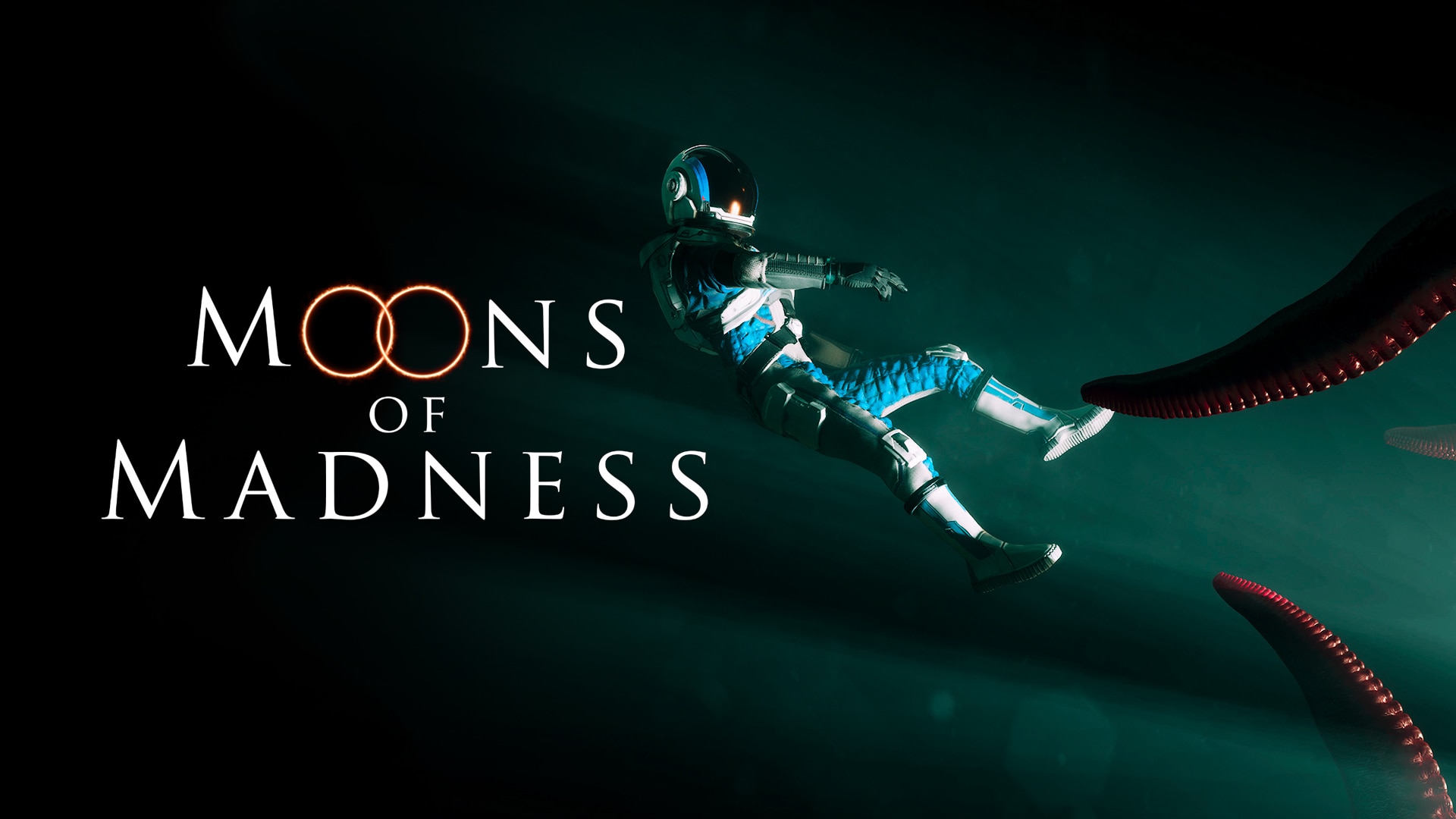
The Moons of Madness

What it is: single player story-driven experience with light puzzle elements

Why Play on the Steam Deck: Immersive blend of SF and horror storytelling conveys well in a very personal way on the Steam Deck, this game got me through a weekend cold.

Possible Issues: I experienced one or two moments of framerate drop at odd moments, but I also ran this game for 11 hours straight from start to finish, so it may have taxed the program a bit. 

I had this game in my library for ages, and finally decided to plough through it. Turns out, Moons of Madness was a great experience on the Steam deck and a very interesting story-based walking sim with light puzzle elements, focused on a (SPOILERS) scifi take on the Lovecraftian mythos. I had no idea it was rooted in the mythos when I started playing, so discovering this organically was very satisfying. It took about 11 hours to complete.

The Ascent

What it is: isometric action RPG with cyberpunk/far future SF theme; multiplayer available but I only played single player.

Why Play on the Steam Deck: Extremely compelling gameplay makes this incredibly fun, and its graphics really shine on the Steam Deck without any framerate loss I detected.

Possible Issues: some real small text, but Steam Deck's magnify feature works with this.

This top-down isometric shooter with RPG elements is the most atmospheric Cyberpunk/SF experience you can get outside of playing the actual Cyberpunk 2077 game, but with the addition of a very satisfying gameplay experience meshed with a rather elaborate story about a distant arcology/station on an alien world suffering from a collapse in power, authority and resources and the scummy cyberpunks who try to profit from it. I had overlooked this game, and glad I discovered it at last, well worth playing through. You can play multiplayer and its green lighted for the Steam Deck, too. About the only issue is there can be some small text on screen, so keep that in mind. 

Tales of Arise

What it is: action RPG anime style; single player only (so far as I can tell)

Why Play on Steam Deck: If you want a good looking JRPG to play on the Deck with a compelling story, the Steam Deck provides the right level of interpersonal immersion on-the-go. But seriously, get this game even if you don't have a Steam Deck.

Possible Issues: none so far. 

I'm in the middle of this one and unexpectedly enjoying it. After caving on this one with a recent sale, I was a bit concerned it would be yet another bog-standard JRPG with arcane mechanical contrivances to attract veterans to the combat system, but simultaneously becoming out of reach for more traditional or newer gamers. In fact I played the demo and came away worried it wouldn't be that fun....but I was completely wrong, and the game's much better and more organic actual introduction/tutorial region (cleverly disguised such that you won't even notice it is a tutorial) does a great job introducing you to the mechanics and how combat works, and its a lot more traditional than I expected while still being a compelling quasi-action RPG style meshed with a really fascinating story, world and characters. A+++ and plays great on the Steam Deck. 

Important to note! If you are like me and tired of most JRPGs starting with a gang of teenage or subteen protagonists, you'll love this one, as the average character is at least in their twenties or older (so practically geriatric by anime standards!) and the storyline is presented in a keenly intelligent manner with excellent voice acting.


Wednesday, September 14, 2022

Square-Enix Announces shutdown of Babylon's Fall - The Folly of Games-as-a-Service

 You can read about it on Steam's website, and enjoy the discussion groups (the ones not suspended) here. This one impacts me, surprisingly...I bought Babylon's Fall when it came out back in February of this year, along with a handful of other new games on Playstation 5, just happy to see some actual new content. Other games I nabbed included Final Fantasy Origins (another Square-Enix game) and Tokyo: Ghostwire (from Bethesda). 

Of the three, Babylon's Fall is the one I've played the most of so far, but not without reservations. First, it's important to understand that the game is reminiscent of a lot of older Playstation titles from long ago, especially the many weird JRPG dungeon crawlers which appeared on the PSP and PS2. It has an archaic quality to it that will appeal to the niche of a niche of gamers who liked those sorts of action RPGs with lots of fiddly management. Unfortunately it's welded--ham-fistdedly--to a games-as-a-service model of design which takes what should be a party-based single player game and turns it into an always-online experience with battle passes and a marketplace....all of which is now gone. You can't play this game without being online.

The game's appeal was also limited due to being released on the next gen consoles despite clearly being a last-gen title in design. It's use of a faux antique watercolor/oil painting effect for cutscenes and much of the in-game art design just doesn't look "right" to most people, and the further I got in to the game the more I found this approach annoying (initially I was forgiving; now after two-thirds of the way through I grew mostly just irritated). 

If this were a budget title single-player offline experience that could just be available in perpetuity no one would care, and it would languish with so many other forgettable games as something fun to play if you're into the very specific style of game it is (and make no mistake, the game's combat is fun....though like the art style, it starts to feel repetitive about 2/3rd of the way through). But nope, it's a GaaS and as a result it's getting shut down....the cost of maintaining a skeleton crew and servers to support the game is too costly for Square-Enix to even bother.

On the one hand, I am annoyed; I'd be interested in a refund if it were possible, though I made the mistake of buying it through Playstation's digital store, which famously have provided refunds for nothing save the mess that was Cyberpunk 2077 in similar situations where a publisher fail has imposed upon the consumer. Most likely I think Square-Enix figured they could do this because the game probably sold copies in the thousands, maybe a few tens of thousands at the most....so to them it looks like weathering a bit of negative publicity, but at least they're not screwing millions of purchasers over, right? Right???

On the plus side, this proves that their games-as-a-service experiment failed. Maybe, just maybe, Square-Enix will avoid doing this anytime in the near future, or if they do maybe they will divest more time, energy and effort to the studio tasked with making such an abomination.

I thought about just giving up on them as a personal statement....but so many good games that are also offline single player experiences do come from Square-Enix and its studios, and I own a nontrivial percentage of them already anyway. So maybe the better lesson to learn here is: if I see that the game is a GaaS model that still expects a retail purchase to play, maybe just turn the other way and run.

In the meantime, assuming I can't convince Sony's CSR goons to give me a refund, I guess I better finish that last 1/3 of the game I have left to complete so I can add this to the list of other games that failed and evaporated from existence in similar fashion.....

RIP Tabula Rasa, Evolve, City of Heroes, Wildstar, and now Babylon's Fall. 

Sunday, September 11, 2022

Pathfinder 2E - On Risk and Mortality in Games (vs. D&D 5th and Cypher System)

 Brief thoughts here....I've looked at the playtest material released for One D&D so far. It doesn't look too bad, although the whole "monsters don't crit" is a deal breaker for me. It feels like a way to offset level 1-2 player deaths but in the process create a bigger problem for challenges later on. I could be wrong, but the D&D math after level 4-5 favors the players pretty consistently, so losing crits removes a fun element for the DM and reduces the threatening value of monsters overall. On the other hand, like many games, D&D is less about "survival of your PC" these days and more about just telling stories and having some occasional conflict for fun, but I think the notion of player character mortality is something that runs counter to the general direction of the game and its audience these days.

I was doing a session zero with the game group on Saturday for Cypher System, another game which essentially is not about character mortality as a serious risk. You can die in Cypher but it takes a mutual level of determination by the GM and utter ineptitude by the player; you have to really, really want the PC dead and the player has to really burn through their resources astoundingly fast to get to the point where death is inevitable. I think its happened or almost happened only twice in the time I've run Cypher System.

That got me back to thinking about Pathfinder 2E. This system, although I have had my ups and downs with it (and have many issues with its approach to skills and overly structured probabilities), is undeniably not like the other two I mentioned: character mortality is possible at any point in a PC's career, and the idea that level-appropriate encounters are laden with mortal risk is part of the game by design. Pathfinder 2E also leans in to letting players make bad choices if they want with their actions during combat, pushing success past the point of likelihood and risking greater failure as a result. As a consequence of this, the one campaign I ran from level 1 to 20 in PF2E demonstrated that the system had managed to find a decent balance at high level which felt consistent with lower levels; the odds of failure remained even late in the game, an intriguing notion. 

By contrast, with D&D 5E there comes a point where the game can prove challenging, sometimes in unexpected ways, such as how gangs of lower CR monsters are usually more effective that a single CR-equivalent or higher monster which can go down quickly if its not a boss with legendary actions. D&D 5E has been pretty consistent in this regard; you can get a sense of challenge out of a session but the potential for real risk is generally not on the cards unless the DM goes out of their way to try for it. 

Likewise, with Cypher System, you don't really build scenarios in Cypher with the idea of player mortality in combat being a likely thing;* you aim for complications, events, encounters and discovery for sure, but it is best (in my experience) to treat Cypher Characters like the protagonists in a book; they have a certain amount of plot immunity for the most part, and it takes a real monumental cluster of unfortunate events to take them out.

But Pathfinder 2E does not have this problem....and while it does have a slightly different issue (that in which especially low level and especially high level encounters relative to the group are too trivial or too lethal to even consider), it does manage to handle that sweet spot of keeping the group on its toes quite nicely....which is something I like, on occasion.

 Which is all a long winded way of saying I need to look at it more closely again. PF2E, much like PF1E, might end up being the bastion for those who find themselves once more dissatisfied with the current or impending edition of the Big Dog. 

One other item of note....the revision to character races in the proposed One D&D playtest shines a light on how the Pathfinder 2E ancestries, while more elaborate in their design requirements, already accomplish a range of flexibility that D&D 5E appears to be trying to mirror. They are obviously toying a bit with some sacred cows such as proscribed ability modifiers, but if you go back far enough D&D in its roots didn't have ability modifiers to begin with, so whatever. But picking an ancestry in PF2E gives you feats and interesting stuff, as well as choices, that don't stop with level 1....its just a better approach to the concept overall.

Post-Script - all said though, a conversation with one of my players does hammer home the big problem with even considering Pathfinder 2E over, say, D&D 5E: the fact that I am not the only one who does not find the player side of the experience fun or rewarding. That, alone, kind of negates any positives I as GM might see with the system; what's the point of a smooth GM-side experience if the player-side of the system doesn't offer an enjoyable of fulfilling experience? 

*Cypher players may take a long time to figure this out, though; it's easy to invoke a sense of risk and mortality, particularly in tiers 1-3, surprisingly, probably because the way a player has to think about running their character in terms of their "risk pools" invokes that sense more easily; but numerically they definitely have the advantage...most of the time. The GM at least has a ton of flexibility in design, so its always possible in Cypher to just design something which cruelly knocks them down to near death if you really want to and the rules fully support it; much harder to do that in D&D 5E, and PF2E can do it but requires a bit of structure and effort to do so. 

Friday, September 9, 2022

Dungeons & Dragons Premium 3.5 Edition Books are now POD

 Amazingly, Drivethrurpg now lists the 3.5 premium Player's Handbook and the 3.5 premium Dungeon Master's Guide as being available in both softcover and hardcover in print on demand....fingers crossed the Monster Manual will follow soon! This is pretty amazing....as time has gone by my appreciation for this edition has been enhanced over the years as the one that ended up being closest to the "sweet spot" of what I enjoyed most about D&D (even with its many foibles, warts and grappling rules). 

Though I enjoy D&D 5th edition, it is supremely nice to also be able to go back to an edition --and era-- when the game was considerably less politicized on social media, and still intrinsically meant to be played as-is with physical rulebooks. 

I have the original premium edition reprints, but this will give me an excuse to pick up new copies I can use and abuse as table copies. 


Saturday, August 20, 2022

The Dreadfire Nebula Exanse and the World of Enzada

 The following is a brief introduction to the region of space around the World of Enzada, and the subject of discovery and exploration for (of all systems) the OSE game I am running. Right now they're still on Enzada, for the most part, but they are on the cusp of moving on to a much more rigorous space adventure. 

An Introduction to the Dreadfire Nebula Expanse

The mysteries of the galactic civilizations around the world of Enzada start with a region called the Dreadfire Nebula Expanse, which includes the Commonwealth, a coalition of independent worlds that united under a sort of "United Planets" charter to provide common protection and civil services across dozens of colonies. The main hub of activity is in the Seven Pillars region, a part of the Nebula known for spectacular gaseous formations called the Seven Pillars, where a dozen or so planets are the center of trade and commerce. Spinward from the Commonwealth is the Border Sector, where mostly independent colonies and free worlds can be found. Beyond that is the Hexen Expanse, a vast sector of unclaimed territory that used to be comprised of the Aon Empire, which collapsed about a century ago due to internal civil war, and left a vast swathe of unclaimed and uninhabited worlds in its wake, many devastated by the necrophage virus which was believed to be a superweapon that got loose.

A noteworthy mysterious region of the Dreadfire Nebula is known commonly as the Hub System, and is one of many worlds stretching deep into the heart of the sector that show evidence of the ancient race called the Shapers, going back at least one million years. The "greys" can be found here, or evidence of their remains, often on abandoned orbital stations. They are believed by some to be genetic descendants of the original shapers. The people on the mainworld (Enzada) call the Shapers the Sky Builders in their local beliefs. Enzada is one of a handful of worlds classified as "Anomalous" in the Shaper worlds of the region, as each one exhibits unique properties due to ancient Shaper technology that warps local physics in strange ways, allowing for what is known as magic to prevail. Magic is different from psionics in subtle ways, and considered more powerful, as it messes with higher-dimensional quantum states but is influenced by psionics and the lost technology of the Shapers. Beyond that, not much is understood about Shaper worlds, as most are considered off-limits by the Commonwealth except for academic study, and Commonwealth rules do not allow advanced technology to be placed in the hands of pre-stellar civilizations that are not ready to join the galactic community. Uplifting a pre-stellar world is considered a high crime in the Commonwealth. 

The one colony in Hub System is known as Academy-992 on the dwarf planet Ceremos, a way station and academic center run by the Commonwealth Scientific Academy of Research and Discovery (CoSARD). It's been there for three centuries now, since before it was a research station and was just a freeworlds port, and was previously dominated by salvagers and relic hunters until the authorities took it over about eighty years ago. The Commonwealth didn't grow into its current state until the Aon Empire collapsed, but on inheritng swathes of unclaimed territory once held by the Aon Empire, the Shaper Worlds posed a conundrum. The mystery of why the Aon Empire regarded the Shaper Worlds as off-limits has not been revealed, and the Commonwealth authorities decided to hold the same restriction, but with limited academic study, to see if they could figure out what the Aon Empire knew that they don't. Academy-992 on Ceremos caters to this careful research, and also still allows for local belter mining and relic hunting, but only on the ruins of salvageable relics, stations and artifacts on the other uninhabited worlds of the system, or the derelict orbital platforms around Enzada (of which there are 136 considered “fair game.”)

Five orbital stations are classified Anomalous-High Risk, and each contains what appears to be a manifestation, possibly pan-dimensional, of the anomalies locals call the Star Gods. These interstellar beings are difficult to approach and study, and appear to have exerted some influence on the religious beliefs of the world below. Only a few other planets in the galaxy have such creatures present, and researchers are convinced they are either higher-dimensional entities partially manifesting in our lower dimensional spaces, or are much older than anyone can imagine, possibly being precursor species that predate the age of the current Universe; the end product of post-Kardashev Type III civilizations that survived the collapse and rebirth of a prior universe. Either way, they are considered off limits to approach and all attempts at contact have been fatal.

Last Item of note is that the center of the Dreadfire Nebula is an immense star-cluster known as the Maelstrom, where a gigantic black hole is in the process of ripping apart a trinary star system. The dense cluster of stars is where the old empire's secret shipyards are believed to have been stationed, along with their top-secret weapons program. Multiple powers in this region of the galaxy are interested in finding this vestige of the empire if they can; and it is ostensibly part of the "Shaper Anomalies" so doing so requires Commonwealth approval or going rogue.