Showing posts with label Tunnels. Show all posts

Friday, September 12, 2014

Five Games that Desperately Need to Join the Old School Revival (somehow)

The OSR has done wonders for preserving the memory of games from the first decade or two of the hobby, and it's kept them alive either spiritually or in some form of retroclone. The OSR was strong enough that I think it is at least part of the reason that we ended up getting reprints of no less than four editions of D&D (not to mention the D&D PDF store), and is why we continue to see effort poured into making older games such as Traveller and Runequest available through various editions and iterations.

There are, however, some games out there which are worthy of this sort of respect, but which linger on in limbo, neglected by all save a very small handful of gamers who still have physical copies to play around with. Some non-D&D games have gotten some attention, yes....the 4C System is a decent lowdown on the classic Marvel Superhero RPG from TSR, for example, and others appear in decidedly more nebulous format (such as how Star Frontiers exists as a thing you can buy if you don't mind feeling a bit shady about the process).

Nope, this is about those games which, despite popularity or venerable status as classics, haven't somehow gotten their proper due when it comes to the OSR revival. Or "osr" revival if you're one to quibble that the hobby is exclusively about D&D and everything else is at best a fringe case. So without further adieu....my top five RPGs in desperate need of an OSR revival. All they need is a champion with the spare time to figure out how to massage the OGL into coughing up a suitable replica....or a crazy publisher willing to spew forth a working reprint or revival:


5. Top Secret

Top Secret recently had a module appear....in print no less....in Gygax Magazine. The only thing more utterly inconceivable than a game that's been out of print for close to 30 years getting a new module in print today is a game that's been out of print 30 years and doesn't even have an OSR retroclone to support said module.

Top Secret was part of an 80's wave of spy/espionage games and one of the most memorable. The second edition might arguably have been the better edition, but it was nonetheless a great game and did a fine job of conveying the genre from an 80's cold war style. It's possible later competitors like the Bond 007 game were better, but Top Secret was the one that first grabbed me.

Status: presumably part of WotC's wholesale grab of TSR, it is theoretically possible they could do something with the game but I think we'll be fortunate if they bother to scan it in for PDF re-release.


4. Mercenaries, Spies & Private Eyes

Even better than Top Secret was Mercenaries, Spies & Private Eyes, Mike Stackpole's magnum opus of gaming (because sometime after MSPE he moved on to fiction and never looked back). MSPE was based on the same core system as Tunnels & Trolls 5th edition, adding a skill system in and demonstrating rather amply that regardless of how irreverent and beer & pretzels T&T could feel, MSPE could use the exact same system for some serious gaming. The book was, like all Flying Buffalo products of the day, clean and exceptionally well organized with loads of interesting bits. One of my favorite games of the last four decades was in MSPE.

Status: MSPE currently languishes in the hell that is reserved for games that passed in ownership to other less stable/responsible publishers. So while Flying Buffalo exists and is producing new stuff even today, MSPE is not a part of that, having been bought by Sleuth Publications, which folded a few years later and also took Different Worlds magazine with it, as well as some great Tekumel books (as I recall...or maybe it was whoever bought Sleuth, and then THEY folded, too). The good news is you can still get copies of MSPE and most of the content released for it over at Flying Buffalo's online store. If a new iteration of MSPE were ever made possible all the game would need would be a an update to the modern era...the core rules could remain as-is.


3. The DC Heroes MEGS System

DC Heroes went through three editions before Mayfair Games had some sort of meltdown and liquidated their RPG line. The core mechanic, called the "MEGS" system for Mayfair Exponential Game System was a stroke of genius and this was my second-most-played game system for most of the late 80's and early 90's outside of AD&D and Cyberpunk 2020....it was such a smooth system, and it handled the vast power differences of the DC universe flawlessly.

Status: Sold to the people who released the system as "Blood of Heroes" and then disappeared off the map, MEGS languishes in forgotten game hell now. The only consolation I can suggest is that Mutants & Masterminds 3rd edition moved to a stat system with exponential values that is distinctly similar to MEGS.


2. Dragonquest

When SPI carved its way into RPGs it did so as only a wargame company could, with complex systems that were viewed by some as on the extreme end of the bell curve of complexity. Dragonquest quickly became my go-to system right after Palladium Fantasy and Runequest back in the day when I formally abandoned AD&D between 1985 and 1988, and I did not leave it as my engine of choice until AD&D 2nd edition (and a large table of begging and pleading players) coerced me into the dark side once more.

Dragonquest was robust, filled with exotic modifiers and details including astrological signs and a combat system that would make D&D 3.5 blush with jealousy. It's format was strongly aligned with the protocol for the era of wargame rulebooks, something that proved daunting to those who had not dabbled on both sides of the fence. It later fell into limbo as SPI was bought out by TSR, and was then revived in a new 3rd edition which received one module for support. A hypothetical future sourcebook still exists on the internet.

Dragonquest was noted for its elaborate rules on demonology with a strong focus on "medieval" feeling magic. When it was revamped by TSR it became a victim (and benefactor) of the "we are terrified of the fundamentalist anti-D&D crowd" focus TSR had adopted, and the demonology was removed entirely and replaced with a new set of rules on elemental summoning. The ideal 4th edition of Dragonquest would include both the new content and the missing old content.

Status: presumably one of many games sucked up as part of TSR by WotC, but suffering because they already have a flagship game. The best we could hope for would be a re-release in PDF down the road. There's a hidden online fanbase for the game as well, if you search hard.


1. Fantasy Trip

Need I say more? Fantasy Trip was for many the defacto alternative choice to AD&D back in the day, and was considered by many to be more playable and functional than other competitors of the time. It became the spiritual father to GURPS 1st edition and the Man-to-Man sourcebook which Steve Jackson Games released was effectively a second edition of Melee. Unfortunately TFT died when Metagaming went belly up after a scandal involving a "treasure hunt" for a million dollar gold unicorn advertised in a supplement, with no prize ever forthcoming. Steve Jackson's efforts to buy TFT outright were thwarted, prompting him to instead create GURPS.

TFT was so amazing because it was such a tight, concise system that offered all you could possibly need or want in one very clean, comprehensive package. It was the anti-D&D of it's day because it managed to be both complex and organized. It had sourcebooks which offered solo play, books like Melee and Wizard which offered tactical combat experiences, and the full "In the Labyrinth" which graduated it into a fantastic full-featured RPG. It was designed by Steve Jackson, and it shows. The map and minis/chits combat was fluid and fun. It was a Full Monte style package. I had a friend back in the day who practically devoted his life to this game...he never played anything else. I tracked down all of the books I could back then, and loved pouring over every detail it offered. This was written at a time when every word was worth reading, nothing was just filler text.

Status: The Fantasy Trip plays like a tight, pared-down version of GURPS which focuses on gritty, low-magic calculating fantasy with an emphasis on tactics.* We could technically have a version of TFT today of SJGames released a Lite version of GURPS which skinned the system down to just the stuff that would coincidentally exist in an iteration of TFT. As it stands, to get the pure deal you need to hunt around online for those sites which keep it alive, sometimes in the form of bootleg PDFs. Then you have to try and explain to your younger gamer crowd (or older D&D-obsessed gang) what TFT was and why it was so amazing. There's also a "version" of it in existence that has some current scenarios in print that model themselves loosely on Metagaming's old boxed sets here. Dark City's pretty close in terms of a modern rendition, but they still don't have a good hardcore "In the Labyrinth" product out, last I checked, to bring it all together.


*Note that a "tactical" experience in 1979 was decidedly different from what we think of as tactical today. A lot grimmer, high mortality rate, and no superheroics or game systems designed to keep you in the game through gimmicky rules designs. TFT comes from an era where tactical meant a sword to the gut was likely your PC's grizzly end.

Thursday, September 4, 2014

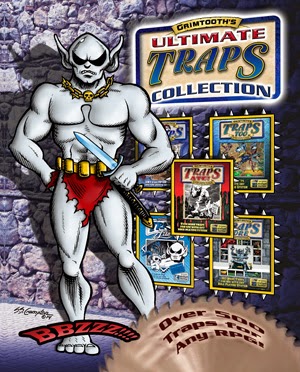
Grimtooth's Traps Compilation from Goodman Games


Did you know about this? I sure didn't, until wandering over to Goodman Games to see what was new for Dungeon Crawl Classics, that is....my proclivity for collecting DCC modules has reached a fever pitch as I plot ways to either actually run DCC at some point or convert the modules to D&D 5E....because frankly it wouldn't be too hard, and the spicy zip that DCC brings to weird fantasy is well worth the effort.

Anyway, it looks like Flying Buffalo has joined in an unholy union with Goodman Games to produce a definitive hardcover collection of all the Grimtooth books, as originally presented with no alterations (such as was done with the Necromancer Games' D20 edition).

This absolutely MUST be on my game shelf.

Wednesday, June 18, 2014

Good News Everyone! Deluxe Tunnels & Trolls is looking good


Rick Loomis released a beta test version of the Deluxe T&T rules to backers today. If you're a backer check your email. I'll say this:

1. What's released so far is formatted and in layout with art and looks very clean and orderly.

2. It's already got 105 pages done but the page count says it should be 178 pages long plus a 16 page quickstart in the back ("short form rules")

3. I like what they did with talents in this iteration, it's a smart and not overly "baby with the bathwater" way to deal with it.

4. The art in the beta is awesome.

5. This looks like a version of T&T I really want to play. Like, yesterday. Right now. Damnit!

Since they still have the spell lists and other stuff yet to go, I'm guessing we'll probably not see this in time for August GenCon but maybe we'll see it before the D&D 5E DMG releases in November.


Friday, February 21, 2014

Tunnels & Trolls Newsletter

If you're not on the list and you even remotely have an interest in the second oldest fantasy RPG in the world then you should subscribe here. Right now. Now!!!

They're up to issue 3, and it's a great informational newsletter, really pulls together just how much coolness is rolling around in the Tunnels & Trolls community these days. Also includes regular updates on the status of the Deluxe T&T Kickstarter and where it (and all the extras) are at.

It's also cool because if you (like me) found Trollhalla's strange inner sanctum walla a difficult place to find regular information --but still want to be an involved T&T fan-- then the newsletter is the perfect solution.


Tuesday, August 13, 2013

Saving Fang from the Pits of Morgul for Tunnels & Trolls

Saving Fang from the Pits of Morgul is a new Tunnels & Trolls adventure that Ken St. Andre just released, and which backers to the Deluxe T&T Kickstarter received PDFs of. The solitaire is actually intended for use with the original 1st edition T&T rules (which are in print somewhere through Ken, I believe) and is officially the first solo ever released for that particular edition, since Buffalo Castle came out with the 2nd edition of T&T.

The book is gorgeous...it's got Simon Tranter cover and interiors (Simon did the cover for my Chirak book, too) and Steve Crompton layout and design so in terms of overall look and quality it's way above the average non-D&D OSR product (or regular D&D-derived OSR product, for that matter). With Saving Fang out that adds this one to Buffalo Castle's revision and the new City of Terrors. From Rick Loomis's latest update it sounds like we may at last be seeing the Deluxe game and mail-outs maybe a month or two late (just guessing) past August....we shall see!

Friday, July 12, 2013

A Random Friday: Tunnels & Trolls updates, Neverwinter and more

Just a short post as I am behind my Monday-Wednesday-Friday quota this week (sort of). News bits and other random stuff:


Tunnels & Trolls

Tunnels & Trolls Deluxe will be running late, as Rick Loomis announced in the latest update, due to Liz Danforth being sick and also behind schedule due to a round of conventions going into August. They wanted to have it ready for Gen Con apparently, but no go. On the up side, the second PDF module is out, and I now have a nice copy of City of Terrors on the tablet.

Speaking of Tablet gaming, there have been a number of releases in the last year or two featuring revamped Fighting Fantasy books (and others inspired by such) which are pretty effective in the ios/Android format. I wonder if Rick and Ken have considered what it would take to turn T&T into an app-based gaming experience, at least for the solo adventures?


Runequest 6

 I am still reading Book of Quests for Runequest 6. It's a great book, and will provide some detailed discussion on it, hopefully next week. I've been talking to some of my players, and we have a new game interest brewing, just need to find a way to squeeze it in. My Wednesday regular campaign is Pathfinder-only, unfortunately; the player collective I have for that night comes for the Pathfinder, and deviating would be to seriously upset the apple cart. Maybe an off-weekend, played at home, so my wife can bring her gruesome RQII elven blood sorcerer out of retirement....


Max Payne 3

Last weekend (July 4th weekend) was very productive in terms of moving "games I've been playing for a while" to the "games I've finished" list. Max Payne 3 was on that list, and I wanted to discuss it at some point as I really enjoyed it, albeit in periodic short bursts, and feel it was one of the better titles of the last few years out there.

Long story short: fantastic campaign (as it should, the end credits for this title was insanely long) and when I could get into multiplayer it was a lot of fun, but strangely (or not) when I finished the single player side of the equation I found myself utterly and totally disinterested in sticking around for the multiplayer experience anymore.  The drive behind this game is the Max Payne story, and that was now wrapped up; continuing the never-ending cycle of violence in Brazil that the game depicts in MP just seemed sort of....pointless? I may revisit it at some point, if only to see how long the community lasts, but... Well, let's face facts; I'm getting old and apparently that has an effect on one's interest in highly repetitive video game tasks (of which MP is easily a component). Also, with like a million games in my to-do roster it's hard to take time for MP unless it's so compelling that it smokes the prospect of something better around the corner. Plus that Steam Summer Sale dealie just started. So...yeah.


Neverwinter

Remember Neverwinter? I've been playing it occasionally (not much), a game here and there, enjoying it in short bursts but not finding it the sort of game that I am motivated to plow through or keep up with, unfortunately. That could change if I find some willpower to stay focused on it (as I recently did, at least for a short while with Guild Wars 2). Maybe once the novelty wears off with Rift's F2P model.

My experience in Neverwinter isn't the interesting bit, however. My wife, who absorbs these games like most humans breathe air, recently seemed to stop playing Neverwinter entirely, after a month-long gorge-fest. I asked her why she had stopped and migrated back to WoW and Defiance....as it turns out, she explained that they all played through at least one or two characters to max level and hit the end game...or lack of it. Best as she can tell, the end game in Neverwinter is nonexistent, and it mainly seems to be an expectation that the community content through the foundry is the source of new material to explore. Anyone who's messed around with the foundry content by now may realize what a problem this actually is; although there is some good stuff in there, the general consensus on the foundry now is that it's lacking the tools for the sort of nuanced and detailed scenarios that it's predecessor titles allowed for. Also, for every gem there are mutliple steaming piles of code you have to dodge, and the Foundry's menu is atrocious for just finding something....I never could successfully locate my wife's own scenario through navigating its menus, for example.


Tuesday, May 21, 2013

Sneak Peak at the Deluxe Tunnels & Trolls GM Screen Art + Buffalo Castle PDF out to backers

Thanks to the Lone Delver for pointing this out! Steve Crompton has the art for the screen (a remix of classic module art from the past) and a contest to go with it posted up on his blog. It looks pretty cool:


I recognize the art sources for all of the modules except the blue big guy on the right...he's escaping me at the moment (maybe a book I don't own? Hmmmmm)

ADDENDUM: And no sooner did I post this then look in my gmail than did I find a link from Rick Loomis to my backer's PDF of Buffalo Castle. Joy! Can't wait for the print copies (which I assume will all be bundled together with the other print copies to save on shipping....but I could be wrong). Anyway, good stuff.


Wednesday, February 6, 2013

Wednesday Bits: Deluxe T&T, B/X D&D PDFs and GURPS Underground Adventures


Just a "smidgeon of news to me" post for today.....too busy to do much more!

The Deluxe Tunnels & Trolls Kickstarter closed at $125,440, over 400% above its original goal. I opted in for all the print stuff I could plus the "vital spots" Tee. I predict a good year for new T&T gaming later this year! The release date goal is August, and hopefully Ken, Liz, Jim and the rest can meet that deadline. I hope Liz gets her tattoo sooner, though....!


I finally caved and bought the Basic and Expert PDF's of Dungeons & Dragons over at dndclassics.com. A few brief comments from my perusing the documents last night:

1. the PDFs are really nice and clean, and the Expert set is indexed (maybe it was my reader, but I didn't see linking/indexing in the Basic book). The Expert PDF also includes a scan of a TSR catalog circa 1982ish. Pretty cool. If you remember the old D&D scans from then WotC was doing this before, keep in mind the quality of the scans has gone up dramatically.

2. I find it very amusing that when you get back to the Basic/Expert sets gnomes are once more delegated to the status of monstrous denizens, and the Expert set even includes a sample gnome lair....

3. Speaking of gnomes, I had also forgotten that in Basic, the gnoll was described as being created when a mad wizard crossbred a troll and a gnome! Fantastic stuff. Will be mulling over using this nugget in future games.

4. I have to concede that in terms of my appreciation for older editions that I haven't given enough credit to just how important Basic and Expert D&D was to my formative gamer years (even back then I tended to ostensibly play AD&D while in reality I was using AD&D for characters and monsters and leaning on B/X for actual rulings). Looking at them now, there is a strong temptation to break these bad boys out for a new campaign played By The Book. Probably will never happen, but they're loaded onto my Nexus now, so I'm prepared, should the need arise.

So anyway, if you're wondering if $10 is worth the admission to check out Basic and Expert Dungeons & Dragons, the answer is: yes, yes it is.

On other news, there's a new GURPS PDF out which looks really interesting: Underground Adventures is all about the fantastic world of digging deep into the earth, and the mysteries it has held (or was imagined to hold) over the ages. So far a great read and very inspirational. As with most GURPS supplements, this can work well as a sourcebook for your preferred game engine as easily as it can for GURPS 4th.


Monday, February 4, 2013

Tunnels & Trolls Deluxe at 400% with 25 Hours to Go

It's at 400% and growing with one day to go. I upped my bid to include all the print versions of the various solitaires as well as the "Ya Missed My Vital Spot" tee. If I don't wear it I know my wife will. Also, given how much of a compulsive collector I've been for official Flying Buffalo T&T products, having a complete set of all the books about to be reprinted/revised is just a big old plus, so what the hell, why not (not to mention my tax return is already on its way).

Friday, February 1, 2013

Three Days Left on the Tunnels & Trolls Kickstarter

If you haven't jumped in, but like the broader old school revolution in all its facets, now is the time to get in on a chunk of the second fantasy RPG to come into existence and help T&T Deluxe hit a $100,000 stretch goal. (barring Empire of the Petal Throne....anyone know if T&T or EPT came first? I have no idea.)

Deluxe Tunnels & Trolls -- Kicktraq Mini

Monday, January 28, 2013

Dungeon of the Bear and a T&T GM Screen


Tunnels & Trolls Deluxe has ripped on past the $80K mark and two new stretch goals are available, which I am buying into both of: The GM's Screen ($5 add on) and the reprinted Dungeon of the Bear ($6 add on). I happen to have a couple copies of the original Dungeon of the Bear, a module I'd actually love to run again one day, but a new one is always a good thing. The GM's Screen is just a "thing"....I like getting game screens (just got the Labyrinth Lord GM Screen the other day, actually) so its a no-brainer for me. Also, I'm curious to see what would go on one, since T&T is a game that is remarkably easy to run  sans-screen. Not a lot of charts in this system.

I'm hoping the Kickstarter passes the $100K mark, which would be cool. Kicktraq thinks its trending that way, so who knows? I mean, if Pathfinder Online can scrape past the finish line, maybe the Trolls can jump the chasm and keep on running...

Either way, I think I need to break out some 5.5 or 7.5 T&T soon and run a few adventures. 2013: a good year for classic gaming so far!


Saturday, January 5, 2013

Tunnels & Trolls Deluxe is Funded!


I actually pledged last night at the $60 level, and as of this morning T&T Deluxe has passed its funding goal, so it's all gravy and cake from here on out!

I'm really looking forward to this next iteration of T&T, which is sounding a lot like it could very well encompass the totality of T&T as all its fans imagine it, and add more cool stuff in on top of it. Ken St. Andre drops hints and bits to those of us over at Trollhalla about its direction and design, which of course only wets the appetite for the final product.

T&T Deluxe, along with Legends of Dawn and the colorvision edition of the Castles & Crusades PHB marks my third delve into Kickstarter. I can see how this phenomenon gets addictive...it's like buying a tiny stake in a creative venture, and to contribute to those creators that I know and respect (or, in the case of Legends of Dawn, just impressed me sufficiently) is a lot of fun.

Although I love T&T myself, and have been playing it since I discovered the 5th edition boxed set around 1982ish at Wargames West, I do have an ulterior motive to my love for this game: I have kept every module, solitaire, edition and variant (from MSPE to Monsters! Monsters!) in a special box, and plan to hand it all over to my son in about 8-9 years, should he look like he's following in his dad's footsteps. T&T is an ideal game to introduce new and younger gamers to, not just a fine system for the old school grognards out there.

Wednesday, August 1, 2012

T&T Deluxe, Paizo Anniversary Sale, Camazotz' Mud-Colored Nostalgia Glasses and More


So first, for Tunnels & Trolls fans it looks like Ken St. Andre and crew are going to collaborate on a Deluxe Edition of Tunnels & Trolls. There's more about it here on Trollhalla's Outer Sanctum and the Lone Delver also speaks on the matter in detail.

I'd like to see a Deluxe super edition of T&T and the fact that it's going to include collaborative work from Rick Loomis, Steve Crompton, Bear Peters and Liz Danforth along with Ken himself, of course, can only be a good thing. T&T 5th edition has long been regarded as the best (or most organized/well presented) edition of T&T thanks to Liz's work, and I am sure that we'll see the game shape up in the same fashion.

Next! Paizo is having a tenth anniversary sale right here.

I didn't find out about this until after visiting Barnes & Noble, where I purchased the latest Brian Fagan book Elixir, along with Dean King's Skeletons on the Zahara, Paula Guran's Extreme Zombies, Into Africa by Martin Dugard, and Immortality by Stephen Cave. All interesting books which I plan to blast through in the next month, and all helping me to alleviate my conscience from the engorgement on Steam games I engaged in just a couple weeks ago....but luckily this also served as a money sponge to avoid my succumbing to the ridiculous 75% off deals on print products over at Paizo. All of their older pre-PFRPG release OGL modules are up for sale, most at $2-3 apiece and all the adventure paths in stock at $5 each. PDF versions are also marked down across the board. It's madness, I tell you!

Luckily, a dearth of remaining discretionary income and a hearty mental kick to the noggin reminding myself that I never, ever run published modules (except on occasion for C&C) served to quell my insatiable consumerism. If you, however, wouldn't mind getting something around 37 adventure paths and single modules in print for 75% off, head on over. The PDFs of the core book are all $7.49 apiece right now. Kind of a steal, ya know?


On an unrelated note, I may have given up my chance to own the AD&D Premium edition rulebooks. My FLGS owner called up and inquired as to whether I really wanted them or not, to which I explained as I always do with books they've been holding for a week or more that yes, I do want them, but the problem is I absolutely don't need them so I've been having a hard time finding the discretionary income to throw at vanity ownership. So if she had someone else keen to buy them (she did) then she was welcome to sell them and I'll just take my chances on finding copies in the distant future. Such is life as a father and husband and sole breadwinner in the family right now.

And yeah, I could have saved up the moolah I spent at Barnes & Noble, but those books are something I'm actually going to read and enjoy, maybe learn something from. Buying pristine editions of AD&D 1st edition, simultaneously marvelling at the game I played as a kid and also mildly loathing it for the memories of my youth it brings up....just not quite the same bang for my buck.

I wonder if one's OSR-ness and love for all things 1980 and earlier is inversely proportionate to one's level of fondness for the memories from that period? I'm not saying I don't have fond childhood memories....but I definitely wouldn't repeat my childhood as it unfolded. On the other hand, I continue to hold a pristine boxed set of Runequest 2nd edition, which I do indeed enjoy perusing on occasion for the fond memories, and ironically I also still have my original 1st edition Gamma World books in startlingly good condition, still filled with my writing from age 9-12 when I played Gamma World to death. That there is one of the reasons I don't even feel mildly compelled to try Gamma World 1st edition again; every time I open the pages I see a snapshot of myself in my youth, and it reminds me that those days are unique and are nonrepeatable, at least in their original forms. That's what Mutant Epoch is for, anyway...!

Bah, enough introspection! Go check out Paizo and read what Ken has to say about T&T Deluxe.


Friday, May 18, 2012

Tales from the Watchers of the Sullen Vigil: Dragons of Sarvaelen


Dragons of Sarvaelen


Since the dawn of mankind’s rise from the muddy waters of prehistoric times dragons have been present. Though hard to find, some erudite researchers can point to ancient caves filled with thousands upon thousands of years of ancient rock art, depicting a history both venerable and momentous in its imaginative capture of humanity’s efforts to understand the world around it. Dragons, it has been noted, are among the first beasts ever depicted by men.

The first dragons were said to have appeared in the deep wilderness, dragging and clawing their way up to the surface of the world from the chthonic realms below. Indeed, the many cavernous realms beneath the surface of the known world are attributed to the tireless digging and scratching of the dragons, which burrow long and deep into the earth to make their homes.

These first dragons spoke as men, and in some stories (mostly told among the elves) it is claimed that they actually taught the first languages to humanity. This language was to allow for easy instruction on the worship of the chthonic gods of the deep. The dragons, it was said, were the heralds of the Old Gods, born in the deeps of the world specifically to serve and envoys and servitors to these chthonic beings in the claustrophobic darkness at the center of the world.

The fragmentary texts which survived the Final War of the old empire of Camrinal piece together an interesting later history of dragons. It is clear that the more intelligent dragons served as envoys and voices for these old gods, although some might dispute that the dragons actually were such, and weren’t simply leveraging their own great power to set up cults and followings which served their own needs. Dragons regularly demanded tribute…and still do…from the lesser kindred of the world, seeking to promise safety in exchange for gold and sacrifice.

Arcane scholars who have studied dragons note that there are really two distinct breeds of beast in the world, one which is cunningly intelligent and rare, and the more common beasts which are normally found in the wilds, slaying livestock and terrorizing peasants. There is much speculation on how the two relate, as dragons by and large appear to be of normal intelligence, but it is as if some internal social problem or cultural matter has led to younger dragons going feral. Either way, whether speaking with one of the old intelligent dragons or the newer feral ones, a traveler risks losing his life if he enrages the beast.

Amongst dragons there is something of a different consensus. The dragons claim to have come from a breed of ancient beasts that sailed extraplanar realms, transmigrating from one dimension to the next, to populate vast numbers of worlds. The dragons that settled on Sarvaelen, they claim, were enamored with the dark whisperings of the Old Gods, tempted by their power, and so settled in to stay. The mysteries and secrets revealed by the Old Ones to the dragons was intoxicating, and those who embraced it found that they were given powers of prophecy and near immortality.

The embrace of the Old Gods had a terrible impact on the dragons, however, for the power of these chthonic gods warped and twisted the species over time, and as the generations past more and more dragons gave birth to feral children and monsters. Wyverns, serpents, hydrae and other beasts are suspected to have come about from the corrupted eggs of the eldest dragons.

Some dragons sought to purge their bloodline of the corruption, to turn their back on the Old Gods. These dragons migrated to remote regions, usually high in the mountains or in other areas sufficiently remote that the ever-present whispering of the maddening dreams and prophecies of the Old Gods was barely audible to their mind. These dragons have sometimes gone through desperate measures to purge their bodies of the taint, seeking to use exceptional magic, and occasionally engaging in breeding experiments with the lesser mortal races. No one knows if any have been successful at these efforts, but stories of adventurers contracted to scaly-skinned agents who descend from the mountains to pursue exotic tasks such as the acquisition of a phoenix’s eggs from the Seletharin Desert have been spoken of.

In game terms, dragons of Sarvaelen are statistically identical to your preferred game system’s take on them, albeit with a preponderance of ancient priests and mages in the service of the Old Gods. The dragons seem to have avoided much damage to their kind during the Final War of Camrinal, although the stories from that period suggest that a great many feral dragons were captured and trained for war in that time. Such an affront would be impossible now, as all of the great Magi are long dead, snuffed out during the final days of the war when Camrinal was blasted into oblivion. Indeed, it is said that undead dragons and their knights, unable to rest, still haunt the last battlefields before the imperial city of Zaravande, looking to carry on the fight eternally.

In T&T, Legend and BRP you can use your preferred dragon stats as you see fit. Dragons are multi-colored and come in many varieties, so there is no uniformity among their kind, or division by color. If you use dragons in C&C or other similar games, color types are less relevant and dragon breeds are better identified by their use of exotic breath weapons. Nor is alignment an issue for dragons, where a red or gold can both be chaotic evil, or both lawful good, and their color is only what they have a preponderance of, as their chromatic nature leads naturally to a wide mixture of “mutts.”

Next: back to the frontier wilds along Camrinal, and to the remote Watcher outpost near the ruins of dread Zaravande!
 

Friday, May 11, 2012

Tales from the Watchers of the Sullen Vigil: the Naga


The Naga of Sarvaelen
Naga in Sarvaelen are an ancient race, cursed long ago with the serpentine traits that mark their lineage. Once, or so the story goes, the Naga were among the greatest of the old ones, the races that predate modern men long ago. A series of ancient tomes, most of which are now lost to history called the “Yavandreth Manuscripts” tell a bit of the ancient tale of the naga. A mostly complete  set of the four surviving tomes can be found at the Library of the Sun in the port city of Aramen, Aeronost’s southern port and capital of the so-called Stormsinger Coast province. There the lone monk Procosius maintains these books and remains the land’s foremost authority on Naga lore.
As legend goes, naga were once men, albeit of a breed of old that was naturally inclined to sorcery and spoke directly to the Old Gods, who were cast down during the Great War two centuries ago. Their ancient king was the sorcerer Kaliya, a powerful necromancer and priest of the old gods revered by his people. These four gods were said to grant great strength to the naga.

According to the Yavandreth Manuscripts, Kaliya did something to anger his gods. There are conflicting tales. One says he was to sacrifice his eldest child in honor of the gods and as a payment for his great necromantic talent, but he refrained from doing so and brought down a great curse upon his people. Another tale suggests something similar, but that it was his wife, Padmavati, could not bear to lose her child and so spirited him away before Kaliya could sacrifice the infant. Yet another tale says nothing of this curse induced by loss of sacrifice and instead suggests that the naga were formed when they sought to make a dark pact with the elder god called Dev Yama’Dragoth. Yama’Dragoth (known in later centuries only as Yama) granted the naga their wish, giving them supreme power and immortality as sorcerers, but in exchange he took their humanity, leaving only the twisted, serpentine forms naga are known for today.
Whatever their origin, naga appear to be half men and half serpent, often with strongly reptilian facial features and sometimes the wide, decorative “hoods” of a cobra enveloping their head and neck. Naga are fearsome to behold. Naga are known for their poisonous bite, also a shared feature with the cobra, and they are exceptional swimmers, albeit not aquatic, a common misconception among humans since the only known kingdom of the naga is to be found on the Isle of Stoneblight, where the naga city of Nagapuram can be found.

Nagapuram is an impressive, ancient city located on an expansive island about two hundred miles off the Stormsinger Coast in the Pavain Sea. The naga call the island Manak’tagar, and  defend it vigorously from outsiders; one must seek a benefactor to vouch for a foreigner who seeks to visit the island and it’s amazing city of ancient monuments. Stories of travelers, diplomats and merchants indicate that there are ten thousand naga within the city and probably three times as many slaves, usually of humans from the south eastern kingdom of Sammar, which does not normally disturb the citizens of Aeronost who have frequently had to deal with hostile pirates from that distant land.

The island itself is ruled by the so called Living Goddess who goes by the name of Padmavati, the mythical first queen of the naga. Whether she styles herself a descendent or a reincarnation of this first naga queen is unknown, but she does believe she is a demigoddess, imbued with the powers of the current naga patron deity, Manasa.

The naga are a potent force locally, and the diplomats of Aeronost have sought to keep them as allies rather than enemies. Still, the naga are so feared that the often do as they will, and treat much of the Stormsinger Coast as their own domain. This has often led to unfortunate bloody conflicts between the soldiers and naval forces charged with protecting the dominion of the Pavain Sea and the forces of Nagapuram.

In the region of Aelghast, there is a small community of about one hundred naga who have taken up residence in the subterranean caverns around a sacred hot spring that they call Uk’halat. The hot spring has been turned into a shrine dedicated to the seven-headed serpent god called Agharda, said to have devoured the original four naga gods of old and absorbed their essence. It is believed by this remote group of exiles that the seven heads of Agharda represent the seven kingdoms of the naga, spread throughout the world, and that worshipping this deity will reunite the naga into a powerful force that will resume the mantle of rule again.

This worship of the seven-headed god is regarded as heresy by the Living Goddess Padmavati, as it was only a century ago that the cult of Agharda was embraced by her people. This period led to a vicious war with the distant eastern empire of Kadatha, and nearly led to the destruction of the naga kingdom. As a result of this conflict Agharda’s worshippers were forced into exile lest they be hung for heresy. This branch near Aeronost follows the fanatical priest Yazzad Sydaris, and call their unique sects the “Sons of Sydaris” or simply Sydarites. They believe that Sydaris has a unique ability to channel the thoughts and speech of Agharda.

Because the naga are so ubiquitous throughout Sarvaelen’s lands, the appearance of one is not regarded with fear or suspicion save in the most remote regions of Aereonost and the other kingdoms along the Pavain Sea. As such, a naga character is certainly a possibility in play.


Naga Statistics for BRP

STR 3D6, CON 3D6, SIZ 2D6+6, DEX 3D6, INT 2D6+6, APP 3D6, POW 2D6+6 EDU 3D6

Armor: naga scales provide 1 point (or 1D2) of natural armor.

Movement: Naga move at a speed of 10 meters and swim at a speed of 16 meters.
Attacks: Constriction (1D6+DB) or Bite (1D3+DB plus poison); Naga poison is Potency 15 vs. CON;  inducing paralysis for 1D6X10 minutes in the target (this effect strikes in 1D6 rounds); if a target is bitten more than once in that period each successive strike deals 1D6 damage directly and reduces DEX permanently by 1 until all HP damage is healed. Naga can only bite once before they must regenerate more poison; this takes 1D6 hours before the poison sacs in their cheeks are refilled.

Swimming: Naga base swimming score is 80%.


Naga Character Statistics for Legend

STR 3D6, CON 3D6, SIZ 2D6+6, DEX 3D6, INT 2D6+6, CHA 3D6, POW 2D6+6

Hit Locations: use the same hit location chart as lamia (MoL); tails have the same HP as legs.

Armor: naga scales provide 1 point of natural armor.

Movement: Naga move at a speed of 10 meters and swim at a speed of 16 meters.
Attacks: Constriction (1D6+DB) or Bite (1D3+DB plus poison); Naga poison is Potency 75 vs. Resilience, inducing paralysis for 1D6X10 minutes in the target (this effect strikes in 1D6 CAs); if a target is bitten more than once in that period each successive strike deals 1D3 damage directly to two random locations, and reduces DEX permanently by 1 until the damage is healed. Naga can only bite once before they must regenerate more poison; this takes 1D6 hours before the poison sacs in their cheeks are refilled.

Swimming: Naga have a base swim score equal to DEX+STR x 4.


A Typical Naga in Legend:

Average Stats: STR 11, CON 11, DEX 11, SIZ 13, INT 13, POW 13, CHA 11

Naga Hit Location Chart:
D20 Hit Location           AP        HP
1-6 Tail                             1          5
7-9 Abdomen                    1          6
10-12 Chest                      1          7
13-15 Right Arm                1          4
16-18 Left Arm                  1          4
19-20 Head                       1          5

CA: 4 Move: 10m; 16m swimming; SR: 12 Damage Bonus: +0 MP: 13

Typical Armor: 1 point natural; usually they wear leather or soft leather. Warriors wear chain and sometimes plate

Skills: Swim 88%, Evade 50%, Perception 60%, Persistence 45%, Resilience 50%, Stealth 70%

Weapon Skills: Constriction 50%, Bite 45%, one other 45% (usually spear or sword)

Weapons:
Constriction (1D6)
Bite (1D4 plus poison, see above)
Scimitar (1d8; bleed)
Short Spear (1D8+1; impale)


Naga in Tunnels & Trolls:

Naga are already in T&T, on page 27 of the 7.5 edition rulebook! If you are using an older edition, the stats are:

STR X1.5, CON X1, DEX X1, INT X2, LK X1.5, CHR X1.5, WIZ X1, SPD X1 (but double when swimming)

Naga Venom: Naga deal poison damage the first time they get spite damage in on any attack. The victim makes a save vs. CON equal to the level of the Naga or become paralyzed for 1D6X10 minutes (this sets in within 1D2 rounds). Additional spite damage is dealt as normal but deals 2 points for every spite to a paralyzed victim. Naga can only use this initial venom attack once before it must regenerate; the regeneration takes 1D6 hours.

Constriction: This naga attack deals 4 dice plus personal adds in combat. If the naga using this attack deals any damage (including spite damage) he can make a Save vs. DEX (usually equal to the target’s level, but the GM can decide) to grab and constrict an opponent. If he succeeds the naga deals its full HPT in damage to that target the next round automatically. The naga can keep the hold each round by making a STR save vs. the target’s level (or GM’s judgement) each round. If the naga critically fails a save during this process the target break free an deals it’s HPT for the round in damage against the naga instead!


Next Week: The Dragons of Sarvaelen....cthonic wyrms of the earth, the heralds of the old gods.....not your ordinary fire breathers....!

Friday, May 4, 2012

Hexblades of Legend

Since I have an unhealthy obsession with the concept of the hexblade, I decided it was time to work out some details on just how these spell-wielding blades work in Legend as a quasi-mystical martial order, and in Tunnels & Trolls as a specialist class (see bottom of the article):


The Order of the Hexblades


The concept of the hexblade is a master of witchcraft, who relies on a special relationship with his uniquely forged weapon to cast and focus magic through. Hexblades gain their power through dark pacts, and seek to learn power from spirits both malevolent and benign. Some hexblades are good natured and seek to help those around them with their unique gifts; others fall quickly to the potential corruption of the power they seek and walk a darker path.

Hexblades have a loose fraternity of association, for the easiest way to become one is through a practice of apprenticeship to a master. Much like shamans, hexblades rely on knowledge of the spirits and the planes to tease out their magical talents. Some civilized lands may have entire knighthoods or magical orders dedicated to the practice of the hexblades, but in most lands they are reclusive fellows who gather in large groups only on rare occasion.

The hexblade started with a class which appeared in Dungeons & Dragons 3rd edition first, and later as a warlock variant in 4th edition. Literary and game inspiration for this archetype can be found in the fiction of Adrzej Sapkowski’s “The Witcher,” and similar concepts of a man with a special blade can be found in Moorcock’s Elric novels. I also suggest the Kane stories by Karl Edward Wagner.

Joining the Ranks of the Hexblades:
This process is as simple as finding a teacher willing to take one on, who is willing to teach the art. A character could begin play having completed his apprenticeship training. If this option is permitted, then the following Professional Background will be available:

Profession: Hexblade
Cultural Background: All
Common Skill Bonuses: +10% perstence, +5% Athletics, +10% to one blade weapon style
Advanced Skills: Lore (Any), and Craft (Weaponsmith) or Lore (Tactics)
Magic: Common Magic, Manipulation, Sorcery (Grimorie: Tome of the Hexblade)
Hexblade Starting Common Magic: 6 points chosen from the Hexblade spell list below.
Starting Hexblade Weapon: A newly rolled hexblade chooses one blade weapon (sword, dagger) with which he has the Hexblade bond (see initiate details, below). This weapon will be made of cold iron as its exotic material (which may depending on setting have an effect on some planar beings and fae creatures).

Hexblade Magic:
Students of this art have access to the following magic by way of teachers or institutions in the more civilized realms where enclaves of hexblades can be found. Most hexblades are extremely proficient in common magic, but tend to rely almost exclusively on the Tome of the Hexblade for their sorcerous studies.

Common Magic: Bearing Witness, Bladesharp, Coordination, Countermagic Shield, Demoralize, Detect (exotic metals), Dullblade, Fanaticism, Fireblade, Mobility, Parry, Protection, Repair, Strength, Vigor

Sorcery (Tome of the Hexblade): Damage Enhancement, Damage Resistance, Haste, Spell Resistance

Heroic Abilities: Deflecting Parry, Duellist, Sundring Strike

Hexblade Skills:
The following skills can be trained through hexblade membership: Athletics, Craft (weaponsmith), Persistence, Resilience, any blade style, Sorcery (Tome of the Hexblade), Common Magic, Manipulation.

Membership of the Hexblades:

Hexblade Initiates and the Nature of the Hexbade Itself:
An initiate must procure a unique weapon which he forges or finds on his own. The weapon must be of no common origin, either being made of an exotic metal, being unique in some fashion (i.e. a king’s blade, or the weapon was used in the past to slay a powerful extraplanar opponent) or it must be forged by the initiate himself out of exotic metals and imbued with a sacrifice of 1D3 HPs of damage-worth of his own blood during the forging process. If an exotic weapon material is needed, it defaults to cold iron.

Once a hexblade has this weapon, he undergoes an initiation ritual of bonding with the blade. This imbues himself and the weapon with a unique connection; he may now use the blade to channel his sorcery and common magic, reducing the MP cost of spells by 1 point when doing so (to a minimum cost of 1 for common magic). His weapon is now an imbued component of his casting, and he must grasp it when casting any spells. He gains a +10% bonus to his manipulation, sorcery (grimoire) and common magic skills with his blade in hand. Without his blade, he can still cast magic, but it costs 1 MP more than normal and he gains a -10% penalty to the same skills.

Does a hexblade need to bond with a sword of some sort? That’s the GM’s call, but the presumption is that the nature of the weapon is highly conducive to channeling magic, and other weapons are not. Alternatively, there could be branches of the order that specialize in hexed axes, pole arms or even hammers and maces.

A hexblade who loses his weapon permanently must restore it with an equally significant weapon. If he fails to do so after one year and one day, he is cast out of the order. Likewise, a hexblade who forges or bonds with a new blade loses his connection to the old blade.

Hexblade Apprentices:
A hexblade apprentice must have 30% or more in three order skills and 45% or more in his blade weapon skill. He must have demonstrated an act of servitude to the credo of his specific order or mentor (which can vary; an evil order may require that he have slain an honest man; a benevolent branch may require that he saved an innocent under threat of harm). Additionally, the hexblade apprentice must have learned Bladesharp 2 by now.

Hexblade Adepts:
The hexblade adept must have three order skills at 45% or better and his blade melee skill at 60% or better. He must either have the Duellist heroic ability and attained Bladesharp at rank 4 or better. Adepts may take on apprentices but are not required to do so.

Hexblade Masters:
Hexblade masters have three order skills trained at 70% or better and must have 90% or better in his blade melee skill. Hexblade masters must also have Grimorie (Tome of the Hexblade) at 75% or better and have Bladesharp 5 or better. A Hexblade master must have earned a reputation for himself; if his name is known and either feared or respected by a noted ruler or leader of the land, such that the other senior masters of the order feel his reputation is engrained, then he may be entertained for membership at his highest rank. He must then commit one truly great deed, worthy of the skalds to sking about, such as slaying a hydra or dragon, liberating an oppressed kingdom, slaying a corrupt king, or even conquering his own domain. The task may depend on the ethical skew of the hexblade himself. At this level, however, it is his demonstrable proficiency and efficiency, not his ethical leanings, that are most important.

Should the hexblade attain the rank of master, he is required to take on a new apprentice to teach his skills to if he has not done so already.

Additional Secrets of the Hexblade:

Tome of the Fey Courts
Although the Tome of the Hexblade is the grimoire of study for the order, there are rumors of an older tome, written in the lost history of the Fey Court by the elven prince Aritroskis, which contains even more potent secrets. Such a tome is a coveted prize for a dedicated Hexblade, for it contains the secrets of teleportation:
Sorcery Grimoire (Tome of the Fey Court): Intuition, Regenerate, Teleport, Shapechange (human to wolf)

Adamantine Hexblades:
A weapon crafted of admantine is impervious to harm, or so it is said. Furthermore, it is said to weigh less and be more nimble in one’s hands. Such a weapon has an AP double the normal for the weapon in question, and double the HP as well. It grants a +5 modifier to the wielder’s strike rank (provided that wielder is trained at 40% or better in using the weapon type). Finally, because it is so keen, it does one additional point of damage after subtracting all APs from the damge dealt (so an adamantine war sword which deals 7 damage and hits 6 AP of protection would deal 2 instead of 1 damage like a normal weapon).

The Hand of Zoromast
There are rumors of this infernal talisman, a mummified hand capped in a gold clasp and chain from the first and most legendary hexblade of a lost era. Rumor has it that a hexblade who wears the Hand of Zoromast around his neck will gain even more impressive fighting talent and a closer bond with his blade. The stories also suggest that Zoromast’s spirit will attempt to possess the wielder, but that a sufficiently strong-willed hexblade can defeat the spirit and tame it to his use.

An ordinary man wearing the Hand will feel nothing, though the spirit may seek to possess him. A hexblade immediately notices that he gains an additional +5% bonus to his sorcery, manipulation and common magic skills as a result of wearing the hand. In addition, he discovers that he now innately knows Bladesharp 6 (for which the hand is a focus) so long as he wears the talisman. If he removes the Hand, knowledge of the spell also evaporates.

While worn, the Hand’s spirit will try to possess the bearer. Zoromast’s spirit is a malevolent ancestral spirit, with INT 12, CHA 12, POW 24; Spectral Combat 120%, Persistence 96%, Discorporate 120%, Stealth 96%. The spirit, once it possesses its victims, can substitute his own skills: One-Handed Sword Skill of 150%, Dodge 114%, Lore (ancient history) 114%, and Shield (114%). However, while possessed the bearer develops a very evil and self-serving disposition, and tends to call himself Zoromast a lot.

The artifact will be destroyed should Zoromast’s spirit ever be exorcised or destroyed.


Hexblades in T&T:


This Specialist class requires a Dex and INT score of 16 or better and a WIZ of 12 or better. You don’t need to roll TARO like usual, but you do need to have those two scores up to demonstrate the right level of talent.

Attributes: Hexblades rely on DEX, INT, WIZ and CON for level advancement.

Hexblades can cast spells like a rogue, and have the same access and limitations, but a limited spell list taught by members of their order (see below). They have an edge over rogues, however: they can and will learn amongst themselves. All hexblades start play knowing Vorpal Blade and one other 1st level spell from the Hexblade spell list below. Hexblades can learn any magic like a rogue, but only the hexblade spells can gain the benefit of spell cost reduction from their special weapon (see below).

Hexblades can create a bladed weapon (any sword of dagger) precisely as described above, by forging or locating a unique weapon that the hexblade then bonds with. At character creation the hexblade starts with one, typically made of cold iron. The weapon lets the hexblade reduce cost of his hexblade spells by 1 WIZ per level, but more importantly, so long as the Hexblade is fighting with his bonded weapon he may double his personal adds when using it.

Hexblades can advance in their order, gaining ranks and notoriety. The T&T requirements for advancement are as follows:

Initiates: Hexblades start as initiates, having completed the ritual and forged their first blade as indicated above. They may eventually try to forge newer and more powerful blades (or find them) and then commit to a new bond if they desire. This severs the bond with the old blade.

Apprentices: A hexblade must reach level 2 to be an apprentice, and must meet a task specified by his mentor or order (see above for details).

Adepts: A hexblade adept must reach level 3 and must have all spell from the hexblade list learned up to level 3 as well.

Masters: the master must not onluy perform the tasks outlined in the main article, but must also be at least level 6 and have all spells on the hexblade list through level 6.

Hexblade Spell List:
Level 1: Cremme de la Kremme, Detect Magic, Know Your Foe, Teacher, Vorpal Blade
Level 2: Dura-Spell Battery (must be his blade as the object), Unerring Blade, Whammy
Level 3: Dis-Spell, Shield Me
Level 4: Double Double
Level 5: Breaker Breaker, Resist Magic
Level 6: Reversal of Fortune
Level 7: Zappanthingum
There are as yet no known spells of higher level in the hexblade repertoire…

Hexblade Magic Items:

Tome of the Fey Courts: This ancient book grants the hexblade the ability to cast “Blow Me To…” so long as the book is in his possession, as well as Healing Feeling and Second Sight.

Adamantine Hexblades: in addition to adding a +3 boost to the DEX of the wielder (which means boosted personal adds), adamantine weapons forged into hexblades double the damage of any hits (including spite) that gets through armor.

The Hand of Zoromast: This talisman can be used as a focus for Dura-Spell Battery. It lets the hexblade reduce the cost of all spells by 1 WIZ when worn (minimum of 1), and lets him cast spells as if he were one level higher. However, the spirit within will seek to possess the wielder. This requires a Level 5 Save vs. INT to overcome. If the hexblade fails, the spirit possesses him. His LK score doubles while possessed, and he may triple instead of double his adds with his bonded weapon, but he is now quite evil and thinks he is an ancient power-mad hexblade.

If the spirit is ever teased out of the artifact it is an MR: 120 beast (or tougher depending on your crew) which can only be harmed by magic and magic weapons, and deals damage to INT instead of CON. If a target is reduced to 0 INT it will immediately possess the body and restore it to life.


Hexblades in Sarvaelen

The hexblades of Sarvaelen are the remnants of a once powerful order of mystical witch-knights that served both the emperor and the empire's enemies faithfully during the final years of the Last War. The story goes that a handful of hexblades escaped the destruction of Camrinal and carried on their tradition in remote regions of the known world, such that today there are a handful of scattered orders and loners who are practicing hexblades.

Unlike official knighthoods such as the Order of the Sullen Watch, the Order of the Hexblades are not officially recognized by the young king of Aeronost. Hexblades are regarded with a measure of fear and supersitition by those who understand their roots, but most commoners regard them as little more than eccentric mercenaries who a disposition for magic.

Next Week: The Secrets of the Naga in Sarvaelen!

Friday, April 27, 2012

The Temple of the Whispering Dark


Thanks to my random dungeon bit for Legend on Wednesday, it looks like I managed to get two dungeons in one week with a “dark” issue. Yay for darkness! It’s what we attack with magic missile. Or Blast. Or TTYF.

Watchers of the Sullen Vigil II:
The Temple of the Whispering Dark


This week continues my ongoing campaign-building/scenario designing exercise, dual-statted for BRP and T&T (and as an exercise I’m including some Legend notes as well). Last week we got an overview of the region around the edge of the vast Camrinal Desert, a wasteland filled with deadly dangers. Here at the edge of the kingdom of Aeronost can be found a mysterious order of vigilant knights, the township of Aeronost, a community of benign ghuls and naga, and an old dwarven miner who strikes it rich along the edge of the desert but pays for it with his soul and sanity.

Camrinal was once a thriving empire, but two centuries ago a terrible magical war wiped it out overnight, leaving the land a desolate waste. All of the old empires struggled to survive the magical apocalypse that Camrinal enshrouded the world with, and only within the last few decades has a sense of order been restored.

One such region where order is returning is in Aeronost, one of the new Young Kingdoms that has arisen from the chaos and ashes of the old times. Aeronost has supported a knightly order called the Vigil of the Sullen Watch. The order consists of knights who have come to this desperate edge of civilization to guard the young caravan routes that are growing and prospering from the creeping beasts of the western lands of Camrinal. The hideous monsters, undead and worse that have plagued the remnants of that land are a constant threat, and only the dour and determined knights of the Sullen Vigil can stand against it. Well, them and the adventurers they like to hire for the really down and dirty jobs…

One such job, discussed in brief last week, is the appearance in the dune wastes of a temple, revealed by the shifting sands for the first time. Old maps of Camrinal kept in the Tower of the Watch indicate that no temple of any size was ever there when it was a living land, so there is a mystery afoot. The Order tried to investigate, but they lost their entire first excursion and the second came back terrified. Only hearty, stout-hearted adventurers desperate for coin can save the day…

Background on the Temple of the Whispering Dark

In the present era the people of Aeronost are dedicated to the monotheistic worship of a single deity, called Nevereth, the All-Mother. Scholars can tell you that she was once part of a much larger pantheon, the so-called old Pagan Gods of the lost empires, a practice of faith that fell out of favor with the destruction of Camrinal among all save the demihuman races. Today, Nevereth is the sole goddess of the land, a matriarchal figure who presides over a troop of angelic seraphim to do her bidding, and a host of saints and prophets who carry forth her will by word and deed.

In the old era of Camrinal, such as not the case. The pagan gods were a mysterious and dark force, redolent with ancient power and dark secrets, worshipped not because they were kind to their followers but because they were so fearsome. The ancient mages of the old empire gained incalculable power from these gods, so many of which are now lost to memory, and in taking that power they destroyed their old world.

Not much is known of this lost era or its gods, but just outside the main gates of Aelghast in the vicinity of the shanty town of the ghuls there is an old ghul hag known as Wachara who claims to have been a young girl when Camrinal fell. More importantly, she claims to know some old stories, and it is possible adventurers inquiring for details about the mysterious temple may learn of her and seek out some history on the matter.

(GMs: this is a chance for you to control the volume of information your characters might want; inquisitve groups should get a lead to follow; those who could care less for backstory need not pursue the matter).

Wachara can tell them that the temple was a real place, but it disappeared shortly before the final days of the last war. The mystery of the temple lies with the worship of a particularly vile old pagan god, a tragic love affair and a dark sacrifice to a rival deity. Wachara is happy to tell the story to any who will talk with her, have lunch and drink tea with the old, miserable but wise ghul woman.

This pagan god of old was called Shamanza’gadhal, which in old Camrinish means “Lord of the Whispering Dark.” His followers were mysterious and hated, but his high priest-mages were potent and regarded as privy to ancient secrets of the future. One old story suggests that they heard within the whispers of their god’s maddened dreams that Camrinal would be bathed in magical fire, wiped from the earth. Upon hearing this they took action.

The mage-priest who ruled the ancient temple of Shamanza’gadhal was a man named Tarsos. He was powerful, but not enough to protect his temple. He had an affair with the emperor’s youngest daughter, Etania Caradosh, who was herself a potent earth mage in servitude to an ancient elemental lord now lost to memory. Etania fell deeply in love with the charming but manipulative Tarsos, who talked her into aiding him in his scheme.

Tarsos’ plan was to submerge the temple beneath the earth, to arise when the empire was reborn. Etania petitioned her elemental lord of the earth to aid in this matter, and it agreed to do so, for a price. She must marry Tarsos, and bear a child, which she must sacrifice to consecrate the ritual necessary to submerge the temple.

As all stories of love, tragedy and black magic are prone to go, this one did not end well. Etania bore a child after marrying Tarsos, which itself was a monumental effort as they had to convince her father, the emperor, to allow such a union in the middle of a great war. But when she gave birth, Etania could not bear to slay her child in sacrifice. Tarsos, ever the cruel sort, did the deed, and then slew her as well.

The story is vague about what happened after this point. Some say the temple was submerged protectively beneath the earth, and all traces of it were wiped out as a part of the ritual. Others claim the elemental lord appeared and told Tarsos that he would stand forever as guardian of his accursed temple as punishment for slaying Etania. Still other tellings suggest that the temple sank, but Etania rose as a vengeful ghost to haunt the priests who ensconced themselves within the temple to await a future era when they would be revived after the empire was restored.

Wachara doesn’t know why the temple would reappear now, but she wonders if this means that Aeronost is a spiritual successor to the old empire, or if that portion of the story is simply not true. She does not have a good answer.

Travelling to the Temple

Journeying to the temple requires forging into the wastelands of Camrinal about 20 miles. The desert is hot, the sand dunes barely navigable and the risk of heat exhaustion or dehydration ever present. The lands of Camrinal are a punishing desert, and while Aeronost to the east is a harsh, arid clime, this is much worse.

Each day of travel should require an appropriate fatigue/constitution check to insure that the adventurers are handling travel just fine. On foot will take two days to arrive. By horse not much less, as the horses will find the sands and dunes rough going. Camels, which can be rented from the camel merchant Ghunnar Herdson in Aelghast for 5 gold pieces (with a 30 GP deposit per camel, returnable on safe return of the camels) will cut the journey down to one very long day.

Traveling the deserts can be risky. Wolves and feral ghouls roam the region, as do wandering undead and some more dangerous monsters. Roll on the following chart for each day:

Encounter Risk: 20% chance per two hours of travel or rest while in the desert

D20 - Wandering Monster (Roll of Choose)
1-2 - 2D6 roaming skeletons
3-4 – 2D4 roaming zombies
5-6 A pack of 2D4 wolves
7-8 – 3D6 feral ghouls on the hunt
9-10 – a small caravan of suspicious but potentially friendly ghuls (2D6 in total, with possible nonhuman guards, either orcs or ogres)
11-12 – a young predatory dragon is sighted within 1D6 miles in the sky
13-14 – A manticore lurks in ambush in a sandy hole it has dug for itself
15-16 – A lone demon in the guise of a friendly or innocent looking person (a young girl, child or elderly person) will try to convince the PCs it is a lost person who wandered from a caravan, or who was taken by bandits and released into the wastes to die. There is a 25% chance it is just curious about the adventurers, but if not, then it is either looking for a better host form to possess, or is simply masquerading until it can reveal its true body to feast on flesh.
17-18 – a group of 2D8 bandits who live the rough life, seeking refuge in the wasteland and then raiding caravans. They use their shanty town in the wastes as a place of safety since most locals (except the Watch) won’t pursue them here.
19 – A spectral ghost (1-12) or a host of ghosts and an entire town (13-20) manifest and interact with the PCs as if they are alive and oblivious to the waste around them. Convincing the ghosts of their reality will cause them to become insanely violent!
20 – A lone mad hermit named Arnestos is found by the PCs, either his small shack in the wilds or perhaps while he is out foraging. He is quite mad, but friendly, and a powerful sorcerer. He will offer the PCs a place to rest if they need it, which is safe from wandering monsters that fear the hermit. Arnestos is actually the earthbound spirit of the old pagan god Naradon’Gahar, once a god of scholars and lore, now a divine spirit forced into an old, frail yet immortal form. He is (or was) brother to the Whispering Dark (though he does not mention this), and will warn friendly PCs of the temple’s dangers, offering each of them a talisman that absorb up to 10 points of protection against attacks that deal damage to POW (or WIZ in T&T). “The god of prophecies perished in flame like all of the old gods,” he will intone. “But unlike some, he dwells in the shadows of death, hungry for life, hungry for escape from a prison not of his own making.”

Arrival at the Temple

On arrival, the adventurers will see a wide complex that clearly is much deeper beneath the sands, as if a vast temple complex was forced up from the earth itself. A wide front entry looms dark and open, ringed with eldritch symbols of the lost Mage’s Tongue of Camrinal. Someone who can read it (or try reading a dead language) may learn that the symbols speak of the Whispering Dark by its proper name, and state that all who enter must bow before Shamanza’gadhal and convert willfully, or they will become converts before they leave whether they wish to or not.

The front entrance of the temple also has the dead bodies of half a dozen squires and twice that many horses. Unknown creatures have picked the bodies clean of meat and stolen what goods were stowed in packs.


Thanks to Gozzy.com!
Exploring the Temple

The following locations are keyed to the map. There may be more levels added at the GM’s discretion if you’d like to expand the complex accordingly. The map is keyed at 20 foot squares. This is a big place. The complex is effectively a network of chambers and tunnels carved out of solid sandstone, which runs deep into the old rock on which it was founded long ago.

The outer rock itself (which was once, long ago, a sort of ancient pagan “Ayer’s Rock” place of worship for the Whispering Dark) was in later generations carved to look like a proper temple complex on the outside, replete with ancient supernatural figures standing thirty feet high, though over the centuries most have worn away. Actually, someone with some background in geology or architecture might notice that the external carvings of the temple haven’t so much worn away as they appear to have “grown over” as if the stone itself were expanding and absorbing the crude works of man. One might almost come away from this heavy stone work thinking that the rock itself was erasing man’s attempts to deface it.

E. The front Entry: The Inner Hall

The Arrow point on the map marks the entrance described above. It opens sideways into a long hall which is decorated with dozens of ancient demonic statues carved from the wall rock. The corridor has two primary exits, and to the right it heads north and downward at a slight slope. There’s a dampness in the air that may surprise the adventurers after traveling through the very dry wasteland in the region.

Further along the north passage that descends on a slow slope is a more or less intact body of one of the previous knights of the Sullen Vigil. He has been killed, and something with claws of steel-strength clearly ripped through his breastplate and gutted him. Clutched in one hand is a sword that glows faintly with a luminous blue light, covered in sticky black blood that feels more like tar. In his other hand is clutched a tuft of coarse black hair, that a naturalist or ranger might safely say looks nothing quite like any normal animal they know of. Also, no footprints of the attacker are evident in the dust on the ground. The man has a necklace around his neck of silver (worth 20 SP) with his name on it: Anton.

Both doors in the main hall are decorated with symbols in the Mage’s Tongue. The door to entrance 2 reads, “Repent,” and the door to entrance 1 reads, “Faithful.” Both doors show evidence from scraping in the thick dust of having been opened. Someone or something closed both doors; prints from the previous knights who visited lead to both doors (but no prints lead out).

The sword in the knight’s hands is enchanted. It is a weapon of pure good, blessed by Saint Arastis the dragon slayer, and it is a broadsword that deals +1 damage to foes, or +1D8 to dragons and demons. The weapon is infused with the good soul of the saint, and any being of evil nature or intent which wields it suffers a 1 POW loss per round. The weapon exudes a permanent soft blue glow for a 10 foot radius that can only be extinguished by a scabbard.

(T&T: A broadsword that deals +1 dice normally and doubles HPT against demons and dragons; evil beings lose 1 WIZ per round while holding the weapon; radiates a soft glow for 10 feet).

Area 1. The Chamber of the Faithful

The chamber of the faithful is the first shrine of the old temple, and the point at which most pilgrims of old would travel to make offerings . The center of the chamber contains a tall statue made of smoky quartz (a close examination reveals it is several large pieces placed together) depicting the image of the Whispering Dark. The figure is of a tall man in ancient armor, with a blank face but eyes in both palms of his hands. He has four legs, though they end in long, single barbed claws instead of feet. The smoky quartz of the statue at first appears normal, but those in its presence for a minute or more may notice that the smoky darkness within seems to shift and move as if it is alive, albeit slowly.

The base of the statue is surrounded by ancient bowls, jars, casks and other objects that once held offerings brought to the statue by countless pilgrims from an era long before the fall of the empire. The walls of this chamber are decorated with extensive stucco images of pilgrims offering gifts, while behind them and overhead a mixture of angelic and demonic figures, often with animal heads, cavort about and sample the many offerings.

Studying the offering vessels reveals that someone has left some coin within a few jars, totaling 133 gold pieces and 267 silver pieces. There is also a locket of old bronze that can be forced open to reveal a small carven image in ivory of what looks like a tiny elephant. Finally, and most disturbingly, there are two bowls directly in front of the statue, which each contain hearts. One is a small heart, and the other is a normal human-sized heart. Both appear black and shriveled, but if touched the hearts begin to beat. They can be burned or destroyed, but will reappear in the bowls unharmed 1D6X10 minutes later after any such attempts to damage them.

Taking any of the treasure in this chamber causes a strange effect 1D3 rounds after doing so: the smoky essence in the quartz of the statue begins to ooze like a mist from its joints, fillng the chamber! As it does so, the strange, barely audible whispering of distant voices can be heard, and the noise begins to gnaw at everyone’s sanity.

Each adventurer needs to make a sanity check (1/1D6 San loss) (T&T: L1 Save vs. INT or WIZ). For each adventurer who fails the check, one of the quasi-demons/angel images separates from the stucco on the wall and attacks. The 3D-version of these images seems eerily real but the adventurers may suspect an hallucination. When the first one strikes and draws blood (visible even to those who made their sanity checks) then they know it is not. The guardians can only be seen by those who failed their sanity check, but they will attack all intruders in the room.

If the guardians are destroyed, then the mist will recede back into the statue, and will not be a threat for one hour. After that time, the stucco images reappear on the wall (even if the PCs manually deface these images they seem to “grow” back in) and the trap is reset. In the hour between it is possible to loot the coin and offerings, but doing so will automatically cause the trap to activate when it resets. The guardians can pursue the looters anywhere in the temple to recover the stolen goods.

Regardless of any other events that happen here, any adventurer that seeks to pass through one of the two doors beyond must make a donation of either a thimble of blood or 10 SP. Upon doing so, the doors will unlock. Otherwise, a normal skill check (fine manipulation/mechanisms or L1 SR vs. DEX or LK) will allow one to pick the locks.

Stucco Guardians of the Shrine
STR 12, CON 10, SIZ 15, DEX 16, INT 10, APP nil, POW 12 EDU nil; DB +1D4 HP 13 MW 6
Armor: 1 point natural Movement: 10, 16 flying
Notable Skills: Dodge 55%, Fly 60%, Claw Attack 45%, Spot 40%, Listen 35%, Hide 75%
Weapons: Claws (1D6+1D4 and Soul Drain Attack; Potency 18 vs. POW; deals 1D3 damage to both POW and INT on a failed resistance check).
These are animated entities, and as such have no real intelligence, appearance or education scores to speak of. They are still cunning, and so for practical purposes behave as if they have an INT 10.
If an adventurer falls victim to a soul drain attack by either stat dropping to 0, his image will appear 1D6X10 minutes later on the stucco imagery as another pilgrim eagerly awaiting a chance to offer his meager goods to the Whispering Dark…
Legend: +1D2 DB, SR 13, CAs 3; Persistence 45%, Resilience 45%, Perception 40%; NPC HPs 13; Critical Wound 6; Claw attack deals 1D6+1D4 and Soul Attack works the same way.
T&T Stats: MR 45 each; Spite/2 causes a soul draining attack, dealing 1D3 damage directly to WIZ or INT (player’s choice) for each point of spite damage.


Area 2. Chamber of the Repentant

This wide, dark chamber is completely devoid of any imagery, carvings or other features at all save for a series of wide alabaster circles inset into the stone floor, totaling 31 in all. Each circle save for a few has carved upon it a single name, they appear to be names of the old empire, but none stand out as significant. Interestingly, each adventurer (who is not an adventurer) will notice that there are six newer names carved on some of the circles, which appear to be names of Aeronostian origin. They might deduce that these are the names of the six knights who had recently entered the complex (including Anton’s name from the entrance hall). Worse yet, the adventurers may also notice that there are exactly as many empty circles without names as there are members of the adventuring party…

An adventurer who chooses a blank circle and chooses to earnestly pray upon it and dedicate him or herself to the Whispering Dark may make a roll (roll D100 equal to or under POWX3). If he fails, he loses 1D6 sanity and hears the eerie whispering of distant voices. The voices are taunting, maddening, and always on the edge of consciousness, even when trying to sleep. This effect will not dissipate for 1D6 weeks, and each night that he tries to sleep the adventurer must make a new check (POWX3 or less on D100) to fall asleep or lose another 1D2 sanity.

If the adventurer makes the roll, then his soul has earnestly been pledged to the Whispering Dark. He does not lose sanity or have sleep problems, though he does hear the voices and sometimes they seem to be telling him things. Once per month he may roll D100 vs. POW (no modifiers) and if he succeeds, then the whispers impart some specific and prophetic piece of knowledge to him, though at a cost of 1 SAN. This piece of knowledge will always inevitably turn out to have already happened or will be unavoidable (i.e. a vision of a noblewoman falling to her death that the adventurer seeks to stop will lead to him accidentally knocking her from a balcony, arriving in time to witness the accident, or otherwise finding himself only able to insure the tragedy comes to pass).

If an adventurer does not repent and later dies in the temple, his name will appear on one of the circles.

(T&T Terms: Make a L2 Save vs. LK or INT if repenting. Failure causes the adventurer to lose 1D3 WIZ permanently and develop a random madness. Each night he must make a L1 Save vs. INT or LK to fall asleep despite the maddening whispers or suffer 1 WIZ damage. When WIZ drops to zero he goes permanently mad (but then gains all WIZ back immediately). If he gets through the 1D6 weeks this effect persists then all WIZ returns immediately.

If the adventurer succeeds, then once per month he may roll a L2 save vs. WIZ to gain a prophetic bit of information from the whispers as above, but must expend 1D6 WIZ in exchange (recoverable).)

Area 3. Shrine of the Beast

This door is locked, and is reinforced with tarnished brass. A large lion-like head with a wide door knocker hangs in the center. The key can be found in area 6 to open this door, but a diligent adventurer with lock picks can try to open it on a difficult chance of success (roll equal to ½ relevant skill of Fine Manipulation or Mechanisms, or a level 3 Save vs. DEX or LK for T&T).

Beyond the door is a 40’x40’ chamber in which an impressive statue of carved bronze can be found. The statue of tarnished bronze looks like an ancient cross between dragon and lion, wrapped around what appears to be a child-sized coffin made of iron. The coffin is inset in the statue, so a strong individual (difficult (1/2 score) athletics test or roll L2 save vs. STR) could elevate enough to lift it up from the coiling dragon/lion form that holds it in place. Studious scholars will recognize this as a depiction of a mythical sun dragon, said to be a protector of children, infants and mothers in child birth. It’s a creature revered even today as a servant of the goddess Nevereth.

The coffin is bolted from the outside and can be unlocked easily enough. Within is the mummified form of an infant, missing a heart. The infant has around its neck a gold necklace with an image of what looks like an ancient hill with an eye in it. This is a symbol of the lost earth elemental worshipped by Etania. If someone wears this necklace in the presence of Etania’s ghost she will not attack them (area 11).

The child’s body is really a mummy and does not get up. However, it has some weird properties. Its small hands appear to be covered in recent blood. The body itself feels warm to the touch. Merely handling the body or opening the coffin is also enough to alert the Beast in area 4 that it’s corporeal remains are being mishandled…

Aside from the body and the necklace, a small lockbox at the foot of the coffin contains 100 gold pieces and a small golden brooch, in the image of the lost pagan sun god Yath, which if worn will provide a permanent magical protection bonus of 2 AP to the bearer in all locations (against both physical and magical attacks). The device loses this property if damaged. (T&T: it provides 2 hits of magical protection).

Area 4. The Nest and Pit of the Beast

When the infant son of Etania and Tarsos was sacrificed by its father, the soul of the boy transmigrated into a vile form corrupted by the Whispering Dark. The elemental lord of earth then entombed with temple within the earth, and submerged it such that all within were trapped for centuries to come. As it did so, the beast that the child’s soul transformed into went mad, and charged through the temple, slaying all of the priests before they could anoint themselves properly for death to preserve their forms for the future emergence of the temple. The beast then dragged their bodies here, to this chamber which once served as the dwelling of his mother and father, and began a strange sort of nest.

As adventurers approach this chamber they can smell the musty old smell of death long preserved mixed with animal musk. The walls of the passage leading to this chamber are scraped by hideous claws, but no evidence of prints can be found. When the chamber at last opens up, it is clear something terrible has gone on here. Everyone first entering this room must make a Sanity check (0/1D3 loss; T&T: L1 Save vs. INT or experience a terrible sense of dread causing -5 to personal adds for 1D6 rounds).

The chamber is filled with black, sinuous pillars of dark, oily flesh that stretch to the ceiling. Embedded in these pillars are dozens of half-living, half-dead men and women, the occupants of the temple when the complex was submerged and the beast ran wild. Some are still alive after two centuries, even though portions of their body are hideously aged or rotted away. Others are clearly undead, but move with the agony of one who can feel their flesh rotting even if their very skin and muscle have peeled away to the bone. The whispering is intense here, mixed with the groans and endless pleas of the trapped and tortured souls of the pillars.

The far end of the chamber (which is 160’x120’ in size) contains a nest of debris and materials stitched together and held by the black, mucous flesh of this room like some sort of glue. If the beast hasn’t moved to investigate intruders elsewhere, it will reside here, prowling among the dozens of pillars of suffering or perhaps sleeping in its abode.

The beast is about eighteen feet tall, covered in a wire-like bristled hair, and has vaguely leonine features, with wide, white blood-shot mad eyes. It’s long forearms end in loping claws that appear to be of burnished steel, and its legs are non-existent, tapering to a serpentine tail that disappears in a trail of smoky mist, explaining the lack of footprints. The beast will attack any intruders it comes across, then add them to its pillars at a leisurely pace.

The beast still contains within it the soul of the Etania’s child. It can do no harm to anyone wearing the necklace around its mummified neck from area 4. Likewise, if the PCs befriend Etania’s spirit, she can quell its rage and insure it does not harm them.

The Beast
STR 32, CON 20, SIZ 28, DEX 12, INT 6, APP 4, POW 16 EDU 0; DB +3D6 HP 24 MW 12
Armor: 4 points natural Movement: 14
Notable Skills: Dodge 35%, Claw Attack 65%, Spot 60%, Listen 75%, Hide 60%, Phase Attack 45%Weapons: Claws (1D8+3D6; bleed); Baleful Howl (1 in 1D4 chance per round it howls; Potency 15 vs. POW: failure means target loses 1D6 SAN, 1 PP and flee at full speed for one round)
Phasing: the beast can move at half speed through solid stone. It can try to do so against living beings, and if it does so it steals 1D6 POW, adding it to its own score. It can only phase for one round at a time, moving as it does so, but when this happens only magical attacks can harm it.
Restoration: Each foe it slays and places in a pillar will restore HP equal to the POW of that fallen foe. Each POW stolen through phasing can be spent to heal 1 HP automatically.
Legend: +1D12 DB, SR 9, CAs 2; Persistence 55%, Resilience 95%, Perception 65%; NPC HPs 24; Critical Wound 12; 4 Pts Natural Armor; Claw attack deals 1D8+1D12 with bleed; Baleful Howl: Potency 75 vs. Persistence; failure means loss of 1D3 POW/MP and flee for one round, unless Sanity rules are being used then as above; HP by Location: 10 for tail, 11 abdomen, 12 chest, 9 per arm, 10 head; same chart as Lamia.
T&T Stats: MR 220; Spite/3 Every time 3 or more spite are dealt the beast lets loose its Baleful Howl. Each adventurer must make a L1 save vs. INT or WIZ or suffer from a random effect: 1: lose 1D3 WIZ, 2-4: flee at full speed for one round; 5-6: lose 1D3 WIZ and INT)


Area 5. The Outer Sanctum and Private Temple

This wide open chamber was once where the priests conducted their own daily prayers and business. A somewhat more modest statue of the same deity as depicted in area 1 can be found centered in a ry water fountain in the center of the chamber, made of the same murky, smoking quartz that seems to move (depending on how they handled area 1 this might make them jumpy). A throne rests in front of the door leading to area 6, where the high priest Tarsos once conducted his daily business.

The throne is now vacant, save for what appears to be a whispery, ghost-like image that rests its chin upon the palm of its hand. The image is little more than a vague, chilling impression of a person to the normal eye, but if the light of the sword from area 1 bathes it in blue light then the image alights as Tarsos in the flesh, and becomes aware of the adventurers around him.

If so revealed (at the GM’s discretion other magical light cast by a caster of good deed or nature may have the same revealing effect) then Tarsos will react with surprise and some fear. “Who are you?” He intones in whispers. “You should not be here. The temple cannot rise until the empire is restored. Now go!” he will get angry.

PCs can try to negotiate with him, talking him down from what appears to be a wild madness as he looks about fearfully, as if afraid the noise he makes will attract unwanted attention. He is right about this; for every round that the adventurers talk to him, if they have not encountered the beast in area 4 yet, it may make a listen/perception check to “hear” Tarsos. It will then charge at full speed to this location, and seek to first rend the spirit of Tarsos to bits (no hard task; he only has spirit stats of INT 17, APP 16 and POW 21 but all damage the beast does is by phasing) before turning on the PCs.

If the PCs can negotiate with Tarsos’s ghost before it is attacked, he will plead with them to leave, and failing that beg them to find his amulet, and present it to Etania as a gift, to beg her forgiveness. He says that he lost track of the amulet long ago, and knows not where it is now, but it was once in his bed chambers where the beast now makes its nest.

PCs who have been to that chamber will know that they found no such amulet. It now rests in the Hall of Lost Memories, where the shade of the child holds it (area 10).

Area 6. The Hidden Chamber of the Priests

This chamber was once housing for the priesthood, a communal bunker for the cloistered order that had given up worldly possessions and delights to pursue the prophetic whispers of their god. The chamber is not derelict, with crumbling furniture, beds, desks and debris everywhere. Moldering remnants of old tomes and books can be found, but nothing appears salvageable. A careful search will reveal a fully intact staff with a solid smoky quartz crystal, a lost relic of worship to the Whispering Dark. The staff has long since lost its power, but could be restored with some effort by those with a talent for enchantment. It once served as a power battery. The staff also has one useful trait which a knowledge or lore (occult) check or a L1 save vs. INT might reveal: the smoky quartz crystal on the end is a pure version of something called a Spirit Stone, and it can be used to channel an otherwise bound spirit or ghost, serving as a focus and bind point for such entities.

Area 7. The Hall of Whispers

Entering this wide and unadorned chamber hall is immediately disconcerting, for it is completely dark by magical means and even magical light such as from the sword in the entrance area is extinguished. The whispering grows intense, and any who seek to pass through here must do so with all senses impaired (sounds is dampened and the chamber makes all within blind).

After 1d3 rounds of entry, each adventurer will feel a sharp and eerie pain, as if something has reached into their very being and pulled something important from them. That same moment, an ebony skeleton armed with the same weapon and armor (if any) as the adventurer it was pulled from appears and attacks. This effect will happen to each person who enters the chamber (and lingers too long) once per hour. If an adventurer fails to slay his skeletal doppelganger after 1 day, he permanently loses 1 POW (T&T: 1 WIZ).

Shadow Skeletons (BRP page 346)
STR 11, CON nil, SIZ 13, DEX 10, INT 10, APP nil, POW 1, EDU nil; DB 0 HP 13 MW 6
Armor: none unless the PC it comes from wears armor Movement: 10
Notable Skills: Dodge 40%, Doppelganger’s Weapon 40%
Weapons: armed with a shadowy version of the PC’s own weapon
These shadow skeletons are normal skeletons, but the armor and weapon they wield is made of shadow stuff and dissipates if they are destroyed, as does their body.
Legend: use the skeletons as presented in Monsters of Legend
T&T Stats: MR 38 each; Spite/1 normal

Area 8. The Unused Hibernation Chambers

This long chamber contains dozens of what appear to be glass coffins along the wall and in the center of the chamber, with a staircase leading to an open second floor above in the 30 foot tall chamber, and dozens more on the second level. Many of these glass coffins have been shattered, and a few skeletal remains can be found draped within. Still more are intact, and appear to be filled with a strange, clear fluid.

There is only a single glass coffin that contains a preserved body floating in the amniotic fluid. The mechanism attached to each coffin to open it is old and stuck, but with some force it can be activated to open the coffin. The man within is an old priest of the Whispering Dark named Baelcar, and he is miraculously still alive, though he knows not why. When he awakens within 1D6 rounds of the coffin being opened and the fluid gushing out he will be disoriented and suffer from amnesia. Within 1D3 days he will begin to recover his memories, realizing that he may have been spared (unlike his fellow priests) by the beast because of the kindness and pity he showed its mother, Etania. Indeed, he explains that he helped her give birth. He was powerless to stop the ritual of sacrifice; however, for after some harsh words about the matter with Tarsos the high priest had Baelcar dragged her and interred immediately to keep him away from the ceremony.

Baelcar is too weak to even walk by himself, and it will take weeks for him to rebuild lost muscle tone, but he could eventually become a useful henchmen or ally to the adventurers, and he is a practiced priest and sorcerer. Stats for him can be devised at a future date by the GM if needed.

Unfortunately, Baelcar does not know how to lift the curse on the temple or free its denizens of their tortured misery. He seems to have faith in the Whispering Dark, however, and proposes that the adventurers petition the god for direction in its inner temple at area 12. He says that the god may be “dead” now, but if its spirit, its essence, were to be freed once more and worshipped by men, then perhaps the god could be reborn into the world anew, to live once more to instruct man of the threats and needs of the future.

Area 9. The Second Hibernation Chamber

Once a meditation room, it was later renovated into a second hibernation chamber much like area 8. Upon entering this chamber the adventurers will notice that something is amiss; it appears that most of the dozens of glass coffins filled with fluid still have bodies inside, but the entire chamber is also permeated with the dark mist-like substance that they have potentially encountered elsewhere. The Whispering Dark’s bound spirit, trapped in madness, has corrupted the bodies of its hibernating priests such that the beast saw no need to seek vengeance upon the occupants of this chamber.

However, there is a bigger problem. Any who enter will notice that the bodies begin to move and thrash about if they approach within 10 feet of a given coffin, eyes flying wide and clear madness radiating from the blackened, saturated flesh of the priest within. Indeed, the priests have become zombies, desperate to escape! For each zombie so awakened, they have a 25% chance per round of thrashing about that they will either shatter the glass or hit the emergency release from within the coffin. They will then proceed toward the nearest living being to sate their insatiable hunger for flesh…

Corrupted Priest-Zombies (BRP page 350)
STR 16, CON 16, SIZ 13, DEX 7, INT 6, APP 3, POW 1, EDU nil; DB +1D4 HP 14 MW 7
Armor: none unless the PC it comes from wears armor Movement: 10
Notable Skills: Bite 30%, Claws 25%, Grapple 35%, Crude Weapon/Club 35%
Weapons: Bite (1D3, bleed), Claws (1D3, bleed), Grapple (special), Club (1D8+1, crushing)
Slashing, crushing and impaling weapons deal half damage to zombies. These zombies require a special success dealing damage to the head to put them down (see page 361).
Legend: use the zombies as presented in Monsters of Legend
T&T Stats: MR 42 each; Spite/2 Bleed effect: each target that takes spite damage continues to bleed for 1 Con/round until they can stop and make a L1 save vs. LK or INT to staunch the flow


Area 10. The Hall of Lost Memories

The hall of lost memories was once another chamber for another purpose, but when the empire of Camrinal fell and the temple was buried by magic beneath the earth, it was repurposed into a reservoir for the unfulfilled prophecies and visions of Shamanza’gadhal. The chamber is decorated with religious ornamentation of obscure and symbolic nature along the walls and floors, and a heavy stone door with an image of the god can be found in the north wall. In the center of the room rests a shadow form of what appears to be a young child holding a golden amulet, over which hulks an immense shadow, that of the beast from area 4. The child speaks eloquently as an adult even though the shadow form can’t be depicting a child of more than a couple years of age (and the infant from the coffin in area 3 was clearly a newborn). So it seems that the true spirit of the child has aged.

The child seems perplexed. Those who approach it wearing the necklace that came from its body in area 3 will earn its ire. “You have my necklace, I want it back,” and if they don’t hand it over (the shade has substance and will clutch the necklace.) When he takes the necklace, he will drop the amulet and lose interest in it (a chance for the adventurers to grab it).

If the adventurers don’t have the necklace the child will ignore them. If they try to take the amulet by force then they can do so, but the child shrieks and summons monsters (see the summoning roll below for what). Any attempt to take the amulet that isn’t a trade will lead to a fight.

Those who speak to the child soothingly (Persuade or Charisma check) can get his attention without spooking or angering him. Some coaxing reveals he needs to answer a question before he can pass through the stone door, and he needs to get through the stone door. “My father is in there,” he will state. “But he needs to know my true name. I don’t know my name.”

His only clue, if he has the necklace, is that it was fashioned by his mother. “She knows my name. She gave it to me.”

Adventurers who approach the stone door will hear the persistent whispering in the chamber reach a crescendo and then a single voice asks two pertinent linked questions, heard by all:

“You stand within the Chamber of Lost Memories. Our lord has but fragments of knowledge, and to enter you must share your own. Tell me, mortal, has the Empire Risen, such that He May Rest?”

Depending on how they answer the question, the door may or may not open. Here are some guidelines:

Yes it has risen, and he may rest: The voice answers, “You lie. The visions have shown no restoration of this lost glory.”

Yes it has risen, but he may not rest: “You lie, but you speak the truth, for his wanderings must be endless.”

No it has not risen, and he may rest: “You speak the truth, but his prison is eternal.”

No it has not risen, and he may not rest: “You are honest, and you may enter.” At which the door will open for all.

Any other answer will result in a increase in the whispering noise, followed by a pained cry. Roll for what happens next:

Monsters Summoned; Roll 1D6: 1-3 1D2 skeletons per adventurer in the room manifest in area 7 and proceed to this chamber to attack; 4-5 the Beast from room 4, if it has not already been dealt with, moves toward this chamber to attack; 6: both of the above.

If, after defeating the foes anyone lives, then the door quietly slides open. It will not allow the child to enter, who in turn refuses to do so until he knows his true name.

Meanwhile, the child has the power to rid the temple of the beast if the adventurers can talk it into understanding what harm its unleashed id has caused. If they can convince the shade to put on its burial necklace, then the beast is destroyed immediately. This can happen automatically if they befriend Etania’s ghost, whom the boy will listen to in room 11.

The child’s shade is weak. If anyone were to use a means of destroying it (INT 9, APP 12, POW 16; T&T: MR 18) then they would be able to do so, but many events possible in area 11 and 12 end in what could be called “the bad ending.” 1D6 minutes after the child’s spirit is destroyed, the entire complex begins to submerge beneath the earth again, and the adventurers have 1D10 combat rounds to escape! (This time is shorter than at the end for other options; the idea being the process happens faster when the one innocent soul in the complex gets snuffed.)

Area 11. The Shrine of the Mother

This simple chamber is similar to room 3, but there is not statue within, only a plain, unadorned coffin wrapped in chains on the ground. A faint whimpering and crying can be heard over the persistent whispering of this infernal temple.

There is no way to manifest Etania’s spirit without the amulet of Tarsos, which is held by the shade of the infant in area 10. Placing the amulet on top of her coffin in an inset of the master lock that fits it precisely will cause the chains to rupture, and within one round her ghost flows fluidly like ectoplasmic smoke from the coffin itself. Her appearance requires a sanity check (0/1D4 loss; T&T: L1 Save vs. INT or lose 1 WIZ).

If the adventurers are foolish and brave and attack her, refer to BRP page 342 for details on ghosts, with her specific stats being INT 21, POW 24, APP 18. However, Etania has no desire to fight, and will only do so because she is disoriented and wreathed in blind madness and pain from what she has suffered through. Seeing the amulet is enough for her to speak rationally.

(T&T: Etania’s spirit is MR 146 and all damage dealt reduces WIZ and INT, player choice).

“I…have been freed…..but why?” and if adventurers respond with some of what they have learned, they get different responses:

Telling her of Tarsos’s Desire for Forgiveness: She will become enraged and shout that the curse is not his but hers: “I could not kill my child! Satarnas demanded it, my beloved chthonic lord of the depths, but I could not give my child over. Tarsos was stronger, but he banished his own god to hellish imprisonment in doing so. Satarnas played us both for fools, he only wanted to imprison his rival, the one who whispers in the dark, Shamanza’gadhal. We were but pawns in this madness….”

Telling her of her son’s Shade in the Chamber of Lost Memories: “My child! His soul is intact, but trapped within this hell. If you could but take me to him….alas, I am bound to this coffin which contains my mortal husk…”

On the Name of the Child: “Only I can tell him. If there is but a way to bring me to him…”

Other inquiries may reveal the following:

Etania’s earth god was a being whose name was previously lost to history called Satarnas. Satarnas is an ancient elemental spirit, the literal embodiment of the stone hill in which this temple was crafted. Apparently, long before it was consecrated as a temple to Shamanza’gadhal it was a place of ancient druidic worship for Satarnas. Satarnas, it turns out, was weak, and needed the sacrifice of blood started (and continued) by Etania’s child. When the child was slain, its spirit was immediately split into its passive and aggressive sides, creating the shade and the beast. The beast spilled much blood, fueling the ritual and allowing Satarnas to engulf and entrap the entire complex beneath the earth. The ritual was only set to last for two centuries; it has at last worn off, and the temple has resurfaced. Satarnas has since passed on into deep slumber beneath the mantle of the land, but his victory was complete, for Shamanza’gadhal was trapped, and when the magical destruction hit Camrinal and destroyed not only the empire but its gods as well, he was slain immediately in his prison and now his spirit alone lurks, haunted and doomed, and unable to do much more than whisper prophecies of dire yet inevitable portent.

Etania thinks that freeing Shamanza’gadhal will lift the curse and allow her spirit and the others to rest, at last. Taking her to her son is the first step, she says.

If the adventurers either use the staff from area 6 or manually drag the coffin down the hall to area 10, they can get her to speak with her son. There, she will tell her son his true name:

“My child, who I did not name before you died. I shall call you Sempitermus.”

And with that, the child will nod approvingly, give the necklace to his mother and then approach the door, which opens for him. He will enter area 12. If the beast still lives, the revelation of the child’s true name will summon the beast, which dissipates and blends seamlessly with the child, making him whole once more.

Area 12. The Inner Temple and Throne of the Whispering Dark

This chamber is the center of the cacophonic whispering, which is now so loud and prevalent that it is as if ten thousand voices are all whispering the dire secrets of the universe at once. Smoky mist fills the chamber, obscuring site, and a vast, squat figure rests in the center of the chamber, fully twenty feet across, slouched forward as if in some sort of slumber. The figure is an immense, toad-like being, with black, dry skin, faceless, and four immense legs ending in thick, powerful barbs. It is the real Shamanza’gadhal, lord of the Whispering Dark, not merely the stone image of him that rests here.

The chamber contains dozens of shadowy figures moving about, some appearing, some disappearing. The shades of the many who died and were entrapped in the temple can be found here. They will move angrily toward and away from the adventurers, but will not seek to harm….yet.

The adventurers could take a number of actions within this chamber. Some good, some not so much, and some having dire consequences.

Entering with the child Sempitermus: The child will step before the body of the god, and tell him, “Father, I know my true name. Please accept this and release my mother from purgatory.”

The whispers will coalesce into one voice, and the deity will speak, “Tell me thy name, son.”

As the child speaks it, the body will shudder and then collapse on itself, withering away. As it does so, the temple will begin to shake, and the adventurers will get the sense that the will of the dead god was all that kept the complex standing. They have 1D3 minutes to escape!

Note that as the beast shudders and begins to collapse, a thick orb of pure platinum will roll from its chest, a palantir-like object which is the stuff of dreams and visions. It is the Orb of Shamanza’gadhal, a powerful artifact containing the essence of the god’s power. GMs can run with this for future plot hooks as desired, assuming the adventurers grab it before fleeing!

Entering without the child: Any attempt to mess with the god’s moldering body will anger the shades in the chamber of which random ones will attack (1-2 per adventurer per round). Each shade has INT 10, APP 10 and POW 12, but a phasing attack at 60% that strips away 1 POW from the target it strikes. They are otherwise insubstantial ghosts and can only be affected like ghosts.

(T&T: the shades are MR 22 but all damage done including spite comes off of WIZ).

Nonetheless, hacking at the body for 1D6 minutes can reveal the orb by accident. If the orb is removed from the god’s body, then the temple shudders and begins to sink into the earth in 1D3 minutes (albeit without the freedom of the spirits trapped here).

Entering with more than Half the adventurers dedicated to Shamanza’gadhal: If all the PCs entered chamber 2 and passed the ritual, becoming true dedicates to the god, then when they enter this chamber Shamanza’gadhal’s spirit will coalesce out of the voices and beseech them to take the Orb of Shamanza’gadhal within its chest, to carry it out of this hellish prison, and to revive its cult that he may live again. The body will then shudder and expel the orb willingly. If the adventurers (now being true dedicates) follow through then they have an entirely new adventure lying in wait as they become the founders of a new cult dedicated to an ancient god of prophecy. New worshippers might, in fact, cause the deity to be reborn anew, though the act of worshipping one of the old pagan gods will put them at dire odds with the monotheistic church of Nevereth, as such old beliefs are now publically outlawed.

There may be other possible endings, but you may have to adjudicate accordingly!


NEXT WEEK: Hexblades in Legend and T&T!

(Note: apologies for any typos! I didn't properly proof this before getting it on the blog; long week, not nearly as much time as I would have liked to polish this as it needed)
(Note #2: Cleaned up some of the typos and made a few corrections, so at least some of the more obnoxious (to me) glitches are gone now)