I received a survey from Perfect World in the 'ol email bin for Neverwinter Online, which seemed aimed at lapsed players....specifically, why haven't I been playing?
It was an interesting question because in truth I've given up on the game, and even deleted it from the PC (left it on the laptop though). So...why?
The problem with their simple survey is it isn't going to get the answers they want, at least not from me. Question one (pick one only) was "Why haven't you played Neverwinter recently?" Answers included:
My computer isn't strong enough to run the game (no issue here)
I don't like the action combat system (the problem isn't how the action combat works)
I didn't enjoy the quests (they were bog-standard MMO quests, suffering only from painful familiarity)
The character classes didn't fit my style (forget my style, they didn't fit D&D's style!)
I didn't like the character looks (meh it looked fine to me)
The items weren't compelling (this here; class-locked equipment is very much not D&D...anymore)
I wanted more PVP (could care less about PVP)
Not enough story in the quests (this might be true; it pales in comparison to NWN1 and 2)
What's missing was "this isn't what it says it is in the tin....namely, D&D. It's not even a decent representation of 4th edition. Seriously. If they didn't expect some fallout from presenting a D&D game that bears at best a superficial resemblance to D&D then...well. I guess their survey suggests this was not an option to consider, nor one they want to hear about.
The second question was even more amusingly frustrating. "Which character class did you play?" with one option to check off. Of course there are only five very rigid classes in the game, and they do grant players two character slots to start (and you can buy more). So why only one check-off?
The third and final question was the worst. "What would make you play again?" The choices were:
New character class (how about "classes," maybe 5-8 more? And with loads of customization!)
New race (yes, dragonborn please)
More PVP content (meh)
More endgame content (wouldn't know but wife says yes)
More storyline content (meh, it needs more original and engaging storyline content, that looks and feels different from every other MMO out there; also, more dynamic so it stops drawing unfavorable comparisons to the more dynamic DDO style of quests)
What a range of choices! The one's I'd like to have checked off would have included this list:
More customizable classes that actually let you customize like D&D should
A world environment that is not so linear
A gear/equipment system that looks like it does in D&D and no class-locked equipment ala Korean MMO design
A new Neverwinter Nights 3 that builds on the two prior games
More storyline content....that doesn't feel like generic MMO #1,610
I'll leave the last question as-is because it's probably true. I never whipped through to the end like my wife and her cohorts did, but when she says there's not much to it, I believe her...she's an MMO guru when it comes to absorption of content! If she says it doesn't have enough content, I am inclined to believe her.
Okay then! Survey rant off!
ADDENDUM: And not three days later I had a change of heart and loaded up Neverwinter again. My gripes still stand....but I admit, it's still a fun game. More later on why I might feel it's worth it even though I have so many other issues with NWO!
Thursday, August 8, 2013

Wednesday, August 7, 2013
Medieval Bastards Campaign - The Premise

I'm having this vision of a spiritual take on Saint's Row for tabletop fantasy, mixed with the sort of fantastic skulduggery that forms the seedy soap opera antics of novels like The Silent Blade and Spine of the World. The players are all thieves, thugs and scum, born in a large medieval metropolis. If I were to set it in one of my campaigns it would be either Octzel in Lingusia (where I've run similar games in the past) or Uralhat in Enzada, and maybe Corlione in Chirak. The players get their mission statement: you're all bottom-feeders who have grand aspirations to claw your way to the top, but your stations put you hopelessly in the gutter so the only way to social climb is by dragging down everyone else to below your level. Only excluded classes will be Paladins and clerics of lawful good bent. Only excluded alignment will be lawful good, and neutral good or chaotic good need to provide a good explanation for how they function in this debauched society.
The campaign would need a detailed map of the criminal underworld and its associated threats. Magic is the "super power/physics exception" for the game, not so easily acquired --theft from mage's domiciles being one, and players who want to start as spell-casters need to know they've had a grand fall from grace to get to the low station where they start at.
The focus will be on acquiring resources, recruiting NPCs to the guild, snuffing out other guilds, seizing territory and gaining an iron grip on the protection rackets and illicit trades of each city district, and to eventually get enough power that the nobility and the ruthless, hopelessly corrupt city watch take notice of your actions.
I must expand upon this in more detail! Maybe I'll pick one of the aforementioned cities and start developing it for such a campaign on the blog. This could be a great deal of fun! I may have to hunt down some old Thieve's World novels for extra inspiration as well.
In fact....I think I'll start right now, by posting some details of my infamous city of Octzel, the den of thieves which has hosted guild turf for the legendary Black Lotus gang and others in prior campaign eras. To make it interesting and current for me, I'll riff off of Octzel as it exists in the current Warlords of Lingusia era, and will print (or reprint) some of the details of the city so far. Then I'll riff off of the current write-up to expand the city into an in-depth overview of the current criminal underworld and their sordid politics. More to come!

ADDENDA: I'm not actually settled on which city to use yet, so I may present more than one and decide thereafter. We'll see....plenty of material to present, so no rush here!
Monday, August 5, 2013
Saints Row IV Footage and a contrast/review of SR3 and SR2
A lengthy interview with Dave Bianchi of Volition (who holds the title of Systems Designer or somesuch, which is essentially the guy who decides what the game's rules/physics are) ensues, including lots of footage showing what I suspected from prior trailers, that super-villainy is imminent in Steelport:
I don't know how it is that Saints Row managed to worm its way into my short list of favorite video game franchises, but it did. I've even gone back to Saints Row 2 to catch up on what has come before (not sure I am willing to go retro for the original, though). As it turns out SR2 has some call-outs in SRIV so this is a good thing. One trailer I witnessed showed current-Shaundi meeting the hip dreadlocked retro Shaundi of SR2, which given the premise of SR!V (aliens capture the Saints in a VR-universe to keep them occupied while they conquer the Earth, I guess) makes some sense. Or not....the Saints Row series really does work best when you try not to think too hard about it.
If you hang out on Steam forums for Saints Row, it becomes clear that there is a divide amongst its fans between those who love the audaciousness of SR3 and those who loved the attention to detail and slightly more grounded setting of SR2. No one talks much about the original anymore; it was a straight riff off of the conventional "gangsta in a big city" concept which GTA has cornered. SR2 tried to change that by introducing crazier content, and did so with such applomb that it became the core focus of SR3.
The people who contend that SR2 was a better game than SR3 aren't entirely smoking the nostalgia pipe, however. While SR2 is graphically not up to par with SR3, it is a more immersive world with more territory and more detailed regions of the city to explore in some cases. SR3's Steelport is graphically superior, and really big....but the other island port city of SR2 has a lot of hidden surprises and more effort paid into detailing areas that by SR3 are simply left out. You can go into clubs, museums, caverns, music shops and more in SR2; some have suggested that Volition may not have been able to implement as many features in SR3 as they did in the prior game due to the problems of THQ ands pressure to get their game out of the gate. My guess is they just focused effort on the stuff that their player data suggested was most interesting and cut out the stuff that saw the least overall attention (such as nightclubs that at least 12 hours in don't seem to serve any purpose other than to exist in SR2). Other items probably departed due to being redundant or creating a focus in play that was less desirable; the Saints & Sinners car-washes, for example, which probably turned into the default "head here to wipe out your cop/gang aggro" points that they served as. Too many of them in SR2 makes it fairly easy to scrub your record clean even if your enemies are lining up behind you in the car wash. Admittedly SR3 still offers this by letting you haul ass to any property you own, with the similar effect of--say--running into a gun shop you bought, eliminating aggro and leaving a bunch of confused police outside. So oddities like this that just seem amusing in SR3 also exist in its predecessor.
In fact a lot of the stuff in SR3 actually exists in similar form in SR2, but the only real difference is SR2 did take the time to provide an introductory cut scene in which some nefarious, self-serving citizen personality of the city comes to your character and hires them to do whatever dirty deed it is they need done, whether it be massive amounts of property damage, insurance fraud, hosing down downtown with raw sewage or....my favorite....working two different angles on the show "Fuzz" by impersonating a very, very bad cop. That last one did not make it into SR3, which is a shame.
The gang politics in SR2 are also more elaborate, or at least the story missions are. WHile playing SR2 it seemed odd to me that all of Steelport's flashy techno cyberpunk/Mexican wrestler/dominatrix gangs were aligned with one another. There are five gangs instead of three in SR2 and your character has to navigate a tangled web of hubris and revenge against them all. SR2 has a low-tech cyberpunk feel to it because of this; it's still got one foot in "future reality" even though the other foot is firmly in the looney-bin.
Last but not least, SR2 has more care taken with its daily street people. The AI scripting is pretty impressive, at least from the perspective of one who hasn't played many of these open-world theme park crime games before. People are engaging in weird little dramas everywhere you go, and you can intervene to make a mess of things or ignore them as you see fit. These aren't big events or even story-related, really, but they add a measure of ambience to the city that's not as evident in SR3. I would hate to think that the need for greater graphical fidelity in SR3 was part of the reason they had to limit what all the people of the city were getting up to, but its just as likely that in SR3 they really didn't expect you to be walking around all that much; SR2's city is designed in many locations with the expectation that you'll prefer to conduct business on foot. In truth, because of all the fun stuff potentially going on there's a general sense that sometimes you want to hoof it, just so you don't miss any of the little details.
The big negative I can state about SR2 is that the PC port is a shambling monstrosity. It has a number of issues I won't go into, but trying to play it on my PC was difficult; the game has speed issues, in which it runs faster than it should and this makes the game feel uncomfortable to play. Someone on the Steam forums posted what apparently is a decent fix but it was about twenty steps longer than what I consider a reasonable fix (which would be for the devs to make their game function correctly in the first place) so I snagged the 360 version instead. The 360 version, which came out several years ago, chugs along and once or twice now I've seen some impressive slowdown and even a crash once; so SR2 may just have had some issues, regardless of whether it was PC or console. That said, it's still crashed less so far than Fallout 3 ever did!
If you find yourself bitten by the "giant open-city crime simulator" genre like I have, but can't stomach the droll and profane nature of prior GTA titles (I say that because honestly GTA V looks like it will be worth checking out) then I'd say both SR2 and SR3 are worth investigating. Irreverence flows through both titles, but if I had to summarize how these two relate it would be with a D&D analogy: Saint's Row 2 is about your character's progression as a thief from level 1-10. Saints Row 3 is about your progression from levels 11-20. I suspect Saints Row IV will fall in the Epic level 20+ category once we get there later this month!
I don't know how it is that Saints Row managed to worm its way into my short list of favorite video game franchises, but it did. I've even gone back to Saints Row 2 to catch up on what has come before (not sure I am willing to go retro for the original, though). As it turns out SR2 has some call-outs in SRIV so this is a good thing. One trailer I witnessed showed current-Shaundi meeting the hip dreadlocked retro Shaundi of SR2, which given the premise of SR!V (aliens capture the Saints in a VR-universe to keep them occupied while they conquer the Earth, I guess) makes some sense. Or not....the Saints Row series really does work best when you try not to think too hard about it.
If you hang out on Steam forums for Saints Row, it becomes clear that there is a divide amongst its fans between those who love the audaciousness of SR3 and those who loved the attention to detail and slightly more grounded setting of SR2. No one talks much about the original anymore; it was a straight riff off of the conventional "gangsta in a big city" concept which GTA has cornered. SR2 tried to change that by introducing crazier content, and did so with such applomb that it became the core focus of SR3.
The people who contend that SR2 was a better game than SR3 aren't entirely smoking the nostalgia pipe, however. While SR2 is graphically not up to par with SR3, it is a more immersive world with more territory and more detailed regions of the city to explore in some cases. SR3's Steelport is graphically superior, and really big....but the other island port city of SR2 has a lot of hidden surprises and more effort paid into detailing areas that by SR3 are simply left out. You can go into clubs, museums, caverns, music shops and more in SR2; some have suggested that Volition may not have been able to implement as many features in SR3 as they did in the prior game due to the problems of THQ ands pressure to get their game out of the gate. My guess is they just focused effort on the stuff that their player data suggested was most interesting and cut out the stuff that saw the least overall attention (such as nightclubs that at least 12 hours in don't seem to serve any purpose other than to exist in SR2). Other items probably departed due to being redundant or creating a focus in play that was less desirable; the Saints & Sinners car-washes, for example, which probably turned into the default "head here to wipe out your cop/gang aggro" points that they served as. Too many of them in SR2 makes it fairly easy to scrub your record clean even if your enemies are lining up behind you in the car wash. Admittedly SR3 still offers this by letting you haul ass to any property you own, with the similar effect of--say--running into a gun shop you bought, eliminating aggro and leaving a bunch of confused police outside. So oddities like this that just seem amusing in SR3 also exist in its predecessor.
 |
| Shaundi circa SR2 |
The gang politics in SR2 are also more elaborate, or at least the story missions are. WHile playing SR2 it seemed odd to me that all of Steelport's flashy techno cyberpunk/Mexican wrestler/dominatrix gangs were aligned with one another. There are five gangs instead of three in SR2 and your character has to navigate a tangled web of hubris and revenge against them all. SR2 has a low-tech cyberpunk feel to it because of this; it's still got one foot in "future reality" even though the other foot is firmly in the looney-bin.
Last but not least, SR2 has more care taken with its daily street people. The AI scripting is pretty impressive, at least from the perspective of one who hasn't played many of these open-world theme park crime games before. People are engaging in weird little dramas everywhere you go, and you can intervene to make a mess of things or ignore them as you see fit. These aren't big events or even story-related, really, but they add a measure of ambience to the city that's not as evident in SR3. I would hate to think that the need for greater graphical fidelity in SR3 was part of the reason they had to limit what all the people of the city were getting up to, but its just as likely that in SR3 they really didn't expect you to be walking around all that much; SR2's city is designed in many locations with the expectation that you'll prefer to conduct business on foot. In truth, because of all the fun stuff potentially going on there's a general sense that sometimes you want to hoof it, just so you don't miss any of the little details.
The big negative I can state about SR2 is that the PC port is a shambling monstrosity. It has a number of issues I won't go into, but trying to play it on my PC was difficult; the game has speed issues, in which it runs faster than it should and this makes the game feel uncomfortable to play. Someone on the Steam forums posted what apparently is a decent fix but it was about twenty steps longer than what I consider a reasonable fix (which would be for the devs to make their game function correctly in the first place) so I snagged the 360 version instead. The 360 version, which came out several years ago, chugs along and once or twice now I've seen some impressive slowdown and even a crash once; so SR2 may just have had some issues, regardless of whether it was PC or console. That said, it's still crashed less so far than Fallout 3 ever did!
If you find yourself bitten by the "giant open-city crime simulator" genre like I have, but can't stomach the droll and profane nature of prior GTA titles (I say that because honestly GTA V looks like it will be worth checking out) then I'd say both SR2 and SR3 are worth investigating. Irreverence flows through both titles, but if I had to summarize how these two relate it would be with a D&D analogy: Saint's Row 2 is about your character's progression as a thief from level 1-10. Saints Row 3 is about your progression from levels 11-20. I suspect Saints Row IV will fall in the Epic level 20+ category once we get there later this month!
 |
| Shaundi circa SR3 |
Messing with the format
I'll be messing around with the blog look at bit. Some posts in the past may not work so well with whatever changes I settle on, and I'll try to retroactively correct them as they appear (if I find them!) when I can. Trying to find a mix which will provide maximum effective readability. Suggestions welcome!
While I'm at it, with 600+ blogs posted now some old ones are pretty irrelevant, and I wonder if it's considered good form to clean up or delete old blogs that are no longer anything more than digital trash space. Is there any consensus on protocol for this? Should I just leave it all up into perpetuity until Google achieves sentience and subsumes the planet into its data-stream?
While I'm at it, with 600+ blogs posted now some old ones are pretty irrelevant, and I wonder if it's considered good form to clean up or delete old blogs that are no longer anything more than digital trash space. Is there any consensus on protocol for this? Should I just leave it all up into perpetuity until Google achieves sentience and subsumes the planet into its data-stream?
Friday, August 2, 2013
Returning to R.A. Salvatore

A side effect of this is that I've had enough energy to read and not much else. I was looking at Wizards of the Coast's lineup of forthcoming novels and realized that their Sundering series is about to be released. I thought about jumping straight in but the first book, by Bob Salvatore, sounds like a lot of Drizzt Do'Urden reminiscing about his prior umpteen novels (to go by the description on WotC's site). This got me to looking at where I had left off on that series....way back in 2000 or thereabouts, with The Silent Blade.
Let me get this out right away: if you're into role-playing game fiction, and like the various D&D novels out there then Amazon's Kindle App is for you. Nook's got problems when they're marking most of these books at $7 or more, and you can breeze on over to the Kindle app and get them for $5.59 apiece on average.
When I got into Salvatore's novels it was with a grudging admission that he might be worth reading if they kept coming out. I'd only been able to plow through Ravenloft novels back in the '90s and my younger self was largely disinterested in most other fantasy fiction. At some point....having to do with a snow-in in Seattle if I recall correctly, I picked up a copy of the first Drizzt novel (Homeland) and decided to at least give it a shot.
It turned out that Salvatore wasn't just popular because he had drow elves in his books. He's a good writer, in terms of telling a story with some larger than life characters. Arguably his characters drive everything...even the Crystal Shard itself should be considered a character given the way Salvatore writes. His books were great, and I caught up to them over a fairly short period of time. I made it to book 10 before Drizzt fatigue set in, and I took a break. Actually, I didn't so much "take a break" as around that time my work schedule dramatically shifted to an all-night run, coupled with a mid-day job that left me maybe 5 hours a day to sleep. And I was developing diabetes and didn't know it, so I was finding the time and effort to keep up on my reading increasingly difficult.
Cut to the present, many many years later. I have a normal job (more or less), a normal household (barring my nearly two-year old impish son) and I've become hooked on e-readers, as they are much easier on my eyes than regular reading anymore--I know, I know a total contradiction from the declarations of all the anti-e-reader naysayers! Who would have thought that aging eyes would find a backlit device with adjustable fonts to be an improvement on the reading experience???? Blasphemy!
Realizing that the Sundering was imminent, and being interested in seeing how this reboot works, I decided to catch up, starting with The Silent Blade.* It looks like there are sixteen novels in succession that I need to plow through to get to the events in the Sundering (we're discounting all non-Salvatore stuff for the moment). The good news is Salvatore remains emminently readable and in that pleasant, compulsive way. It looks like my Drizzt fatigue has thoroughly worn off, too. I've already blown through The Silent Blade in three days, so I might be able to catch up to the new novels within a matter of weeks. I suspect I will experience more Drizzt fatigue before the end, though....we shall see.....
I will say this about picking the books up again....I gotta say for all of Salvatore's great heroes, his villains are awesome. Artemis Entreri (who if I understand correctly takes center stage in the Sellswords Trilogy) totally makes this book.
I may do some more in depth reviews of these novels as I go along. I also plan on returning to the newer novels set in the Nentir Vale (the whole Abyssal Plague novel series) as well. For the record, Don Bassingthwaite's Temple of the Yellow Skulls is a fantastic, compulsive read as well.

*Salvatore has sometimes been criticized for making too many references to prior novels (flashbacks, reminiscing, what-not) but this actually made jumping back into the middle of the series from where I left off 13 years ago a breeze.
Wednesday, July 31, 2013
Questions of a Random Wizard
 |
| Source |

I've seen this pop up elsewhere but didn't catch the bug until Barking Alien passed it on to me. So here goes...
1. Race (elf, dwarf, halfing) as a class? Yes or no?
Yes if I'm playing B/X D&D, otherwise no. I need a more nuanced class/race system.
2. Do Demi Humans have souls?
In my Lingusia campaign elves, halflings and gnomes are spirits of the weirding made flesh, so no. Dwarves are natural creatures of the earth and do have souls, however. In my Chirak setting elves have souls, as do all other living creatures. In my Enzada campaign absolutely, they have souls which must reincarnate like everyone else.
3. Ascending or Descending Armor Class?
I'll use whatever the system calls for, but I personally prefer ascending AC for play, while preferring the way descending AC tended to create a "hard cap" at -10 AC, insuring you didn't get the no-upper-limit problem of 3rd edition.
4. Demi-human level limits?
I personally never liked level limits and wouldn't use them anymore, unless I was going for a "purist" approach to whatever edition I was running just for novelty.
5. Should thief be a class?
Absolutely. Thief has been a class for what....38-39 years now? It was "not a class" for all of 2-3 years prior. So I think thief has earned it's place. Note however that "rogue" works fine for me with thief as a subtype/archetype/kit of such, too.
6. Do characters get non-weapon skills?
Absolutely. I invented my own skill system as a kid, to allow for more detail in characters. When you're 12 and don't know a lot about, say, siegecraft, engineering or astrology it's nice to know your character, who is supposed to be a master sieger, engineer or astrologer has something which helps regulate what he knows, even if you don't. That stance hasn't changed even as of today, and I have found that a robust skill system dramatically improves all the cool story bits, lore and esoterica that players might seek out because they have an incentive to do so.
7. Are magic users more powerful than fighters? (and, if yes, what level do they take the lead?)
This seems to be a mechanical, edition-dependent question. I guess the short answer is yeah, sure....because wizards in every edition eventually learn spells that let them do stuff beyond mortal fighter's abilities. That said....I do prefer editions in which the fighter is still relevant at high level (say, 10+) despite the fact that the wizard is flinging around prismatic spheres and disintegration rays. How else did Conan still manage to chop up half of the magic users in Hyboria, anyway? The best wizard spell is still solved with a swift jab to the midriff, after all!
8. Do you use alignment languages?
I thought this was a dumb concept poorly executed when I was ten years old, and I still do. I tried to run a purist 1E game with aliagnment languages last year and gave up after two sessions. It was just....no. When even Gary is writing in the book that it's not a very good working concept, and justifies it by pointing to other secret languages (that are only tangentially relatable to alignment languages) then you know it's a concept with issues. With one exception, however: alignment languages might work really well for a Planescape campaign.
9. XP for gold, or XP for objectives (thieves disarming traps, etc.)?
I discarded XP for gold when I was ten; it seemed like a weird "double reward" to me when I first read it....you get experience for acquiring treasure? It made no sense to me! Treasure was its own reward. So I worked out a mission bonus for completing levels/areas of the story, and only kept GP for a 1:1 earning for paladins and clerics who tithed their gold to the temple. I played 1E that way consistently, and when 2E came out I adopted it's methodology and never looked back.
10. Which is the best edition, ODD, Holmes, Moldvay, Mentzer, Rules Cyclopedia, 1E AD&D, 2E AD&D, 3E AD&D, 4E AD&D, Next?
Such a hard one for me to answer, as my default response is "The one that's D&D." But I guess if I go by "what I've played the most" I'd have to say 3E/Pathfinder because it's the edition that does the most of what I want, but 2E is the spiritual top dog for me....so I guess I'll say 2E (best overall) and 3E (best actual play). As for D&D Next...time will tell.
Bonus Question: Unified XP level tables or individual XP level tables for each class?
I have no preference here. A unified table is simpler, but it is less nuanced and requires a class system for the edition that insures that classes are balanced according to the same progression. If you have different progression tables then you can customize them to reflect different rates of advancement for each class, which means that you can treat the XP chart as one way to adjust for class balance and power. Ultimately it makes little difference for me either way.
Well that was fun....! It's an interesting list, built I think primarily for an OSR-heavy view of D&D, and the paradigms that are most commonly associated with the older editions, I suppose. I tend to treat each edition as it's own thing, and usually don't play favorites if I can help it. I'd rather toot the horn for things I like than gripe about things I don't, but it's generally interesting to see among these questions what are most acceptable. Ultimately the editions I play the most will be those which let me build and create the worlds I want with the greatest ease. My Chirak setting has minotaurs, animates, muskets and other strangeness, for example. My Lingusia setting was founded on 1E AD&D and B/X principles so it's the most malleable, while Enzada was built from the ground up to take advantage of what Pathfinder has to offer. Each of these worlds are easier to use in some editions than others. If I do get around to running a B/X game, for example, I'll probably write a new setting (or dial back Lingusia to an earlier age) to run it.
Tuesday, July 30, 2013
Save or Die Effects

A discussion over at rpg.net on this prompted me to write a comment which I then thought might be worth replicating here. Save or Die effects feel important to me in D&D, as a way of distinguishing certain encounters from the norm. What's a medusa without a save or die petrification gaze, other than another ugly monster to be hacked down? Here's my comment:
If I'm playing in a game where a medusa
gazes at me and I don't turn to stone because the rules forbid it on grounds it
would be a misuse of power...well, I sort of feel cheated. The whole point of
SoD effects is that you should figure out how to overcome them by means other
than "I have more petrification points than your gaze deals to me in
damage," or whatever.
I did like how 4E
handled this specific example, though (a series of consecutive saves), so I
think one can find a middle ground between "missed your roll, now you're stoned" vs. "missed your
roll, now your 10% on your way to maybe being possibly stoned."
On the other hand,
I get the feeling that people who see SoD events as an abuse or misuse by the
DM granted within the rules are either dealing with adversarial DMs (always bad) or missing the point of the game
entirely. (this sounds like
I'm endorsing the badwrongfun concept; what I realized after writing it was
that I was asserting that "rulings, not rules" is my preferred default stance; don't think fixing the rules
stops a bad DM from making trouble, I say, so leave the rules as flexible as
possible and provide as much "how to be a good DM" subtext as
possible).
All I want is a
version of the game that reflects consequences intelligently and in a way that
doesn't suspend disbelief. If my PC drinks hemlock and doesn't have a strong chance of dying as a result, I
will be disappointed. If my PC locks gazes with a medusa and suffers no ill
effects....I will feel cheated. Just my 2 cents. I will be happy with any
system in which I feel that the point of SoD effects is retained, even if the
mechanical application lets players feel like the results are "fair,"
I suppose so long as doing so doesn't kill the point of such effects in the
first place.
If you have, say, a medusa with a SoD
pertification gaze that works like it says on the tin, then the players should
reasonably expect to approach a medusa differently from any other monster and
deal with her carefully, at a distance. If the medusa's gaze is turned into a
"save or start accumulating penalties or moderate
damage with an end result of petrification" it changes the fundamental
approach to a medusa from a tactical, measured consideration to a zerg rush
from the players. This effectively removes a tactically interesting encounter from the game, I feel, and
replaces it with an entirely different approach that sort of defeats the whole
concept of the monster in the first place.
Monday, July 29, 2013
Body Horror and Pop Music - Whatta Combo
I like how body horror, bizarre and almost mythosesque symbology and visuals and a keen, sometimes unsubtle sense of the occult manage to consistently...and with great visual effect...commingle with conventional pop songs. Lady Gaga is just the latest in a long line of performers who somehow manage to be mainstream while flaunting the esoteric under the umbrella of artistic expression...great stuff:
Monday Update! Sick Family, More of the Saints, and Lots of Rain
This is another Update blog, which is to say I've missed a couple and have no content lined up as yet. Last week was a hectic work week as co-workers were out on vacation and I was pulling double duty in other departments I don't normally dabble in if I can help it (even if I am the boss; knowing when you don't know something is an important part of the job). Then as work returned to normal I and my entire family came down with some hideous virus simultaneously, with myself, my wife and my son all equally sick. Plus, on top of everything it's been pouring cats and dogs in New Mexico, which is amazing (and needd). What a weekend! Lacking much energy or time I did not get much blogging done.

I did, however, play a lot of Saints Row the Third, and actually finished all the story arcs and primary campaigns. I got to about 78% completion, with only a smattering of the miscellaneous missions and challenges incomplete. All in all I got about 45 hours out of the game, which was not bad. The storyline remained as crazy as one could expect right to the end, albeit with the caveat that SR4 due out next month will top even the craziest storyline in SR3 right from the opening, a tradition now for this franchise, it seems.
After finishing SR3 I started a new campaign on hardcore mode with a male character using the gravelly Statham voice option (as my wife puts it) to see if playing a second gender made a replay worth trying. Aside from the entertainment value of seeing and hearing a dude go through everything it appears to be an identical experience, but the visceral enjoyment of replaying the game is pretty strong, stronger than many other recent titles I completed (i.e. Diablo III, Max Payne 3 and Star Trek, to name the last games I completed). There's also an advantage to replaying SR3 in hardcore mode, too: it's a tougher challenge, but I know that the accrual of reputation (leveling) and accompanying perks will lead to game-changing superiority over time, and this might make for a more challenging experience with a greater sense of reward when those really amazing perks start being acquired.
A week or two ago I pitched an idea about using SR3 as inspiration for a supervillain campaign, maybe powered by Mutants & Masterminds. As it turns out, one of the final missions for SR3 actually ends up giving you a range of superpowers, with which you proceed to trash Steelport. It was a great deal of fun, and a hint of things to come in SR4 if some of the trailers are anything to go by. Apparently Volition toyed with the idea in this once DLC pack (the one with Clone Gat) and realized that there was a great deal of additional potential by elaborating on it. I'll be curious to see if SR4 makes it a more integral portion of the game, or restrains it to a specific set of missions. In SR3 it's a temporary effect that lasts for an hour or less (more use burns it out). They could do something similar in SR4, but make it possible to purchase or find more doses, I imagine. One of the trailers shows Gat running up a building, though...Prototype style....so maybe they'll expand on the power options, too.

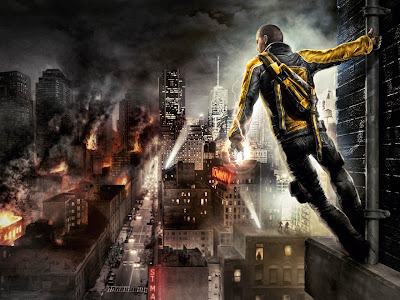
Speaking of Prototype, I snagged that plus Prototype 2 on the Steam Sale and got a few hours in. It inspired me to also resume playing more of InFamous, to contrast the two. Both are very decent games, worth playing, and I'll talk more about them in weeks to come, thanks to my newfound fascination for the wacky world of Open-City Sandbox/Theme Park GTA-clone titles. Prototype is especially interesting because it is best summed up as, "You start the game playing as the end boss from a Resident Evil title." InFamous has an interest good/evil moral quandry mechanic, which means you can be a suitably villainous menace or a misunderstood hero, depending on how you play your cards. Many of the quandries are sufficiently nuanced that it is actually easy to see why choosing the villain path might be smarter, if not kinder, which is interesting.
You know what the biggest threat to the next generation of consoles is right now? It's the last generation of consoles.....at least it will be, for the first couple of years. There were so many amazing and well done titles released over the last seven years that it's impossible to to have kept up for most people, and for gamers who aren't obsessed with the new and shiny (and I would postulate that most of the aging gamer base eventually become more concerned with games they can enjoy on a decent time:money ratio, as opposed to whatever is brand new) being able to pick from such an amazing selection of discounted titles is a real boon.
This is why the Xbox One and PS4 aren't offering backwards compatibility....they know their greatest enemy out the gates is everything that has come before.
I'll try to have more content out this week....been blogging about video games a lot lately, but I concede that my focus lately has been on gaming and also catching up on reading (especially some Wade Davis books I have been enjoying). I really should do some more book reviews soon, and maybe put more of an effort into blogging about all the interesting stuff going on in archaeology and anthropology in general. There are some blogs out there which I admire for their quality over quantity approach; maybe I'll try focusing on fewer but more substantive blog entries....we shall see!

I did, however, play a lot of Saints Row the Third, and actually finished all the story arcs and primary campaigns. I got to about 78% completion, with only a smattering of the miscellaneous missions and challenges incomplete. All in all I got about 45 hours out of the game, which was not bad. The storyline remained as crazy as one could expect right to the end, albeit with the caveat that SR4 due out next month will top even the craziest storyline in SR3 right from the opening, a tradition now for this franchise, it seems.
After finishing SR3 I started a new campaign on hardcore mode with a male character using the gravelly Statham voice option (as my wife puts it) to see if playing a second gender made a replay worth trying. Aside from the entertainment value of seeing and hearing a dude go through everything it appears to be an identical experience, but the visceral enjoyment of replaying the game is pretty strong, stronger than many other recent titles I completed (i.e. Diablo III, Max Payne 3 and Star Trek, to name the last games I completed). There's also an advantage to replaying SR3 in hardcore mode, too: it's a tougher challenge, but I know that the accrual of reputation (leveling) and accompanying perks will lead to game-changing superiority over time, and this might make for a more challenging experience with a greater sense of reward when those really amazing perks start being acquired.
A week or two ago I pitched an idea about using SR3 as inspiration for a supervillain campaign, maybe powered by Mutants & Masterminds. As it turns out, one of the final missions for SR3 actually ends up giving you a range of superpowers, with which you proceed to trash Steelport. It was a great deal of fun, and a hint of things to come in SR4 if some of the trailers are anything to go by. Apparently Volition toyed with the idea in this once DLC pack (the one with Clone Gat) and realized that there was a great deal of additional potential by elaborating on it. I'll be curious to see if SR4 makes it a more integral portion of the game, or restrains it to a specific set of missions. In SR3 it's a temporary effect that lasts for an hour or less (more use burns it out). They could do something similar in SR4, but make it possible to purchase or find more doses, I imagine. One of the trailers shows Gat running up a building, though...Prototype style....so maybe they'll expand on the power options, too.

Speaking of Prototype, I snagged that plus Prototype 2 on the Steam Sale and got a few hours in. It inspired me to also resume playing more of InFamous, to contrast the two. Both are very decent games, worth playing, and I'll talk more about them in weeks to come, thanks to my newfound fascination for the wacky world of Open-City Sandbox/Theme Park GTA-clone titles. Prototype is especially interesting because it is best summed up as, "You start the game playing as the end boss from a Resident Evil title." InFamous has an interest good/evil moral quandry mechanic, which means you can be a suitably villainous menace or a misunderstood hero, depending on how you play your cards. Many of the quandries are sufficiently nuanced that it is actually easy to see why choosing the villain path might be smarter, if not kinder, which is interesting.

You know what the biggest threat to the next generation of consoles is right now? It's the last generation of consoles.....at least it will be, for the first couple of years. There were so many amazing and well done titles released over the last seven years that it's impossible to to have kept up for most people, and for gamers who aren't obsessed with the new and shiny (and I would postulate that most of the aging gamer base eventually become more concerned with games they can enjoy on a decent time:money ratio, as opposed to whatever is brand new) being able to pick from such an amazing selection of discounted titles is a real boon.
This is why the Xbox One and PS4 aren't offering backwards compatibility....they know their greatest enemy out the gates is everything that has come before.
I'll try to have more content out this week....been blogging about video games a lot lately, but I concede that my focus lately has been on gaming and also catching up on reading (especially some Wade Davis books I have been enjoying). I really should do some more book reviews soon, and maybe put more of an effort into blogging about all the interesting stuff going on in archaeology and anthropology in general. There are some blogs out there which I admire for their quality over quantity approach; maybe I'll try focusing on fewer but more substantive blog entries....we shall see!
Monday, July 22, 2013
Steam Summer Sale After Action Report: Sleeping Dogs, Van Helsing and Borderlands 2
The Steam Sale ends today, and with it I came away with a few gems worth mentioning...
The Incredible Adventures of Van Helsing
Just as I was getting ready to fire up Diablo III again to see if the itch I had for an isometric ARPG could be scratched by repeating the D3 content one more time, The Incredible Adventures of Van Helsing comes along and says, "We know what you like best about Torchlight II and Diablo III, and we have merged it all into an unholy concoction of villainous joy, right here! Also, offline and co-op play.Seriously, check us out." It was a chatty game.
Either way, it's also a very good game, and it really does fill a much-needed post-D3, post-Torchlight era niche that has been largely vacant since those two games came out and demonstrated that the era of the ARPG is far from over.
Van Helsing is very polished, at least as I've seen so far. It's graphics are crisp. The voice-overs are well-done, the plot is well-presented and sometimes takes a moment to slyly wink at the fourth wall of computer games, and it is just generally feels good, something that a surprising number of ARPGs fail miserably at.
Bottom line....if you've been jonesing for an ARPG experience that riffs off of what the Big Two have done, and manages to blaze its own trail in the process, then you should check it out.

Sleeping Dogs
In fair disclosure I owned the core Sleeping Dogs title prior to the Steam Sale, albeit purchased from an older Steam Sale. What I hadn't done until now was play much more than the main intro/prologue sequence and then set this one aside for other more pressing games. When I recently realized that I really enjoyed Saints Row 3 for its bizarreness, I also recognized that the vast open-world (open city?) zones of SR3 were actually a big component of the draw. It was then that I remembered I had a few other games that did the same thing, and after downloading those games I realized most of them were either too old and crusty or too obnoxious (never liked the GTA style) to enjoy....but Sleeping Dogs was an exception.
I took advantage of the Steam Summer Sale to snag all the DLC for Sleeping Dogs, which includes a range of additional suits, scenarios and content for this bizarre and fun romp through a Chinese Metropolis, a setting which has been loving crafted in great detail....the city of Sleeping Dogs is so well done, in fact, that I've enjoyed just wandering around to see the sights and explore. It's really very impressive. The fact that it has a compelling and very well acted principle storyline, mixed with a metric ton of amusing side quests is just icing on the cake. The main character is an undercover cop, which means you can play the game with the safe sense that you can become a vile bastard if you wish, but you're not starting off as one.
If you like the concept of an open-world exploration/sand box GTA title, but wanted it to have a more exotic location than Liberty City and a more empathetic character than some cheap con, Sleeping Dogs is for you. It even has some trippy alternative costumes, nods to Hong Kong cinema and wushia action, and an occasional wacko scenario that almost makes Sleeping Dogs as bizarre as SR3 at times. Almost.

Borderlands 2
I began to suspect that Borderlands 2 had something more to offer than its predecessor when my wife, a largely MMO-only enthusiast, kept playing it. She's been playing B2 on and off now since it came out last year, actually. Obessively, even. And even more amazingly, her other MMO cohorts all join her regularly for their crazy romps through the landscapes of Pandora. My wife bought B2 for me last week during the sale, and I subsequently snagged all the DLC (the only time it makes sense to buy DLC: Steam Sales).
I have played a few hours now, and can state the following: if you, like me, had various issues with the original Borderlands, those issues are all resolved in B2. My issues with the prior game included: great lead in, followed by unfulfilled promises of and sort of meaningful or engaging story and characters and a general annoyance at the vast array of completely random guns. I had other issues, but those two were what made it less satisfying to finish the game for me. B2 immediately demonstrates more attention and effort to story, doing a great job of punching it up, a lot. Likewise, it's got a reinvented inventory system that at least makes figuring out what gun is worth your time a bit easier. Will it sustain through other gripes I had? Time will tell, but those two fixes right there are making B2 an immensely more entertaining experience already.
Also, if you (like me) couldn't muster the energy to finish the original, be assured that while this is a direct sequel, it focuses on new characters and so far I have found nothing which suggested I should have survived through the end of the first game to understand the second at all. In fact based on what I've read, the original Borderlands had a pretty basic and uninteresting ending (spoilerish alert: they find the vault, open it, and a tentacle monster comes out, the end). B2 starts some time after that, but then adds lots of new reveals that would never have been seen in the threadbare storyline of the original.

The Incredible Adventures of Van Helsing
Just as I was getting ready to fire up Diablo III again to see if the itch I had for an isometric ARPG could be scratched by repeating the D3 content one more time, The Incredible Adventures of Van Helsing comes along and says, "We know what you like best about Torchlight II and Diablo III, and we have merged it all into an unholy concoction of villainous joy, right here! Also, offline and co-op play.Seriously, check us out." It was a chatty game.
Either way, it's also a very good game, and it really does fill a much-needed post-D3, post-Torchlight era niche that has been largely vacant since those two games came out and demonstrated that the era of the ARPG is far from over.
Van Helsing is very polished, at least as I've seen so far. It's graphics are crisp. The voice-overs are well-done, the plot is well-presented and sometimes takes a moment to slyly wink at the fourth wall of computer games, and it is just generally feels good, something that a surprising number of ARPGs fail miserably at.
Bottom line....if you've been jonesing for an ARPG experience that riffs off of what the Big Two have done, and manages to blaze its own trail in the process, then you should check it out.

Sleeping Dogs
In fair disclosure I owned the core Sleeping Dogs title prior to the Steam Sale, albeit purchased from an older Steam Sale. What I hadn't done until now was play much more than the main intro/prologue sequence and then set this one aside for other more pressing games. When I recently realized that I really enjoyed Saints Row 3 for its bizarreness, I also recognized that the vast open-world (open city?) zones of SR3 were actually a big component of the draw. It was then that I remembered I had a few other games that did the same thing, and after downloading those games I realized most of them were either too old and crusty or too obnoxious (never liked the GTA style) to enjoy....but Sleeping Dogs was an exception.
I took advantage of the Steam Summer Sale to snag all the DLC for Sleeping Dogs, which includes a range of additional suits, scenarios and content for this bizarre and fun romp through a Chinese Metropolis, a setting which has been loving crafted in great detail....the city of Sleeping Dogs is so well done, in fact, that I've enjoyed just wandering around to see the sights and explore. It's really very impressive. The fact that it has a compelling and very well acted principle storyline, mixed with a metric ton of amusing side quests is just icing on the cake. The main character is an undercover cop, which means you can play the game with the safe sense that you can become a vile bastard if you wish, but you're not starting off as one.
If you like the concept of an open-world exploration/sand box GTA title, but wanted it to have a more exotic location than Liberty City and a more empathetic character than some cheap con, Sleeping Dogs is for you. It even has some trippy alternative costumes, nods to Hong Kong cinema and wushia action, and an occasional wacko scenario that almost makes Sleeping Dogs as bizarre as SR3 at times. Almost.

Borderlands 2
I began to suspect that Borderlands 2 had something more to offer than its predecessor when my wife, a largely MMO-only enthusiast, kept playing it. She's been playing B2 on and off now since it came out last year, actually. Obessively, even. And even more amazingly, her other MMO cohorts all join her regularly for their crazy romps through the landscapes of Pandora. My wife bought B2 for me last week during the sale, and I subsequently snagged all the DLC (the only time it makes sense to buy DLC: Steam Sales).
I have played a few hours now, and can state the following: if you, like me, had various issues with the original Borderlands, those issues are all resolved in B2. My issues with the prior game included: great lead in, followed by unfulfilled promises of and sort of meaningful or engaging story and characters and a general annoyance at the vast array of completely random guns. I had other issues, but those two were what made it less satisfying to finish the game for me. B2 immediately demonstrates more attention and effort to story, doing a great job of punching it up, a lot. Likewise, it's got a reinvented inventory system that at least makes figuring out what gun is worth your time a bit easier. Will it sustain through other gripes I had? Time will tell, but those two fixes right there are making B2 an immensely more entertaining experience already.
Also, if you (like me) couldn't muster the energy to finish the original, be assured that while this is a direct sequel, it focuses on new characters and so far I have found nothing which suggested I should have survived through the end of the first game to understand the second at all. In fact based on what I've read, the original Borderlands had a pretty basic and uninteresting ending (spoilerish alert: they find the vault, open it, and a tentacle monster comes out, the end). B2 starts some time after that, but then adds lots of new reveals that would never have been seen in the threadbare storyline of the original.

Subscribe to:
Posts (Atom)