Showing posts with label 1st edition. Show all posts
Tuesday, May 12, 2020
Gamma World in Roll20
While poking around Roll20 to see what it can do, I noticed that among the many games with some form of character sheet support that there was one in particular of note: classic 1st edition Gamma World has a Roll20 character sheet someone devised. Even better, it's a nice character sheet, with hot buttons for figuring out artifacts, rolling for mutations, fun stuff like that. I think it could use some hot buttons for die rolls, but all told....it got me thinking.
Over the last two months, one of the first things I did with Roll20 was create a test environment "home game" to experiment with features. Early on I had my wife and son log on to help me figure out audio, character sheets, stuff like that. I used D&D 5E for this and was fairly impressed with the charactermancer (Roll20's official name for the D&D PC sheet) and the free OGL-tied content on offer. Although we have not as yet advanced with that for a real game, it laid the groundwork for the ongoing weekly Pathfinder and Cypher System games I am running.
Lately my son has expressed an interest in playing so I decided to revisit the idea. Here's how the train of thought on my end went:
1. I can run D&D 5E. But, I don't have the D&D books unlocked and they are kind of expensive purchases for what could be a one-off or possibly very short run on Roll20 if we can all game in person. Also, why doesn't Roll20 have the Dungeon Master's Guide as a compendium option? What madness is that???
2. Also....I am really enmeshed in Pathfinder 2nd edition, maybe I could try that? Even better, I could try running Pathfinder 2E with the Gamemastery Guide's optional Proficiencies without Levels rules, which would dramatically flatten the math for my son on most rolls.
3. Okay, so Pathfinder 2E character sheets are INSANE and I am impressed my players have figured them out. I get it....it's very thorough and works well....but it takes a lot of effort for the initial setup and I don't have that kind of time. If I don't have that kind of time then my son will not benefit from this at all. Plus, it looks like the proficiency+level is baked in to the sheet in such a manner I'd have to edit the code to remove it and I haven't got time to figure out how to do that.
4. So if D&D 5E will work but maybe not optimally, and Pathfinder 2E is too painful to set up for a young new gamer (note: doing this in paper and person would be much easier as I see it, but my son is enamored with the "video game" element of Roll20 so I'm leaning in to that) then what other options are there? Cypher System is an obvious choice, but I feel like exploring other options.
....and that's how I discovered that Gamma World and many other OSR titles have various levels of representation on the Roll20 Charactermancer. Gamma World in particular stuck out because it's the game that got me into RPGs in the first place. Although my father purchased the D&D Basic set for me a few weeks prior, I picked up Gamma World myself at around age 10 and proceeded to run it for my sister and some friends (we were all kids traveling around with our artist parents). For various reasons it resonated well; I think it helped a lot that I had just finished reading Starship and Hothouse by Brian Aldiss, as well as Piers Anthony's Battle Circle series, so I had a firm literary foundation for what Gamma World was about. Within hours of getting the boxed set I had found a map of the Hilton Hotel we were staying at on one of my parents' many art show events in Albuquerque and I was running a post-apocalyptic exploration of the region. That first group ended in a TPK when they wandered afar and found a nuclear missile silo which they promptly detonated. It was the time of the Cold War and I was regularly obsessed with the persistent risk of the end of the world; Gamma World fit well with these worries I had as a kid.
So here I am now, with Gamma World's reprint in my hands from Drivethrurpg, contemplating a game for the family. My son is the same age my sister was back then, and his interest in the thematics seems to be obsessively strong; he's not nearly as interested in fantasy as a genre so much as post-apocalyptic sci-fi and superheroes (not just any superheroes, either; he's primarily about the Flash, Venom and Spider-Man). So a game set in the apocalyptic wasteland featuring mutants might be right up his alley. Bonus since we're in the thick of an ongoing pandemic that is just deadly enough to disrupt the planet while not being deadly enough for us to feel like it's a genuine existential threat (yet; TBD).
Anyway....another perk is that there are a fair number of map packs out there for modern and apocalyptic settings, and scouring the internet brought be a veritable trove of wasteland and Gamma World specific images to be used as props in a Roll20 game. This aspect of Roll20 is great, really....when I do go back to tabletop gaming, I will miss the ability to quickly share images and maps with the players; I may be temped to continue using it even if we are all in person just for that purpose, to be honest. Heck, if the pandemic continues long enough I could, gee, maybe even get used to Roll20 as the norm or something. Maybe. But....man, I miss sitting at a table with live humans and rolling dice!
Anyway....the environment for the first game is fully prepped and ready. I'm setting it in New Mexico (easy fit, and a tradition) and will integrate the Albuquerque Starport module from the GM Screen. I may approach my regulars and see if any want to play, too. At least one of my friends may have to be reassured that I will houserule some less onerous poison damage tables into play....he was famous back in the day for immediately dying due to intense lethal poison/toxin exposure....!
Monday, November 19, 2012
Blowing the Dust off of Second Edition AD&D
![]() |
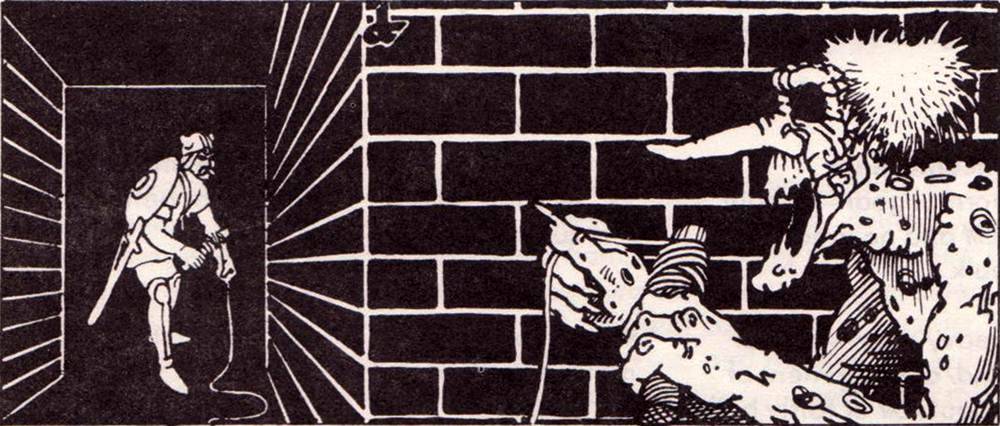
| In the days before Perception was a skill |
So my two sessions so far of the creeping AD&D 1st edition game have been fun, but the lengthy period of time between games is a real killer for the sort of plotline/sandbox thing I originally set out to do. By session two trying to keep track of who had what plot, who was interested in which potential quest or point of exploration and so forth was a muddy pit of confusion, as too many older gamers with poor memories equals disaster when it comes to consistency (I kid! Mostly it was my own lack of focus thanks to too much going on between games to even think about game scenarios or plots). So the game was retooled on the spot to focus on a core plot instead and migrated everyone in classic fashion through what I call AD&D's archetypal Roadtrip from Hell event (aka wilderness journey), involving boat rides, an owlbear and a large array of goblins using a giant stag beetle as a heavy assault beast. It ended with the discovery of a lost temple entrance, and enough suspicion pointing toward its doors as the solution to their problems.
Playing with 1st edition is a reminder to me of many, many things. Not least of these is that its reminding me that I used a lot of houserules, borrowed liberally when in doubt from B/X D&D, and that I don't think I ever applied the surprise, initiative and general combat rules as written in the DMG, relying instead on the outline of combat in Basic D&D and jumping to the DMG for the charts (and eventually using the Armor Class Wheel published in Dragon magazine).
It has also reminded me of just how quaint and amusing (and infuriating when running the game) the obscure wargame inches & rulers measurement system is. There are a huge number of little annoying bits like this that riddle the system (ascertaining encumbrance last session was another momentary headache). It's easy to see why Classic Original D&D tends to get the most love in the OSR community; it really is a simpler, more intuitive approach to the same basic game, and B/X D&D clearly owed much to the Holmes remastering from which they later were adapted (as best I can tell; keep in mind I got into the hobby October 1980, and I was nine years old, so some of the publication history of the game is something I learned about later on).
In any case, one thing has become clear: every moment with 1E that has been annoying me, or led to rules confusion or clarification, or otherwise caused a head-scratching moment is also an element which would be crystal-clear to me if I was running 2nd edition. 2E is, for me, the edition which I know best, the one where I still remember which page to flip through for whatever specific rule it is I need to reference....it's the edition that sits smack dab in my "comfort zone" of old games.
I plan to let everyone know next session (which won't at this rate be until December 8th) that I'll be bringing my 2nd edition books along, as it took about two games of AD&D 1E to remind me of why I stopped running it around 1985 (switching to T&T, Runequest and Palladium) and didn't come back until the game had been formally revised; and even then only because my college group begged me to consider AD&D 2nd edition after I'd subjected them to several months of Dragonquest and Runequest. Hah!
That first game I ran of AD&D 2nd edition, using the heinously bad idea that was the Monstrous Compendium folio along with the new DMG and PHB was glorious. It involved an old farmstead that was abandoned, giant rats, some angry kobolds, a friendly and obnoxious pixie named Percy and an amassing horde of orcs and hobgoblins that the players realized was a threat to the local town. It cascaded rapidly into one of the coolest campaigns I'd ever run in AD&D.
![]() |
| Meat snacks! |
But I've complained about this before! I have lots of fond memories of AD&D 1st edition....but I just can't go back, it turns out. Hopefully my mess of players will understand. It's either that, or I find a copy of B/X D&D and try running AD&D 1E the way I actually did back in the day, as a hybrid mess of the two.
In any case, those 2nd edition reprint listings that popped up on Amazon are a good sign to me that WotC knows people like me are out there, those who were part of the crowd which embraced 2nd edition AD&D, and that we are all more than happy to shell a bit out on some shiny new copies of our favorite edition. I certainly hope that's how it works out...
![]() |
| Hopefully with a different cover! |
Tuesday, September 18, 2012
So much for the Revolution!
Well I am happy to have the 3.5 books again and while I'd like to us them, it looks like (as I expected) doing so will be tantamount to my getting into dentistry and pulling teeth in a matter of weeks. Maybe further down the road....but Pathfinder has its fangs very, very deep.
4E interest still percolates among some players, but not enough in any one spot at the same time for group consistency. While I managed to get a legitimate 4E game started two weeks ago it has already led to a quiet rebellion...or at least a decision this week to switch to low-level Pathfinder. My concession is I'll keep running the campaign I intended (which is a return to Chirak after a lengthy absence) although if I had my way I'd be running straight 3.5 or 1E, just so I could enjoy the fancy new books and keep the game under a D&D title. all me a brand whore, but I kinda like the idea of playing legitimate, official D&D. Heh. Hell, I'd be happy to stick with 4E even though I know it would be once more a count-down to when I grew frustrated with the limited board/minis scope of the system.
Well, the blog serves one great purpose if no other: its a vessel for me to write about the games I like but hardly ever get to play! So expect more 1st edition stuff as time permits. Maybe even more 3.5 analysis. We shall see...
On an unrelated note, I have spent the last couple days trying to play The Secret World. They have an option for recurring payments through paypal, which is good, because I had a bad experience with a credit card setup with Funcom on Age of Conan long ago, and didn't want to repeat that. Well, despite being set up for reasons unknown I couldn't log on. When I went to check my account it said the payment wasn't processed and needed my action to confirm it. Still didn't work. A customer service on their live chat (it was nice that they had live chat) said it could take two days to process paypal payments. I went over to paypal, and they showed that I had Funcom all set to pay monthly and that the only thing missing was the actual payment. I gave it a while, then in frustration decided this was yet another warning flag with Funcom, just like the Age of Conan incident a while back where I ended up massively overcharged after a long wait to get a sub going, and cancelled the recurring payment option through paypal.
I want to play your games, Funcom, so why won't you meet me halfway? I wanted to give you my money, but you wouldn't take it. I guess I might just wait until The Secret World goes free to play after all...
Friday, September 7, 2012
AD&D vs. 4E

I started a new 4th edition campaign for Wednesday nights (first session should be done and over by the time this sees print) after a year's absence. After three Pathfinder campaigns all reaching high level play, with two of the three now effectively concluded, I am ready for 4E again. I have been reminded of what I liked about 4E and what it did to repair or fix issues with 3rd. I'm also ready to play 1st edition again, and even 3.5, but more on that later! For now let's just say I've had an epiphany that I happen to really like each edition on their own individual merits, and find it very hard now to play favorites.
As I am also busy reading AD&D again, its impossible not to compare where 1st and 4th edition are philosophically and ideologically different, as well as where they are occasionally united. I'm one of very few people out there who feel that 4E was a good spiritual successor to classic D&D, and as I read through the AD&D tomes I can see both why I feel that way and also see compelling reasons for why so many find them to be diametrically opposed. Anyway, I'll have to give it some thought, starting here and with more to come.
A few minor observations so far about points where the two editions diverge wildly:
1. AD&D was very much opposed to experimentation with non-human races (while still leaving such decisions to the DM). 4E embraces this and empowers and encourages the player to experiment (while also discouraging the DM from limiting race options).
2. AD&D focused tightly on keeping the mechanics on the DM's side of the screen as much as possible, to the extent that no single rulebook gives you the whole story (PHB vs. DMG). 4E is the opposite, placing a great deal of mechanical control in the player's hands. The DMG provides building tools and advice, but doesn't contain any play mechanics (to be fair it's been this way since 2nd edition).
3. AD&D has a lot of randomization and probability at play. 4E is generally focused on precision and a design that encourages specificity; encounters are built, items are chosen according to what works best for the players and not randomly (for the most part), and so forth.
4. AD&D's randomization can lead to swingy characters; you can theoretically roll up an amazing PC, get lucky and gain psionics, and get even luckier with high hit points. 4E contrasts with precision in numbers: you rarely have uncertainty in the values of what you're about to attain. In exchange, however, the system practically guarantees a decent character...effectiveness is baked into the rules.
Now, to be fair 4th edition can support (and even offers rules for) some randomization, as during its development cycle it became clear that many people wanted an element of chance in the game. You can still roll for stats, you can use randomized treasure parcels, and you can build wandering monster tables in 4E just fine (and the rules provide for it). However, 4E's nature by design encourages structure within those random limits: your character's random stats can be re-rolled if they fail to meet certain minimums, treasure parcel rolls still lead to item selections within level and party appropriate suggestions, and wandering monster charts are more complicated in 4E if only because the rules assume you will try and build challenge-level appropriate random encounters. You don't have to by any stretch, but the game's focus on scaling means a more holistic old-school approach can lead to some messy TPKs (or even worse, prolonged battles of attrition).
You can also view player vs. DM agency in 4E as being about "the DM is in control" but with the caveat that, "the rules provide for all, and are meant to be understood by all." In contrast to AD&D this is remarkably different. I think 4E (and 5E when it arrives) are by virtue of D&D's ubiquity in today's gaming culture forced to adopt this posture, because players and DMs alike are all too savvy, too familiar with the mechanics and structure of RPGs today. AD&D was unique in its power to separate player understanding from DM control, because back then the hobby was young and many, many people played the game straight up and without a good understanding of what was going on behind the DM screen.
I like to always drag out Call of Cthulhu as my example of a game that has fundamentally changed over time not due to edition changes (as it has changed little over six editions) but because everyone is either familiar with it or has read Hello Kitty meets Cthulhu. Or, to put it another way, in 1983 when I discovered Call of Cthulhu I could run games that shocked and surprised my middle school cohorts. Even in 1990-1995 in college it was possible to do this. Today, it's actually kind of difficult to find people willing to play CoC who haven't either drunk from the Lovecraft firehose or who think they know what Cthulhu is because they shopped at Shanna Logic once or played CthulhuTech.
So put another way, D&D's current editions can't separate "what the DM knows and controls" from "what the player does and knows" anymore...or at least not easily, and not in a "forbidden knowledge" way like AD&D did it.
The 4E conundrum in item 1 mentioned earlier is an interesting one, and I want to talk about more at length in the next column, but I'll put it this way:
AD&D has expectations for what it's world looks like (which is very Tolkienish, even if Gary doesn't like to admit it in the text). A great deal of work goes into enforcing why this should be so, and the discussion of alternative player races pulls out my favorite straw man argument (player who wants to play a dragon or demon) to suggest that no player wants to be a monster for purposes other than power. It says a lot more about Gary's games and players, I think, as well as the notion of power gaming back in the late seventies than it does about role playing games and D&D as it was shaping out to be. But beyond that Gary does aknowledge that some players may just be experimental, and wraps up with a "it's your table, you decide" approach.
Cut forward to 2008ish and 4E arrives, acknowledging the endcap of what's been going on since Unearthed Arcana in the 1st edition era, the Complete Humanoids Handbook during 2nd edition, Savage Species in 3rd edition and is more or less baked in to the PHBs in 4th edition: players like playing weird things. 4E's philosophy of "a universe where all races are permitted" is a flaw, however, which vexes DMs aiming for specific flavor. But that's another issue entirely.
What's interesting about 4E is that it allows for a range of races, which on the surface seems contradictory to AD&D's premise of "don't let them do it," but that's only half the story. AD&D's actual suggestion is more correctly, "Don't let them do it to be power gamers, but if you've got players who are genuinely curious about running creature X feel free to let them do so and see how it feels for your game." Which is actually exactly what 4E does, ironically. And in fact 4E designs race building in a fashion that both encourages experimentation and prohibits power gaming by design. So...maybe #1 is out the door, after all...
Then again...
My latest 4E campaign has the following lineup: a gnome artificer, shadar-kai spellsinger, shardmind blackguard, dragonborn hybrid paladin/sorcerer, dwarf runepriest, and satyr skald. Not one human among them. I was joking with the group that the only plot lead-in I needed was "the circus has come to town."
It's not hard, I suppose, to imagine why some people might look at their 1E AD&D experience, contrast it with the average 4E experience, and find it difficult to draw comparisons!
Thursday, September 6, 2012
Advanced Warlords of Lingusia: Golmadras
Starting today and evolving for as long as I have energy, I'm going to start presenting a detailed adaptation of my Warlords of Lingusia campaign setting for use with Advanced Dungeons & Dragons, or any other suitable OSR system of choice. With the print editions of AD&D back out, I feel like one can safely say, "This is intended for use with AD&D" without beating around the bush!
For the first installment, I present the dark kingdom of Golmadras (as you may have guessed I have a thing for treacherous kingdoms laden with sorcery). I'll provide a map and overview here, and in the next several installments will elaborate on each location in greater detail, including stats and data to run it with AD&D.
Golmadras
Capitol City: Eramis
King: Emperor Aruzan Damar (no wife taken yet)
Allies: Saddikar, Al’Jhira, Naminthia, Caratea
Enemies: Etrurias, Octzel, Hyrkania, Sendral
Racial Mix: Most Golmadrans are human, but there is a disproportionately high
mix of surface-dwelling ashtarth dark elves in the region, as well as goblins
and hobgoblins, who are more socially accepted here than elsewhere due to their
loyalty to the emperor. Silver elves who did not abandon the old elvish kingdom
still dwell in Golmadras, either in hidden enclaves of the deep wood or as
lower-class servants of the human kingdom (a few high elves have retained
prominent station in Golmadras as those clans which backed the invaders). A
small but distinct population of sylenic Halflings moved into the coastal
regions of southern Golmadras about two centuries ago, and have been tolerated
ever since.
A thousand years ago the ancestors of the
modern Golmadrans were a mix of southern people, from the kingdoms of Karaktu.
The proud and mysterious Argoseans with their dark sorcerer kings, the nomads
of the great savannah plains, the dark elf exiles of Yenetai, the amazon
warriors of Laibros, and the warrior-merchants of Shillarth. Karaktu had been
extant in the world for as long as the Middle Kingdoms, and had evolved with
its own parallel purpose and history to the rest of the world. Then the Deluge
brought destruction.
Golmadran lore tells of how the rabble of
old Argosea rose up against the sorcerer king, deceived in to believing he was
a false god by mad prophets who claimed the Deluge was brought on by the
emperor’s hubris. Amidst the time of flooding a civil war broke out. After
several years of intense conflict the Emperor and his closest followers
abandoned the field, and took the faithful across the Argosean Sea to settle a
new land, leaving the old kingdoms to be swallowed by the rising waters of the
Deluge. Thus did the exiles of Argosea come to the shores of Sylvias in the
north, as they willingly went in to exile with a hundred ships and ten thousand
loyal soldiers and their families; or so the official history books claim.
The sorcerer-king Aregas Damar was
charismatic, but the elves could offer only temporary assistance. It was when
Aregas discovered the age-old feud with the ashtarth dark elves of Modra that
he realized he could turn the conflict to his advantage. Offering quiet support
to Modra and the goblins of Eldrannor, Aregas backed them in a decisive and
vicious coup, using his own army against the elves to sieze their coastal
cities and ultimately lead the battle inland. Through clever manipulation he
gained the trust of the Hyrkanians of Old Blackholm and Hyrendan, and in a
matter of less than thirty years Sylvias was in his control. It was a bloody
conflict, and the Suetheinurien elves were scattered.
Elvish stories of this period are muddied by
poor recordings of the time, though the high elves are quick to assert that the
refugees, under rulership of King Aregas Damar, betrayed the elves within but a
few years, siding quickly with the scheming dark elves, forging an alliance to seize
the land. Unaccustomed to betrayal of such magnitude, the high elves quickly
fell and were driven back. Only a few remained as slaves at first, though they
would later embrace the new order. Such was the time that the elves became a
diaspora, spread throughout Lingusia, as they sought a new way of life and a
new home.
The new lord of the land, Damar proclaimed
himself emperor reborn and renamed the lands as Golmadras, which meant the Final Lands in Argosean. Later on he
declared himself god-emperor as well, suggesting that he was immortal and all
his descendants would be as well. He established a state-sponsored church of
worship for himself, though he openly permitted the reverence of the ashtarth
demon gods, so long as they were regarded as inferior to his own divinity. The
ashtrarth chafed at this, and there was a brief civil war, before those who
preferred to enjoy the benefits of cooperation accepted the new laws Damar had
decreed.
More mysteriously, Damar advocated worship
of the “true divinities.” These gods were ones almost no one had ever heard of:
the Shadow Pantheon of Unarak, Phaedra, Eskandar, Zelkarod, Amadan and Yagatas.
The cults of these gods were slow to start, and the mysterious nature of these
largely unknown gods left many openly confused about the emperor’s embrace of
this enigmatic faith. Nonetheless worship began, forced by the demands of the
new empire.
Eventually Damar perished, though he was two
more centuries in to his rule when he was assassinated. His longevity was taken
as proof of his divinity by most, and the children he sired were clearly
immortal (or long lived) as well. He was at last slain by his own kin, and his
son, Garanus Damar, rose to take his place, declaring that his father had been
released from his mortal shell to ascend to the planar realms, where he would
unlock the mysteries of the cosmos.
Unknown to most, the Damar family had been
given immortality by a select few: Unarak and his Shadow Pantheon. During the
flight of the refugees, the shadow god had approach Damar and offered him the
secret of immortality, in exchange for undying subservience. The intent, it
seemed, was for the shadow gods to establish a firm foothold of worship in the
mortal plane, to at last seek out true worshippers.
The real test of power for the gods of the
Golmadrans came during the Plague of Unarak. The hordes of undead somehow never
struck the lands of Golmadras, which became a bastion of safety as refugees
from many lands traveled to seek out the safety of the kingdom, to embrace the
Shadow Gods as their own.
Over the centuries Golmadras has grown
strong, and the once great woodlands of Sylvias have been turned to the use of
the growing empire. The current lord of Golmadras is Aruzan Damar, who
proclaimed himself the new god-emperor, not merely of Golmadras but of the
whole world. Many believe he is even more megalomaniacal than his ancestor.
Luckily he appears not to have a sense of strategy, for military engagements
against his neighbors have proved unsuccessful.
Aruzan Damar is quite insane, but extremely
powerful. As a living descendant of the Argosean sorcerer kings imbued with the
secrets of Prehunate longevity, he seems to excel in sorcery. Damar would like
to attain control over all of the Middle Kingdoms, but he has enough trouble
keeping his empire united as it is, and finds the Hyrkanians and Etrurians to
be more than a match, militarily. He feels that if he can just find true divine
power he will gain the necessary edge. Damar secretly reveres Xorion and
Dalroth, two principle deities of the old Chaos Pantheon, consulting them for
advice via the oracles of Mount Seriphar, a fact which he keeps from most so as
to avoid incurring the wrath of the Shadow Pantheon.
Today
Golmadras is a strict empire; a totalitarian regime which denies recognition to
rival kingdoms and religions within its boundaries. It is comfortable to those
who believe firmly that might makes right, and is a dangerous place in which to
live for those with dissenting thought. Its merchants are generally welcome in
many ports, but Golmadras tries hard to remain self-sufficient, a cultural mark
of the Argoseans from old.
Although bards love to tell stories about
how one day the elves will rise up to reclaim their forestlands, it is an
unfortunate fact that the long war of the elves between their darker kin had
taxed them severely, and the short invasion of refugees led to too many losses
for the elves to safely recover from. Elves can breed but once a century it is
said, and if so, then it may be many hundreds or even thousands of years before
they are strong enough to contest their homeland in the mortal plane once more.
Still, a handful of high elves and sylvan elves remain, quietly, in the dark woods
of Golmadras, seeking time and opportunity to strike against the invaders
whenever possible. These elves will never forgive the loss of their homeland,
and often do not even forgive the flight of so many of their kin to distant
lands, let alone the handful of “betrayer houses” which sided with the
Golmadran emperor so long ago.
Locations
in Golmadras
Eramis the Capitol
Eramis is the rough capitol of the land,
centered on a vast ziggurat-palace from which the god-emperor and his house
rules. It is a harsh city of blackened soot and vast urban sprawl, where
cruelty and violence seem to be normal, for suffering is regarded as the only
correct state of mind in the Golmadran religious state. The only open worship
permitted in this city is to the god-emperor himself and the Shadow Pantheon,
though worship of the ashtarth demon gods is permitted in their barrio
district.
Eramis is known for its cruetly and harsh
living conditions, but it remains the most popular trade port along the Iron
Gulf. Merchants from far and wide are welcome here, as the emperor long ago
relaxed all trade limits and tariffs to encourage growth. A side effect of this
influx of foreign merchants and goods is a brisk underground economy that
specializes in everything from illegal imports unattainable elsewhere to a
brisk but very dangerous trade in religious artifacts, iconography and texts
for those beliefs that are forbidden in the land.
Mount Seriphar
This vast lone mountain was once the
Oracular center of communion for the Silver Elves, but has long since been
turned in to a monastery and enclave for the oracles of lost Seriphar, those
ancient witches who advise the emperor in his schemes.
Anethar
This remote mountain fortress is located on
the remains of an even older elvish fortress, where it is rumored the emperor
likes to go as a vacationretreat. The mountains are being pillaged with deep
mining operations for previous metals, including mithril.
Golvad
Golvad is another bustling town, but this
time for being a center of pilgrimage, as it is nestled along the base of Mount
Seriphar.
Shelmadir
This coastal port along the Inner Sea is the
center of the Golmadran navy in that region, which is tantamount to saying “a
lot of pirates that work together.” Though they can put a huge number of ships
to sea, the Golmadrans seem unable to organize such fleets in a convincing
manner, insuring they are unable to do more than raid and pillage along the
coasts of their antagonistic neighbors.
Zulgoth
This coastal port is the center of the
southern navy and is much like its northern cousin, rife with pirates. Zulgoth
is also home to the largest demographic of nonhumans in the region, including
many survivor species from sunken Karaktu. It is ruled by the rakshasa Kadraen,
a good friend of the emperor’s, who lets Kadraen do as he will in his strange
city.
Ryvarin
This is the only occupied city to retain its
elvish name, and has a meaningful elvish population. The silver elves who dwell
here chose to be subjugated rather than leave their homeland, and they have
been persecuted heavily, treated as an underclass throughout Golmadras. The
city is ruled by the emperor’s favored concubine, Elatta Sectaraine, given rank
of governess and the will to do as see sees fit in a once holy elvish city now
turned in to a vast bastion of sin and debauchery.
Thylanalien
The woodland elves of Sylvias’s eastern
Eflin were not quite ready to leave their homeland. Located deep in the fey
woods of their mountain valley, Thylanalien stands strong. Several times now
have the Golmadrans climbed the nigh-uncrossable mountains to this deep wood,
and each time have they been destroyed by the sylvan elves. Some believe that
Thylanalien exists in the Weirding at the same time as the mortal plane, but
none know for sure. Unfortunately for the sylvan elves, the emperor has found
their resistance amusing, and he has declared their extermination a sport,
encouraging young warlords to seek his favor by forging armies to climb the
mountains and seek out the fabled sylvan city and raze it.
Wachalen
This eastern castle oversees the only safe
past between the Southern Hyrkanian deserts and Golmadras. It is fairly
nondescript, but has the usual sooty, burnt architecture so common among the Golmadrans,
and is usually fair warning to those approaching that the kingdom beyond is not
a pleasant place to journey for anything less than official business.
Ruins of Thystivianen
The vast ruins of Thystivianen are but one
of many lost elvish cities, though this one was laid to waste by the dark elves
themselves. The city contains the spectral remains of the old Tree of Life,
slain in battles long ago by the dark elves, though it is said that the young
god Poltrietie grew from the last of the sacred seeds of life from this tree.
To this day the haunted ruins are occupied
by diverse factions of dark elves, goblins, naga, trolls, orcs and other beings
seeking to inhabit them, while Golmadran treasure hunters try to find lost
elvish treasure and occasional parties of vengeful silver and wood elves will
arrive to slaughter the defilers as best they can.
Modra
The dark elves of the old war who sued for
peace and allegiance to the emperor continue to dwell here, in a city both
above and beneath the forest, named for its greatest leader, the dark queen
Modra who had the vision to imagine the ashtarth rightfully retaking the sacred
elvish homelands for their own. Though the ashtarth of Modra seem content,
there is to this day much discord among the dark elves, envious that the
Golmadrans so effectively invaded and expelled the silver elves, yet they seem
to treat their dark elf allies like barely tolerated second class citizens.
Kalevarsh
Deep in the heart of Golmadras is said to have been an ancient
subterranean realm, where the last of the old elvish knights sought to destroy
the goblin kings of old during the era of the Early Empires. The goblin kingdom
was called Kalevarsh. Little is known of this subterranean realm, but it holds
a nearly mythic quality to the goblins of Skazdras.
Urnaman
This relatively nondescript port is home to
a large population of Yenatai draconian, the weredragons of mixed dark elf and
dragon blood.
Aldromos
This port city is largely
independent of immediate Golmadran influence, and is rife with Etrurian
influence as well. It is notorious for being an open port to all, including
pirates.
Eldrannor Hills
These ancient fey hills
are overrun by goblinoid tribes who thrive in the region, occasionally growing
so quickly that neighboring cities must call for a periodic culling, which
turns in to a minor war between humans and goblins for a time, until the beasts
are driven once more deep in to the earth.
The Bleakwoods and the Goblin Swamps
This vast track of
western land beyond the Great River of Light (which bisects the western and
eastern dominion of Golmadras) is rife with monsters, especially the dozens of
tribes of the so-called Skazdras, the Goblin Kingdoms. Noteworthy in this western
region is the port of Aldromos. Several small townships can be found along the
coast, but almost no human settlements can be found in the Bleakwood, and none
at all in the swamplands. Among the dark elves there are several remote
settlements, and a handful of fortresses paid and managed by mercenaries hired
to handle the dirty work of protecting the overland roads in the region.
Aside from the many
monsters and goblinoids in the region it is known that the last indigenous
tribes of elves can be found within the Bleakwood, where they have dwelt for a
thousand years and will continue to do so. These small but vigilant tribes of
silver and wood elves struggle against the occupants of their land, taking the
rare opportunity to strike out and do damage whenever possible, thus
necessitating the reason several well-funded mercenary garrisons are stationed
in the region.
The Bleakwood and its
accompanying swamplands are also the location of ancient ruins, belong as best
can be determined to a civilization that arose in the region about four
thousand years ago, which prospered for a time before collapsing sometime
around the era of the War of the Gods. Old Hyrkanian historical texts exist
which name this land Erekantas, but
little is known of this lost kingdom and its people. Elvish records that
survive the period are curiously lacking on any details, though the elvish
records of occupation date back eight thousand years.
Scarsad (Gorgoth Isle)
The mysterious island of
Scarsad is said to hold a great temple to the Ancients, where the ancient prehunates
are worshipped openly. It is even rumored that the physical forms of the
prehunates themselves can be found here, engaging in cosmic meditations.
Occasional heroes have sought to gain entry to this mysterious temple but the
island is guarded by ferocious monsters that have successfully repelled all
attacks.
Wednesday, September 5, 2012
AD&D the First Part One: Bards, Psionics and Armor Adjustments
Welcome to the first article on my observations and musings on Advanced Dungeons & Dragons, spurred by my acquisition of the recent Premium editions, giving me the first real chance in years to read through these books again with the jaded eyes of an old gamer veteran, a far different experience I can safely say from what my childhood self experienced with these rules! It's sort of like being able to see out of only one eye and then suddenly one day you wake up and the other eye works, opening you up to the amazing world of depth perception.
I'm not going to be charitable and gushy toward the rules....I'm going to be straight forward about it. I feel a lot of people for reasons unknown to me have sort of enshrined Gary Gygax and his writings in a way that almost makes him like some sort of hobby saint. It's creepy, to be honest. But I think he did a tremendous amount of good for what he started, and while his actual rule set might be a strange and sometimes uncomfortable ride, it was all we had back in the day and I'm frankly impressed that the game even managed to come into existence in the first place.
I'm not bothering with Original D&D, because I don't own it anymore (I wish I did, for collectability alone), the version I do is Swords & Wizardry Complete, and I actually like S&W a lot chiefly because it manages to strain from the messy coagulant that was 0E something resembling a cool rules lite system that is eminently playable. Not that the working parts weren't there in the first place--obviously they were--but as a youth I found it easier to read B/X D&D in conjunction with AD&D to figure out how to play than I did trying to puzzle through the OD&D rules which I had bought after the fact (them being cheap at a local used bookshop in 1981ish). I wonder if they're still on the family ranch somewhere, with my old Arduin stuff, Thieve's Guild books, Dragon Tree Press publications, Judges Guild, and All the World's Monsters? I know I had it all at one point...and not a damn thing seems to have made it to 2012 in my possession. Sigh.
So first up, while reading through the Players Handbook I ran across lots of oddball bits that I find curious in light of today's gaming evolution. I'll try to contrast what I noticed today by what I remember from my attitude toward the same 30+ years ago. To begin...
Weapon Proficiencies and the Lack of Skills
This is old hat, nothing big, although I don't remember using them until later on (when I got more rules-savvy), chiefly because there was confusion in my youth about the weapon lists attached to classes and this other thing. So were fighters not actually proficient with all their weapons? Were they just proficient with weapons trained in? As a kid it was easier to ignore.
Today, with AD&D 2nd long dead and sorta buried, I know that the rules were intending for classes to show weapons permitted and proficiencies to be the rules for which of those weapons one was skilled in. Even today the list seems fairly limited; I liked how 2E introduced weapon groups to fix the issue....and of course 3E's feat system for proficiency.
It still surprises me that we didn't see non-weapon proficiencies until the Wilderness and Dungeon Survival Guides. The secondary skills chart in the DMG was the only nod to skills in AD&D with the core books. I know today that there's this thought in the OSR movement that skills are bad, for various reasons (discouraging puzzle-solving on the player's own merits, or confusing the process of player/DM negotiation, or not accounting properly for the broad ideal of what a class might know, and so forth) but back then as now the value of skills as features that could define a character who was above and beyond the scope of the player seemed like a good idea to me. I remember using various skill hacks for AD&D, T&T and other games after I discovered Runequest and later Dragonquest.
I think...when you're a kid, you're a lot closer to the era of "cowboys and indians" so the idea that you need something to help arbitrate when someone claims knowledge for a character that might not otherwise obviously have such comes up. "I'm a wizard, I study alchemy." Sure, prove it. Plus, if you apply the "new old school" approach that says that skills are crutches to real player interaction...well, I do wonder sometimes just how those games work these days. Maybe I'm too out of touch with the old guard to remember, but I know as a kid I often wanted to play characters that knew things I as a player never could. It was part of the charm of role playing. I think the same still can be said today. But...well, there's more about this later, when I discuss the DMG and some of Gary's philosophy on how the game plays and what the game is.
Weapon Adjustments by AC
I love this chart now, and if I get a chance to run 1st edition I plan to do so RAW with all rules turned on, including weapon adjustments by armor class, because it seems so ridiculously specific and appropriate. Now, that is! Back then I thought this chart was a pain in the ass and designed specifically to screw people up. I know why, too. The chart is using AC as defined by specific armor types....but if you wrote down armor with your DEX adjustment factored in, or with magical modifiers, then technically it would muck up the chart, right? And that meant a lot of look-up/book-keeping/adjustment for what averaged at most to be a 5-10% payout. It was easier to decide it was all a wash and move on.
I did the same with Speed Factors back then, although I used their revised version religiously in 2nd edition. I'd use speed factors now, RAW, except for one problem: they're basically tie-breakers in combat....he who has the smaller, quicker weapon hits first. This is ironic, because Runequest does it the opposite way, with bigger weapons getting the extra reach necessary to pull off an attack when the opponent with shorter reach closes. Ironically Runequest was allegedly based on some rough eyeballed empirical data gathered from SCA events, so presumably they noticed that having a bigger reach provided a consistent advantage. Not sure if it's all a matter of interpretation (i.e. AD&D based the rule on similar but differently interpreted data from mock fights) or if AD&D's rules were more of a "wargamer armchair resolution" rule. I suspect the latter.
The Bard
Ah, the first prestige class well before its time. I don't object to the bard, except for the fact that the requisites leave many questions vague. So you need to have 5 levels of fighter...easy enough. Then you take a level in thief. Are you taking thief because you're destiny is bard, thus you are choosing an arbitrary range of class levels? Are you really dual-classing? How does a half-elf qualify, since he can't dual-class? Does that mean a multi-classed half elf can qualify?
Back then I was so confused about the bard I simply never used it....which was easy since no one would likely ever qualify anyway, even if you assumed the laxest interpretation on the requisites. Today, I think the bard is best looked at as being a class that simply dictates it's first 5 or so levels are fighter, and then at least 1 but no more than 3 levels are thief, after which you gain the first level in bard. So long as you meet the bard requirements, its not the same (not entirely) as dual-classing. And half-elves can do this because it says so.
I'd allow this bard into a 1E game today, but I gotta admit, the bard (especially after the Complete Bard book) in 2nd edition was a fantastic revision, a dramatic improvement in play and accessibility over its 1E version.
Psionics
Back in the day psionics were just a weird rare option that was interesting but for which the chance of seeing in play was snivellingly tiny. It really served as a warning marker, to be honest; if you met a guy who had a portfolio of characters, of which 80% had psionics, then you knew he was a munchkin and a cheat, plain and simple. I didn't ever see actual psionics in play until 2nd edition....and those of us who played a lot of 2E may remember the mixed feelings and many issues about the revised psionics rules. My favorite iteration is what came later in Skills & Powers, which benefited from hindsight.
But you know what I am amazed about today is how while writing the Players Handbook neither Gary nor anyone else thought it would be interesting to turn the psionic rules into a viable class option. It would have been trivial to do so, and I am thinking about writing up what that class would look like now. Makes me wonder if anyone ever tried that, or if an option for such ever saw print (such as in Dragon). My Dragon collection was full of holes, so its always possible, I imagine.
(EDIT: After a bit of creative searching I found it: the psionicist appears in Dragon #78)
Okay, enough for today....more next time! Including the Straw Balrog Premise and the curious nature of what is worth XP and what is considered fun. Also, the reason insanity charts show up in every Palladium game, possibly revealed?
Friday, August 31, 2012
"The Dangers of a Mutable System..." and other thoughts inspired by AD&D
"The Dangers of a Mutable System..." A telling quote from Gygax himself in the intro to the AD&D Dungeon Masters Guide....the premise being, its possible to move too far in one direction, altering the game to suit to taste, only to find that the direction traveled was perhaps not ideal, and the game has been altered too much to sustain itself, leading to a short and possibly unpleasant campaign. If you look at later editions as being "official" extensions of this philosophy that 1st edition held, that each table was its own mutation of the system, then one can imagine why not all later versions sat well or lasted long!
So yes, I have the Premium AD&D books in my hands FINALLY AND AT LONG LAST!!!! 'Bout Damn Time! I thank Mandi at Active Imagination for being able to get me copies, and I thank my awesome gamer wife Jody for letting me get them (because she'd like to play some more 1st edition, y'see) although I did bribe her with a copy of Guild Wars 2, so yes, much money was spent today on entertainment of a most foul and suspect nature (the best kind, of course).
I played AD&D mainly from 1980-1984 or thereabouts, with some on and off stints after that, until about 1987 when I had more or less moved away from AD&D and was playing other games entirely (chiefly T&T, Palladium Fantasy, Runequest 2nd edition, GURPS 1st and Dragonquest). This lasted until 1989 when I was off to college and my first gaming group (most of whom I have since reconnected with through Facebook) after a campaign of Dragonquest talked me into checking out the new AD&D 2nd edition books. I had all but abandoned by AD&D 1st edition collection by then...it was something I associated with my younger gaming years at that point, basically, and so I dared to pick up the new AD&D 2E books and sure enough, that was what helped me to recapture the magic.
I didn't play AD&D 1st edition again until 2007 when my local group in Albuquerque went through a repurposing phase, and a new member (Jason) joined who was not only a diehard AD&D 1st edition grognard, but he hadn't even been involved in the hobby outside of that edition since the mid-80's. The rest of the group was like me: we were playing 3rd edition because it was current, but we all had fond memories of really getting into 2nd edition, or of it "bringing us back." So it was with the addition of Jason that we decided to abandon 3rd and went to a hybrid of 1st and 2nd edition....I sort of used a mashup of the various books, most of which I had to secure from Ebay once more (you see, I had a vast collection of books, once, but a fairly staggering amount of gambling debt from my second marriage--my ex had some issues--led me to sell most of it on ebay. Ah, the irony.)
That went on until 4E came out, which that particular group tried for a heroic tier campaign, and after deciding 4E was not going to work for them we cast about, trying some more AD&D, then C&C, and at last settling on Pathfinder when we gained some new players who were keen to try the latest edition of the ever-evolving D20 system.
So now I'm in a new zone once more. I'm keen to try more C&C and have managed some games recently, but Pathfinder dominates the crowd. However, with the premium AD&D books there's a newly emerging interest in the original AD&D system, and not just among those who have played it before. Myself, I am finding that there is a lot of meat in those books that I arbitrarily tended to dismiss back in my turbulent teens due to the fickle nature of youth; the AD&D DMG was like a bible to me from roughly age 10 to 14, and I remained enamoured with it even afterward, despite the fact that from roughly 1984 to 1990 I published a bi-monthly fanzine aimed at T&T and other non D&D RPGs, with a crowd of readers and contributors who were all very much on the "not D&D" side of the gaming fence. I wrote a lot for these other games, ran other games, and generally had fun....but I would usually go back to the AD&D books and ponder their arcane complexity and obscure minutiae with private interest, occasionally running games for them but never feeling I could indulge thanks to the peers I ran with. That's why it wasn't until I went to college that the floodgates opened and 2nd edition was able to blast its way in....by 1989, everyone I knew wanted to play AD&D, and not Dragonquest or Runequest (well, some did). So I managed to get weekly sessions of AD&D 2E in throughout college. Good times.
![]() |
| One of my Favorite Modules. The province of Eor'nin, Hyrkania in the Middle Kingdoms of Lingusia is where I placed this module (thus the city of Eor). |
Anyway, it's a lot of fun revisiting these books, more than I expected it would be. I remember going on a picnic in the Chiricahua Mountains with my family in 1985 or thereabouts, with my AD&D books tucked along, so while everyone else was barbequeing and picnicking I was at the fold-out table rolling up random dungeons to put my adventurers through (it was sometimes hard to get regular games in the Ass End of Nowhere, Cochise County, Arizona). I remember running a crazy dungeon with Yeenoghu as the top villain for my sister and a mutual friend who I think in retrospect might have been a bit freaked out by our shared sibling intensity at playing the game. I even remember going to cons circa 1986-1988, and talking the DM into letting me play my vicious warlord princess Lakuna Helbyrn, a halberd-wielding fighter who was professionally neutral evil.
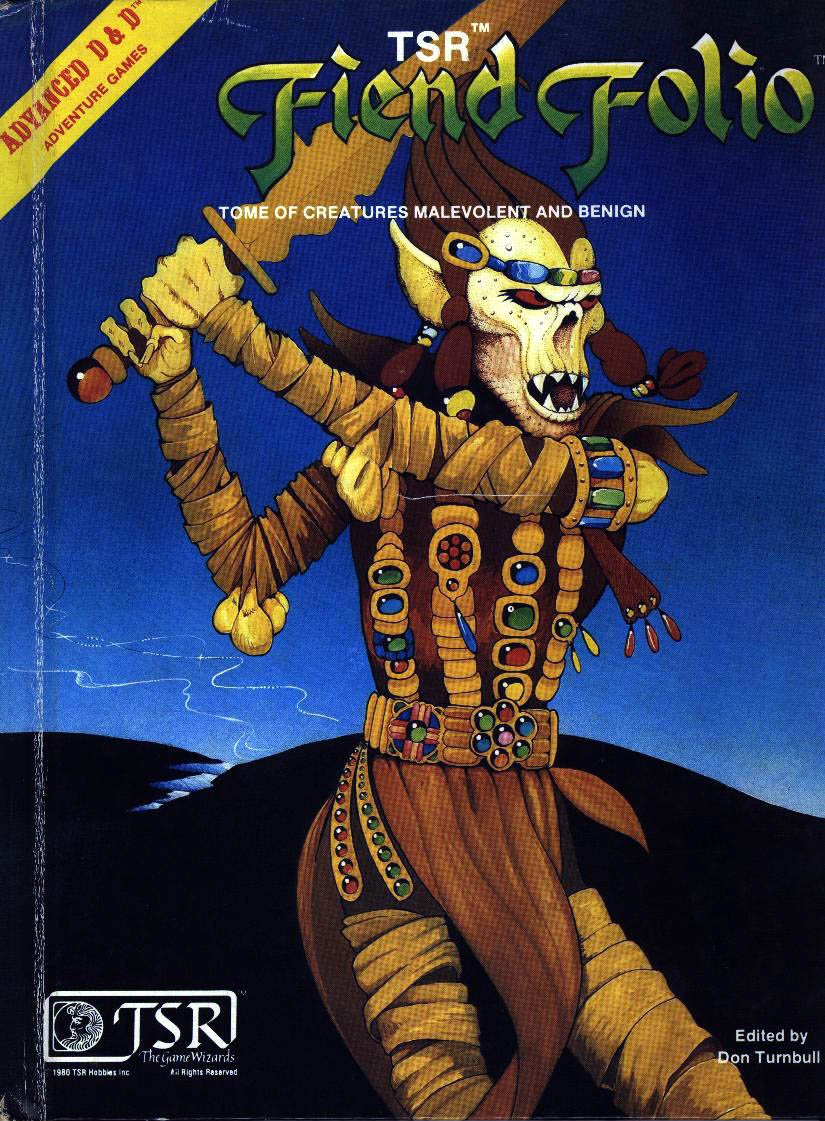
It might just be the nostalgic buzz and the general satisfaction of reading the books again, but hopefully not. I think I'm going to construct and run a new campaign, probably centered in my Warlords of Lingusia setting, since that was the game world that sprang forth from my introduction to the hobby in 1980 and which has evolved continuously for thelast 32+ years now. I've already ordered the Fiend Folio from someone on ebay (because back then the FF was the fourth most iconic and important book to all my old campaigns, and is the reason grell and hooked horrors factor into any and all editions I have ever run). I'm also snagging a copy (hopefully not falling apart) of Arcana Unearthed, because by the time it was released back then I was not running AD&D, and so missed its integration into play. I recall reading it and questioning the value of the book overall, although I think ironically AU contained within it the seed of virtually all that was to come in D&D's future development.
![]() |
| I actually think the Fiend Folio has more iconics than the Monster Manual, at least for me... |
Subscribe to:
Posts (Atom)