Friday, March 15, 2013

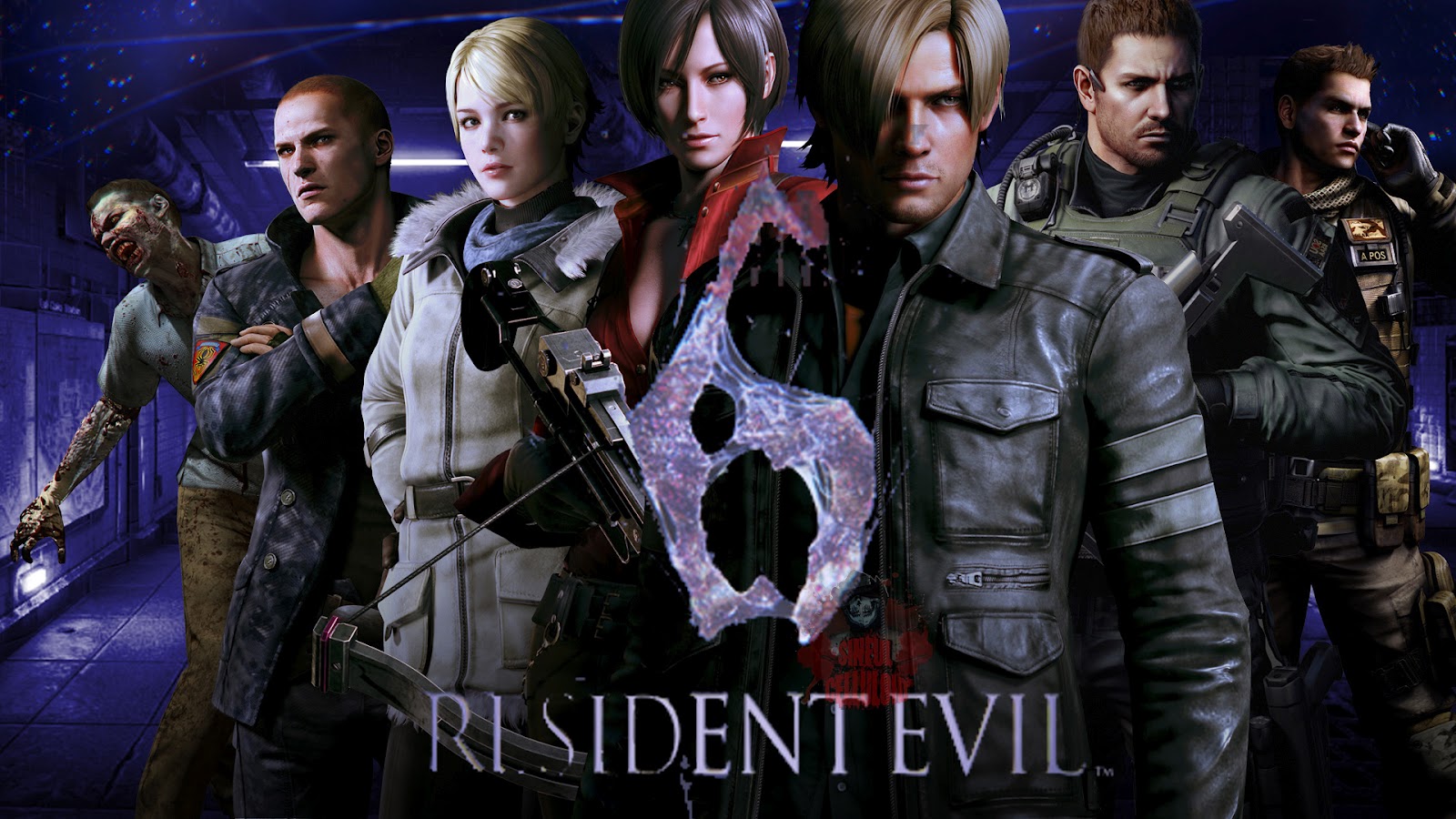
Resident Evil 6 X Left4Dead 2 Team Up!

You know you're a sorry junkie for video game zombies when this news excites you. It looks like the survivors from Left4Dead 2 (Coach, Ellis, Nick and Rochelle) will be joining the RE6 gang in Mercenaries mode. Meanwhile some of the Resident Evil 6 monstrosities will drag their sorry carcasses over to the Left4Dead universe to harass the survivors in their native environment.

Personally, I am excited at this news, and it sort of tipped me over into the "will buy" side of the RE6 for PC camp (yes, I've been playing the Xbox 360 version, I know, I know, and yes that means buying the game again....sue me! I did the same thing with RE: Operation Raccoon City. I'm a damned Resident Evil junkie in case you haven't figured it out by now!)

Anyway cool pics ahead!


After Action Report: Resident Evil 6, the Chris Redfield Campaign


Well, I can't write about the second Resident Evil 6 campaign with the satirical hyperbole that I felt  toward the first (the crazy like a clown car full of zombies adventure that Leon Kennedy got to experience), but I can still review this portion of the game. Sure, 90% of the RE fans have blasted through all four campaigns by now, but that last 10% that either have a real jobs, children or a spouse that does not tolerate the horrid noise such types of games produce might find this worth a read, or are maybe waiting for the PC version later this month.

Fair disclosure: I set the difficulty to amateur, to mitigate the intensely frustrating QTE events I experienced in Leon's campaign. During the playthrough Capcom updated the game with a feature that would even autofill certain button presses for you, which actually was a smart thing for them. As a result, with a few exceptions the bulk of this second campaign was much less stressful (in the bad, this is not fun kind of way) than the first Leon Kennedy campaign on "normal mode."

Chris Redfield's tale takes place three years after Resident Evil 5, and some months after an event in which Chris, now leading a squad of soldiers for the BSAA, a quasi-UN military outfit determined to spend its days mopping up the spillage from previously-thought-extinct Umbrella Corp. He's got a loyal companion by name of Piers who tries to get Chris out of his drunken stupor and back into the action. Turns out Chris lost his entire team in some Eastern European country due to the machinations of the lovely Ada Wong. Ultimately Piers convinces Chris to come back to duty, just in time to deal with a massive terrorist threat from "Neo-Umbrella," which turns out to be Old Umbrella but with more weirdness, larger monsters and even better funding for cooler secret bases.

Oh, FYI spoilers!

"Piers, you do realize that you are the Shia LeBeouf in this relationship, right?"

The campaign for Chris intersects at spots with Leon's campaign (and the next two campaigns as well), filling in the gaps and thankfully not forcing you to play through any of the events that you experienced in the other campaign already. Fans of the series will recall that in the early days there was about 90% overlap in locations and tasks between two different characters' campaigns (i.e. Jill and Chris in the first game). Not so here...this was its own entity, although there were moments where Chris got the idea Leon was up to all sorts of stuff that would help explain why Chris was being put through the grinder (and vice versa). It makes for an interesting experience to see the story unfold this way.

There's not a lot of story depth to Chris's campaign, though. He is called back to action by Piers and his new squad of men, experiences a playable flashback on how he lost his original crew to Ada's actions, then spends most of his time running through the streets of Lianshang in China fighting the latest breed of Umbrella super-soldier, which is a myriad variety of willing terrorists, paramilitary types and madmen who have undergone a variety of transitions from human to alien space bug. By the end, its All Space Bugs, All the Time (except for what appears to be a tyrant at the end, and a massive end boss named Haos that looks like a close relative of the Collector's human addition to the Reaper gang from Mass Effect 2).

Anyway, Chris and Piers spend half the game getting Chris out of his Spec Ops: The Line funk, but luckily he's shooting actual monsters, even if many of them were people once, so he doesn't go Heart of Darkness on anyone. They spend a lot of time on a merry chase to get Ada Wong, who leads them to a ship full of Neo-Umbrella mutants and the revelation of a plan to bomb Lianshang and countless other cities with the new C-Virus, an airborne version of the T-Virus that also makes zombies very quickly. After this debacle, it's off to an aircraft carrier owned by Neo-Umbrella. Remember, the big bad from Leon's campaign is Simmons, the head of Homeland Security, so I guess it's theoretically probable he could have snagged an aircraft carrier for his diabolical plans. Or bought it on the black market from the Russians or something. After the aircraft carrier its off to the middle of the sea where a massive James Bond villain style undersea complex awaits Chris and Piers to unload a metric ton of ammunition into endless waves of vile mutant bug-soldiers.

The entire campaign was fun, and in keeping with the spirit of Chris Redfield's new style ever since Resident Evil 5: which is to say, not very horrifying and full of gunplay. Lots and lots of it. There wasn't anything terribly wrong with this....it's officially an element of the bigger RE universe, it just doesn't happen to be what most people associate RE games with.

There were a few spots that even on idiot-mode were hard to get through, usually because of one critical mistake I was making with the controls. Here's a HUGE and important hint: when you need to run, then slide and then get up quickly, just tap the left trigger, don't hold it down.

"Operation Q-Tip is underway, sir"

This side of the campaign did several things "right" by comparison to the Leon Kennedy campaign. Specifically:

1. Some amazingly huge boss fights that weren't (on easy mode) controller-smashingly difficult.

2. Although there is a point at which you'll be running up, up, and still further up through an impressively huge complex, the goegraphy and locales for the Chris campaign at least make spatial sense.

3. By the end, despite the story being flat military melodrama most of the time, it did have a moving moment that made the conclusion have more impact than Leon's ending.

All in all not bad, and not as many "time wasting slogs" as I expected....although one could argue that most of Chris's campaign felt like a slog if you are really frustrated with the way the third person control mechanics work and feel in this title. It's lacking that smooth, comfortable feel that Gears of War has. Even the aforementioned Spec Ops: The Line felt tighter to me.

Also, if you're wondering how I feel about RE 6 by comparison to Aliens: Colonial Marines, the answer is easy: RE 6 hands down is the worthy purchase. I finished A:CM in 10 hours which in Young Dude hours is probably 4-5. I'm 25 hours into RE 6 and still have two more single player campaigns and lots of multi-player to finish, so I definitely got my money's worth here. Plus, even though RE 6 has more frustrating controls than A:CM, the effort on its story (even when inexplicable at times) is still worth following, the graphics look like they are current, and the game has yet to bug out on me (in fairness A:CM didn't bug out on me either, but I've seen those videos, and clearly it bugged out for a lot of other people, at least on the Xbox).

B+ to this one! Camazotz enjoyed it and found it less frustrating or illogical than the first campaign. It wasn't really "horror" but it was a good action game.

Next: I try to avoid shuddering in dread at the fact that I must now tackle Jake Wesker's campaign, the one that almost everyone says will drive a l33t Korean gaming champion to tears of frustration.

B+

"Okay Perkins, you distract the zombies with your juicy hind quarters. Max, you run interference by wrapping yourself in bacon and Piers, you just try not to get shot too many times from walking in front of my rain of bullets."

Thursday, March 14, 2013

The AD&D 2nd Edition Premium Covers

So the AD&D 2E reprints will have these covers. Very nice, I like this look a lot and it makes better use of the famously atrocious art in the revised editions (still not as good as using the pics from the original first printing covers, but a nice leatherette green covering it all up is still a better way to go!


Theater of the Mind Rules for 4E

This is so ridiculously simple I am now very interested in trying it. Thanks to Uskglass for this post, it's immediately got me interested in trying 4E again with the TotM approach. Here's the text of it, but click his link at the WotC blog forums for the original.

This is an adaptation of a relative proximy zone, ToTM stylem combat system (as seen in WFRPG 3e and 13th Age) to D&D 4E. It can be used as replacement of grid combat, but since it doesn't change the basic stats and numbers of 4E it is always possible to switch from one to the other for each battle.
It makes combat a bit more hazy and unpredictable, trading off a some tactical control for the sake of smoothness and a more organic, freeform feel.

Background
: As seen in WFRPG 3e and 13th Age, the system works using zones of relative proximity. Basically once in combat anything is either Engaged (melee reach), Nearby (1 move action away) or Far Away (2 move actions away). It is still a good idea using minis or tokens for ease of visualisation (we do), but it's not required.

STATES AND MOVEMENTS
• Engaged = Melee (base contact)
• Nearby = One move action away (5 squares or more)
• Far away = Two move actions away (10 squares or more)
• Disengage = Shift; with # being the number of enemies disengaging from (shift 1 = disengage 1 enemy); no roll required
• Difficult Terrain = Slowed = Movement 4 or less : Nearby becomes Far Away, Shift is halved (round down)
• Flanking = two or more allies engaging the same target

RANGES AND AREAS OF EFFECT
• Range 10+ = any Nearby or Far Away target
• Range 5+ = any Nearby target
• Blast = Nd3 Nearby targets (3=1d3; 5=2d3)
• Area burst = Nd3 Nearby targets to origin (1=1d3; 2=2d3)
• Close Burst = All Engaged targets + Nd3 Nearby (2=1d3; 3=2d3)
• Walls = 1dN Nearby targets to origin per square of wall (round down). One move action to bypass the wall, if possible
• Friendly fire = allies engaged to affected targets need a saving throw to avoid AoE/Walls targeting ‘creatures’ in the area

FORCED MOVEMENT
• Pull = Move towards origin
• Push = Move away from origin
• Slide = Move anyway from origin
• 5+ = Specific position Nearby in the direction
• 4 or less = Generic position Nearby in the direction (roll 1d6 and add it to the forced movement: a total of 6+ means a specific position is achieved in the direction of the movement)


Original Source: Uskglass's Community Page


Sigh...I really miss playing 4E sometimes! Stuff like this makes me want to jump back in, though I can usually assuage my sense of longing by delving deep into my massive Pathfinder collection or messing around with Magic World, Runequest and BRP.


Wednesday, March 13, 2013

BRP Supers: The 1861 Comet Universe


The 1861 Comet Universe

This is an incomplete campaign premise for BRP using the super powers rules, inspired by Farmer’s Wold-Newton Universe. I never got this off the ground, but some day I may yet revisit the “1861 Comet Universe.”


Premise
   A world not unlike our own, in which superhumans (called posthumans) began to appear in the first generation of children after the comet of 1861. A later period of posthuman development followed the Tunguska, Syberia event as well.

   In this world, 1 in about 5,000 humans is a posthuman, with powers enhanced by alien nanomachines that tamper with the human genome, or a subsequent alien virus which physically restructures the human DNA and turns its victims in to genetically compatible aliens with its creator species. All superhumans in this universe are therefore products of weird alien science, although some entrepreneurial normal humans have also created gadgets and tools to aid them in working with and against posthumans. By 2020 (the present year of the campaign) scientists understand the nanomachines and the virus well enough that they can synthesize and manipulate their own in human hosts, creating new posthumans tailored as they see fit.

   In the midst of this, a privately funded scientific space exploration team has reached the distant 1861 comet and discovered that it is really an alien artifact, designed to seed the Earth with its viral nanomachines, and that its creators are beings called the Yingalath. Elsewhere, secret research on the posthuman virus have revealed that it came from the Tunguska comet, and that it was created by an entirely different alien species.

   In the midst of all of this, a secret cabal of successfully altered posthumans who are now genetically a different species have recognized their imprinted heritage from the distant STL world ship of the Kin’shigar star empire, and that they are the advance force which must prepare humanity for its imminent invasion!

Origin
   In 1861, many individuals witnessed a prominent (although not spectacular) comet, known only as the comet of 1861. It was a momentous event because it was determined by observer J.R. Hind that the Earth actually passed through the tail of the comet on June 30th.

   Initially it was a simple astronomical curiosity, but within a few years the first generation of what would later be called posthumans began to appear. The comet, apparently, had somehow altered the genetic structure of infants prenatally. Pregnant women in this period had an alarming percentage of stillborn children, mutated children, and in a small but distinct percentage of births arrived genetically enhanced children.

   The first posthumans were misunderstood, regarded as enigmas and curiosities at first, until a broader awareness of the sheer diversity of posthumans became apparent. Soon, fear and and effort to control posthumans set in. By 1891, the first generation of posthumans had grown up. There was an average of 1 posthuman for ever thousand normal humans in any given population. Governments sought to control, suppress, or destroy them while individuals sought to exploit these miraculous people. The psothumans themselves were often given to widely diverse interpretations of their own gifts, which rarely manifested before the age of 16, usually within 1-3 years of reaching puberty, though a few posthumans manifested their powers much later or earlier.

   During this time, new messiahs appeared, and religious cults grew up around the men and women who displayed miraculous powers. Criminals who could withstand a barrage of artillery were subsequently lured with the promise of wealth and luxury to work for the military of one government or another, and some, manifesting at an early age, were recruited by secret societies, who sought to brainwash and control them. A handful of strong willed posthumans resisted outside efforts to control who and what they were, and became notorious vigilantes, renegades, and criminals.

   It would be decades before scientists began to understand what had happened, as humanity’s understanding of genetics worked to catch up to the mysterious nature of the posthumans, as well as the mutations and failed births. It would be even longer before an actual space voyage reached the distant comet in 2018 and discovered that the comet was an artifact of extraterrestrial origin.
   The Yingalath Comet of 1861, as it came to be known after the discovery by space explorers, was the product of an alien race from long ago, sent to earth to seed the planet with its budding sentient population with the necessary genetic x-factors to stimulate a singularity in evolution. Why these aliens saw fit to send such a unique artifact to earth as yet remains undetermined by humanity, although some souls speculate that it may have something to do with the second known extraterrestrial contact with Earth at the Tunguska, Siberia impact.

   The Tunguska impact happened in a remote region of the Syberian Wilderness in 1908, and it was unnoticed outside of some curious astronomers and researchers for decades thereafter. Because of the proliferation of posthumans already created by the 1861 comet, no one suspected that the detonation of the Tunguska comet in the atmosphere also released a new posthuman virus. It would be until the 1960s that some researchers specializing in posthuman studies began to identify two distinct mechanisms for the creation of posthumans, one a gene-altering mechanism later identified as a nanomachine, believed to have been seeded from the 1861 comet, and the second a biological virus that no one suspected came from the Tunguska comet until evidence in 1989 proved beyond a doubt that the virus had to have originated from the Tunguska region.

   The Tunguska posthuman virus did not affect the unborn, rewriting their DNA, adding evolutionary leaps and bounds to the otherwise human children. Instead, it attacked adult humans, slowly rewriting their DNA, changing those humans over time in to something completely inhuman, on a genetic level, no longer related to the terrestrial animals with which man held kinship. The virus turned men in to aliens, literally. Worse yet the virus drove them mad. These posthumans were driven by a strange insanity, a problem having to do with the way the virus restructured the human brain, turning it in to a tri-lobed cerebrum which mimicked the brain structure of the alien organism that it was attempting to recreate. Worse yet, the virus, a sophisticated creation of alien geneticists in its own right, sought to impregnate that mind with the knowledge and lore of its creator species. This information created a strange sort of schizophrenia in its hosts.

   The first of the viral posthumans manifested between 1909 and 1910, just before the Great War. The viral posthumans were thought to be a new variant of posthuman, and were regarded as far more effective supersoldiers, and a great many of them were recruited and deployed in World War I. This brought many of the viral posthumans together, giving them a chance to discover a unique trait they all shared: telepathy. Viral posthumans could sense one another, and communicate by thought. They became aware of their heritage as the inheritors of a strange alien legacy. 

Gradually, a handful of viral posthumans learned to cope with the schizophrenia of their change, and the secret truth of their origin became apparent. They were the advance soldiers of a potent cosmic race which was traveling on a world ship at slower than light speeds toward Earth. They were to pave the way for colonization when the world ship arrived.

   The viral posthumans began to unite, but adopted an approach of secrecy. Those few leaders amongst their kind realized that they were still too few to deal directly with humanity of the genetic posthumans. Moreover, they suspected that the posthumans created by the 1861 comet were caused by the meddling of another alien species which intended to thwart the aims of the viral posthumans.


   By World War II, the nature of war had changed with the use of superhumans in conflict. No matter what sort of posthuman it was, they were all valued for their unique powers in the war front. By the end of World War II, after the dropping of the atomic bomb, legislation was passed which required posthumans to register themselves in the United States and the allied nations. This created a period of tension, as many posthumans did not wish to be registered. The total numbers of posthumans had been reduced due to the enormous number killed in the war. The remaining posthumans were not being replenished as rapidly by new births of their own kind, which indeed seemed to have diminished dramatically. Many posthumans went underground after the war, and only a handful registered, agreeing to lose some of their civil rights. It would be two decades before the registration act was revoked, and the civil rights of posthumans were restored by Kennedy in 1963 after he took office. The trend continued, and some posthumans who preferred the life of vigilantes and contract mercenaries were even given police powers in some states. This was also a direct response to the increasing trouble caused by rogue posthumans who sought to use their powers for personal gain or the subjugation of normal humans.

   The period from the 60’s on up through to 2020 was a period in which posthumans became readily accepted as a part of life. The face of crime, police, poltics, war, and almost every other facet of life had been affected by the presence of posthumans. The culture of the posthumans was unique, one in which it was almost natural to adopt an identity and seek out unique ways in which to exploit one’s powers for personal gain, or the greater good as many, inspired by the dedicated vigilantes and Samaritans who felt that their powers were given specifically to help mankind. The notion of the caped crusader became a prominent theme in this period, and posthumans were everywhere.

   In 2010 the entrepreneurial posthuman Richard Lourdes used the resources of his company (Skyline Corp.) to fund the first manned outer solar system expedition, called Daedalus 1. The vessel, constructed in orbit and powered by a high efficiency fusion reactor, was set officially to explore the outer solar system, but by 2018 it had pushed outward in to the region of the Kuiper Belt, where the team of 11 researchers closed in on the 1861 comet, and began their investigation. Here, they learned that it was actually a vessel, and that it had been created by the Yingalath specifically to seed Earth with the nanomachines that created the posthumans.

   By 2020 there are many who believe that humanity has been visited by aliens on multiple occasions. There is a creature (the Hammer, Texas entity) which has been encountered by some posthumans, including Nightfall, Tachyon and Silver Ray (licensed enforcers in Texas) that appeared to be a distinct alien life form. Archaeological evidence has even been unearthed suggesting that some of the oldest myths of humanity may, in fact, reflect earlier efforts by the Yingalath or other alien species to “enhance” humanity. Indeed, there is now a popular suspicion that references to the oldest gods (Annunaki, Titans, and so forth) may in fact be references to the Yingalath. Some even suspect that these arliest gods may have been actual Yingalath voyagers who traveled to Earth millennia ago.  

   In the opening campaign, characters are members of various posthuman types and groups, who may be newly awakened to their powers or old veterans. Some characters may even have the transforming viral mutation of the Tunguska comet, instead. The future lies in wait…


Character Archetypes
   Some ideas for character archetypes in this universe include the following:

D%       Result
01-20   Newly awakened posthuman (usually age 15-18)
21-30   Veteran posthuman (been around, normal age)
31-35   Elder posthuman (posthuman from as far back as 1861)
36-37   Enigma (posthuman who appears to have come from a prior era before 1861!)
38-50   Viral posthuman-unawakened (from the Tunguska comet)
51-55   Viral posthuman-awakened but rebellious (aware of nature, working against it)
55-60   Viral posthuman-servitor (embraces his or her nature and works with it)
61-70   Enhanced human through modern Science (using viral or nanite mechanisms)
71-80   Gadget-based normal human (uses weird science or gadgetry to compete)
81-95   Skilled normal human (works to achieve perfection to compete)
96-98   True alien (visitor from the stars to Earth from an FTL culture)
99-00   Other-dimensional being (mystery entity from a different quantum dimension)

Setting Rules
   The 1861 Comet campaign uses the following rules for BRP: Mutations, psionics, and powers. All characters can be one of those listed, depending upon what they want to achieve. There is no magic in this setting.

   Characters should choose skilled packages, and do not by any stretch need to be “classic superheroes.” In this setting there are plenty of otherwise normal people who happen to be posthumans. At an average (current) ratio of 1 posthuman to 5,000 normal humans, a city with a population of 1 million will have 200 native posthumans. That means a larger metropolis like New York could have as many as 1,000 posthumans!

Tech Level
   The setting of 2020 is a futurist’s interpretation of where we will be, assuming the singularity has already happened. As a universe filled with superhumans, the 1861 comet universe has achieved some stranger, indeed some very weird science as a result of the unnatural cometary phenomena that has change humankind. This may not be a “magical” universe, but it is still definitely a pulpy comic-book universe. As such, strange gadgets, high concept big-bang science gadgets, cyberware, nanites and genetic engineering are all normal here.

Tuesday, March 12, 2013

Dungeons of Dread is Out


Dungeons of Dread is apparently out in some areas, although its official release date is March 19th (I think WotC has an early release program for locations which participate in their Encounters programs...or something. Or maybe street dates aren't that relevant anymore.)

Anyway, the four-module collection of White Plume Mountain, Tomb of Horrors, Expedition to the Barrier Peaks and the Lost Caverns of Tsojcanth are the compiled S series faithfully recreated. These were great modules, and worth getting regardless of your preferred edition of D&D, as they can easily be ported over.

As I look through the pending releases at WotC, I am reminded that we are now only two months away from the reprint releases of the 2nd edition AD&D rulebooks. Joy! The edition I am most eager to snag, the one which provided consistent, weekly entertainment from 1989 through 2000. AD&D 2E defined the 90's for me, it was the system in which all of my "Keepers of Lingusia" campaigns took place from my first days in college right on up through my second marriage, and was the system that spawned the first lengthy (8+ year) campaign in the Realms of Chirak. Even when 3rd edition arrived on scene I continued to use the bulk of the 2nd edition campaign material in conjunction with 3E, and as 3E grew progressively more complex and demanding AD&D 2E increasingly looked like the edition that still allowed one to enjoy the game for fun, instead of work. I returned to 2E in 2007 when I decided to take a permanent hiatus from 3.5 D&D right up until 4th edition arrived on scene in mid 2008. I was further reminded of how much I prefer 2E after my recent attempt at returning to the venerable AD&D 1st edition late last year, which proved to be a less satisfying experience than I thought when I remembered that everything I loved about 2E's refinement was warped or missing from the kludgy and sometimes bizarre mechanical oddities of 1E.

Anyway....no matter which ruleset you prefer, this is a good year to enjoy older editions of AD&D.


Magic World 2: Rolling a Sorcerer


Magic World Character Generation Part 2: Let’s Magic this one up

For my second character example we’re going to aim specifically for a magical PC. I’m designing with a specific theme in mind, something my wife might jump on (since we’re now planning a Tuesday night game she can attend, hosted at home where our progeny, the semi-feral pre-linguistic gnome can be wrangled safely without unleashing him upon the game store). She likes elves, and she likes elves who can do cool magical things while still poking holes in monsters with swords. Ergo….swordmage.

Swordmages are a common theme in fantasy…..Elric was one, as was Wagner’s Kane. The Grey Mouser was handy with blade and magic. You don’t really see many “wizards without any sword-fighting talent” until D&D appeared on the scene, actually. Even Gandalf could hold his own with a sword if he was desperate enough! Still, there was enough association between “good spell caster =/= good fighter” in the old days of fantasy gaming to make it a tough meme to quit.

Luckily today we’ve seen that meme largely evaporate, and Magic World, along with its grand daddy Runequest have always been about the ability to do things like play sword-friendly spell casters.

In Magic World playing a nonhuman is as simple as rolling the stats listed in that creature’s entry, after gaining GM permission, of course. Elves tend to be slight of build (so STR is 2D6+2 and SIZ is 2D4+4) but exceedingly intelligent and dexterous (INT is 3D6+6 and DEX is 3D6+3).

I’ve determined that my forthcoming MW campaign is going to either use Sarvaelen, which I’ve been developing in the blog but haven’t used for actual play yet…or more likely it may use my Warlords of Lingusia setting, which is functionally built on a very, very old campaign setting founded in the old days of gaming, and therefore is especially conducive to the default level of classic fantasy assumptions MW provides for. Since I know my wife loves elves and such, we’re looking at (most likely) the Warlords campaign. That, however, is neither here nor there with regards to Magic World, which does include its own default setting in the back to get GMs who don’t have about five hundred pounds of their own campaign settings to haul around a quick start.

So our new PC will be Serosante, an elven swordmage out of the domain of Yllmar. He’s a wood elf (Sylveinurien in the campaign vernacular) and therefore fits the default elven stats perfectly (my campaign’s silver elves would need a bump up in SIZ, being taller than humans, for contrast). I go ahead and roll the following:

STR 9, CON 17, SIZ 11, INT 14, POW 17, DEX 12, APP 13. Wow! Some nice stats, actually. His POW at 17 means he knows 3 levels of spells innately, so even if I don’t push him down a sorcerous career path he’ll be gifted with minor magic. He’s a bit tall for his kind, and very physically fit.

Elves in MW gain no special features such as in Runequest, where they gain lifesense. Likewise, elves in MW are conventional elves….they are not plant people ala Glorantha. The elvish description is great; MW’s elves have eyes just like the elves of my Warlords of Lingusia campaign, so I take that as a sign I am on the right track with adapting my setting to MW for the forthcoming campaign. All I need to do to modify elves for my setting are to add low-light vision to their list of options. I could go especially retro if I wanted and retcon it to infravision….hmmm. We’ll stick with lowlight vision.

Serosante’s derived characteristics work out as follows. Since he’s part of the more fantastical world of Lingusia, the optional heroic HP rules are in effect now:

Damage Bonus is 0, so he’s no hard hitter but he’s not a wimp either. His heroic Hit Points are 28, which is much better than the 14 it would be for a regular non-heroic campaign setting. He has 17 Magic Points, a very nice total. His roll scores are: Effort 45%; Stamina 85%; Idea 70%; Luck 85%; Agility 60%; Charisma 65%. Serosante is a bit clumsy by elven standards, but his stamina is astoundingly good for an elf.  Finally we have skill category modifiers, which are Physical +5, Communication +7, Knowledge +7, Manipulation +6, and Perception +9.

Serosante’s distinctive features are next, of which he’ll have two, thanks to an Appearance score of 13. I’m partial to rolling randomly, so here goes: 2 (facial hair) and 7 (speech). Since these are positive traits thanks to a good appearance, I decide to pick “mystic designs cut in close-trimmed hair,” moving it from the chin to his actual head since he’s an elf, and elven males don’t grow beards like humans, dwarves and other hirsute lesser folk. On speech I’m going to pick “soft but commanding,” which sounds about right. He speaks softly, but carries weight in what he says.

Age is next. As it turns out there aren’t a lot of guidelines about starting age for elves in here, so I’m going to default to my campaign setting’s assumptions, which is that wood elves mature around age 70-80, give or take a few years. I’ll just roll the base age (17+1D6) and add it to 70. I get 92.

Following age we have culture and then occupation. Wood elves in my setting are especially suited to the “band” culture and so it’s a no-brainer.  As I get three +10 picks among culture skills, I choose Move Quietly, Nature and Swim. The suggested occupations include shaman, which is suitable to wodo elves, but I am still envisioning a more classic swordmage, one who perhaps left his tribe to study sorcery. Maybe he was studying to be a shaman, but in the course of a vision quest he was granted a sword which he would learn to master and meld with his magic?  

Magic World encourages the design of customized occupations. I could make a swordmage occupation, sure, but as I see it “swordmage” is what this guy became, likely from doing something else. I could combine two occupations, as well….but I think I’ll just go the straight route, and pick a single occupation which in turn I can supplement with additional skills appropriate to sword fighting. Since Serosante’s cultural background suggests shaman, we’ll go with that.

As a shaman Serosante gained an additional 1D6 allegiance to his ranks in shadow, balance or light. I see Serosante as conflicted…..so I’ll take a moment to figure out his allegiance, choosing Shadow 25,  Balance 15 and Light 5, rolling 1D6 and getting 4, which I add to Shadow for a total of 29.

As a shaman I pick the following skills: Insight +40, Physik +40, Potions +20, Track +40,  Nature +20, Oratory +20, Fast Talk +20,  and for his +60 I’ll apply it to the “and one other specialty” skill, which I will make….him being a swordmage and all!....so I choose scimitar, the ideal weapon for an elf of his strength and stature (STR and DEX 8 requirement). A scimitar is a Weapon Class 2 weapon, so that +60 (on top of the base chance of 15 the scimitar grants) will make him a formidable swordsman right out the gate.

As a shaman with a base POW of 17, Serosante gets 3 levels of spells for being gifted and 1D6+3 for shamanic training. A quick roll reveals 8 additional levels, for a total of 11 levels of spells known.

Now that we have Serosante’s occupational skills, let's pick his four supplemental skills, of which one gets +40 and three get +20.  We can use this to balance out his “useful skills” for being a swordmage-type. Dodge is the first obvious one, we’ll give it the +40. For +20 let’s buff up Sense and Listen, and finally +20 to Ride so he doesn’t get thrown in combat too often.

Serosante starts with 5D100+100 bronzes for being a shaman, which gives him a total of 422 bronzes. We’ll snag a scimitar (175 bronzes) and a suit of soft leather (100 bronzes) to get him started.

Now for the good part…..magic! Or, sorcery, to be more accurate.

Spells in MW do not require skill checks to cast; you invoke them with the payment of magic points, and the target may attempt to resist the spell, using his or her POW score to overcome magic. This means that for Serosante, against an average opponent with a POW of approximately 10, he has a 35% advantage when using offensive magic.

 In MW you can’t learn magic unless your character’s POW is 16 or better, but there are options. Some suggested options for the GM include lowering the minimum POW, making the entry requirement a combination of POW and INT, or simply removing a minimum requirement entirely (the Runequest method). Like other BRP-based engines, your INT score does set the limit on how many spells you can “have in memory.” This generally works as follows: your grimorie is where you keep all your spells, but you lock a certain number of them in mind, and can cast from those. To access spells not in memory, you need to lose them and study your tome for the new ones. Yes, even in BRP/MW there are shades of Vancian casting rules. Note that at character creation the number of spell levels you start with is (usually) lower than the number you keep in memory. 

The rules also suggest tinkering with spell maximums, pointing out that elves with magical affinity in a setting could have INT+POW as a maximimum number of spells in memory. I like that, so we’ll make it so. This comports with an old notion that elves in my setting have a form of eidetic memory.

Sorcery’s rules are fairly detailed, but are very much rooted in the realm of verisimilitude. These are rules that support what makes sense, which is a good thing. One rule I particularly like (among many) is the creation of a sorcerer’s focus….in the typical example, this is a staff, but non-wooden materials can be imbued at double the cost. This is a good long-term goal for Serosante, unless he is part of a campaign in which a benevolent GM assumes he can access his focus weapon at the start.


To create a focus weapon, Serosante will need the following: approximately 12 weeks of time (this is double what it takes for a staff), around 1,500 bronzes in upkeep/supplies in this period, a Craft (sword) roll –presumably he can either provide a weapon for the enchantment as well, or hire someone to do this if he lacks the skill—and the permanent sacrifice of 1 POW into the weapon. When the ritual is complete, Serosante will have a scimitar which does +1D6 enchanted damage and holds a reservoir of MP equal to his own (16, after sacrificing 1 POW, unless he managed to get his POW increased before paying the cost). He can cast spells in memory using his own MP as well as his weapon’s reservoir.

Time to pick out Serosante’s spells. He starts with 11 levels, determined earlier for being talented (POW 17) and a shaman (1D6+3 additional levels). These are the total spells he knows at the start, and are both in memory and transcribed into his sorcery tome. I’ll be picking spells with a “swordmage” flavor, which is to say….stuff a guy with a sword might cast. Also called, “combat spells.”

Sorcerer’s Razor (a variable level 1-4 spell) is the obvious first choice.  This spell will increase the potential damage by +1 per level of the spell up to the weapon’s maximum (which is 9 points for a scimitar wielded by Serosante, with no damage modifier). A level 4 memorized in this spell means he can guarantee his attacks do a minimum of 5-9 damage with this spell.

Next up, equally useful is Sorcerer’s Strength., which can increase STR by 3 points per level, up to three levels. At level 2 that means his STR would jump to 15, and in turn that means he gains +1D4 damage to his attacks. Sure, he’s using magic to compensate for his slender build, but it means his blade, combined with Sorcerer’s Razor, will deal 7-13 damage with each strike.

Serosante studied as a shaman, so summoning spirits seems appropriate. Summon Healing Spirit seems like a good choice, and it’s a level 1 spell. Even better, Serosante can bind spirits (temporarily or permanently) into objects. Like, swords, for example. Good, the motif continues!

Next is Unbreakable Bonds, which is a rather cool trick, basically a form of hold person. The target can try to resist using its STR vs. the sorcerer’s current  MPs. This can be potentially useful, but less so if the sorcerer is drained. Getting a focus object will make this spell more useful, of course.

We need one more spell. A good utility spell seems appropriate, and Understanding (level 1) is perfect, a modest enchantment which grants 20% in a given language to the caster. This also can be used to negate the reverse spell, called Babble. Understanding is also useful because amidst all the skill points I spent earlier, speaking the common human language (the Middle Tongue in his world) was not among them, so Serosante will need to spend time in the future learning the common dialect unless a benevolent GM grants everyone bonus skill points in additional languages.

There are other good spells to be had, which Serosante will have to seek out and learn. Sorcerer’ Armor, Undo Sorcery, and others would work well with the motif of a spry elven spell blade.

There are actually a lot of interesting spells to choose from, and you could make some interesting and distinctly different choices in terms of flavor. Imagine if, instead of a spry swordmage we had decided Serosante was a foul cultist of the undead-plague god Unarak. His spell selection would instead look more like this: Affliction (4), Befoul (1), and Breath of Death (6). Or perhaps Serosante was actually a warlock, a discreet summoner of demons. He might have Terror (1), Wrack (1), Summon Demon (1), Sorcerer’s Talons (4),  Omen (3), and Pox (1). There are a lot of ways to generate a distinct sorcerer in Magic World, just as it is with Runequest and BRP.

So Serosante is now complete and ready to go adventuring. What does he look like in the end? We have:

Serosante, Beginning Adventurer
Elven swordmage of Yllmar; male, Age 92
STR 9, CON 17, SIZ 11, INT 14, POW 17, DEX 12, APP 13; HPs 20; MPs 17; Damage Bonus 0
Rolls: Effort 45%; Stamina 85%; Idea 70%; Luck 85%; Agility 60%; Charisma 65%
Skilll Modifiers: Physical +5, Communication +7, Knowledge +7, Manipulation +6,  Perception +9.
Distinctive Features: mystic designs in close-trimmed hair, soft but commanding voice.
Allegiance: Shadow 29, Balance 15, Light 5
Skills: Insight 64%, Move Quietly 36%, Swim 40%, Physik 77%, Potions 27%, Track 59%, Nature 62%, Oratory 32%, Fast Talk 42%, Scimitar 80%, Dodge 69%, Sense 44%, Listen 44%, Ride 60%, Speak Elven 70%
Maximum Spells in Memory: 31 (as an elf; otherwise 14 by default rules)
Spells in Memory: Sorcerer’s Razor (4), Sorcerer’s Strength (2), Summon Healing Spirit (1), Unbreakable Bonds (3), Understanding (1)

Wealth: 147 bronzes
Gear:
Scimitar (1D8+1 damage; medium length, can parry, WC 2)
Soft Leather (1D4-1 protection; light burden)

Serosante as a Seasoned Adventurer

Magic World has rules on starting characters at higher levels of experience. What would Serosante look like at these levels? Options for veteran, heroic and legendary adventurers are available. For fun, lets take the base character, above, and turn him in to a heroic adventurer. This grants him +2 POW, +2 additional points to other characteristics, and a bunch of additional skill allotments and spell points. Serosante as a heroic adventurer might look like this:


Serosante, Heroic Adventurer
Elven swordmage of Yllmar; male, Age 102 (bumped up to reflect some time aqdventuring)
STR 11, CON 17, SIZ 11, INT 14, POW 18*, DEX 12, APP 13; HPs 28; MPs 17; Damage Bonus 0
Rolls: Effort 55%; Stamina 85%; Idea 70%; Luck 85%; Agility 60%; Charisma 65%
Skilll Modifiers: Physical +6, Communication +7, Knowledge +7, Manipulation +6,  Perception +9.
Distinctive Features: mystic designs in close-trimmed hair, soft but commanding voice.
Allegiance: Shadow 29, Balance 15, Light 5
Skills: Insight 84%, Move Quietly 36%, Swim 41%, Physik 77%, Potions 47%, Track 59%, Nature 62%, Oratory 32%, Fast Talk 42%, Scimitar 101%, Dodge 70%, Sense 64%, Listen 64%, Ride 81%, Speak Elven 77%, Speak Middle Tongue (common) 27%, Speak Orcish 27%, Hunting Bow 36%, Medium Crossbow 51%, World Lore 42%, Navigate 37%  
Maximum Spells in Memory: 32 (as an elf; otherwise 14 by default rules)
Spells in Memory: Sorcerer’s Razor (4), Sorcerer’s Strength (2), Summon Healing Spirit (1), Unbreakable Bonds (3), Understanding (1), Fury (1), Heal (2), Sorcerer’s Armor (4),  Undo Sorcery (4)

Wealth: 210 bronzes
Gear:
Scimitar-Focus Weapon (1D8+1+1D6 damage; medium length, can parry, WC 2; Magic Pool: 18 pts)
Hard Leather (1D6 protection with helm; light burden)

*1 MP sacrificed to make his focus scimitar

Serosante as a hardened hero has more spell-casting at his disposal, is very nearly a master of the scimitar, and had developed some more worldly skills, the sort of thing most likely picked up while traveling and adventuring. His bonus stat points went into STR, which is not horribly useful, but the image I have is that he practices a lot with the blade, and this is toning him up….but he still needs his sorcery to really hit his hardest.

The experienced adventurer option does not provide any guidelines on increased starting funds, but one might imagine a heroic adventurer having maybe five times the starting wealth. That would mean he started with 2,110 bronzes. That would be enough to pay for his focus ritual to make his scimitar a focal weapon imbued with a reservoir of magic points, as well as the cost of the blade itself from a craftsman of suitable skill (an alternative would have been to put some points into Craft (weaponsmith) but I don’t see skinny Serosante having the muscle power to hammer out blades on a regular basis). Finally he still has 510 bronzes left, enough to buy a nicer suit of armor, although he upgrades to hard leather only, to avoid any physical skill penalties. 

Next: we'll try out some sample combat and other rules with Serosante as our unwitting victim!

(Post-Script Edit Note: realized my copy was missing the STR increase and accompanying modifiers; now fixed!)

Monday, March 11, 2013

Jim Sterling Speaks the Truth about Preorders

Thank god for Jim!


I pre-ordered Aliens: Colonial Marines (on the PC, which seemed to have fewer issues than the console version), and while I wasn't as traumatized by it as many were and even enjoyed the single player campaign, although the multiplayer remains inaccessible for me, I also didn't spend as much on it as I could, having bought it on sale at Green Man for about $30. On the other hand, I've also got the Season Pass for A:CM as part of the deal, and to be honest, I don't see it being useful to me know, since either the game is bugged and won't let me get into multiplayer, or there's simply no one playing it. It's AvP all over again, but with atrocious bad press.

But know what? I also preordered Crysis 3 and Dead Space 3. And Both of those games were already selling for $40 at Origin recently, and elsewhere. These are both games I will or am enjoying, albeit with less time recently to devote to playing them (what with saturating myself with PS3 titles and such), so I am reminded, once again, of why one should never, ever buy any games that aren't part of a huge Steam sale...or one of the many emulation sales by Steam's competitors.

Either way, Jim is right: we need to stop preordering, stop buying season passes without hard evidence the game's worth it, and try to assuage the game industry from engaging in these abusive marketing tactics.


Review of Painted Skin: The Resurrection


Review of Painted Skin: The Resurrection

also known as, "Chinese Cinema Has All The Cool Fantasy Movies"

I've seen more than my fair share of amazing fantasy adventures come out of Chinese cinema. It's not just about martial arts, wire-fu and traditional historical epics anymore, and the days when Hong Kong action flicks were guaranteed to be full of cheesy acting and bad voice-overs is simply a thing of the past (more or less). Today we get some seriously good stuff.

Painted Skin: The Resurrection is essentially an answer to the question, "What if it turned out that Brom and Robert E. Howard were both actually Chinese men who wanted to make a movie?" Featuring tale set in a world that is one part ancient China and one part freaky, quasi-necrophiliac barbarian-and-sorcerer craziness, Painted Skin: The Resurrection manages to create an even more interesting contrast in eastern and western fantasy than usual, with a firm mixture of eastern mythology and a dash of really exotic sword & sorcery lifted from western aesthetics but thoroughly enmeshed in eastern sensibilities. It's a really fascinating experience.

Princess Jing and Xiaowei
The story starts with a fox woman, a demoness trapped in ice for an ancient transgression in which she helped save the life of a mortal man whom she fell in love with. Xiaowei is condemned to imprisonment within ice by her fellow demons for this act of kindness and love, and lies for centuries in her prison until the young  bird demon Que'er comes along and frees her (Que'er being something of a curious trickster). Xiaowei, being a demon, needs human hearts to sustain herself in the mortal realm, and as she travels about with Que'er she realizes that she desperately wants to be human, an act which is only possible if a mortal willingly gives him her heart.

More skulls for the skull god!
Xiaowei eventually stumbles upon the martially proficient Princess Jing, who is on the lam from an imminent marriage to the prince of the empire of Tian Lang, which is just across the street from the remote mountain fortress of the White City where her lost love, the former palace guard turned general of the frontier named Huo Xin commands. It turns out that, long ago, the Princess was mauled by a bear, and Huo, as her guard, saved her....but a budding romance was ruined by his guilt at her near death experience which led to permanent scars on her face, now hidden behind her golden mask.

Xiaowei enters the White City with the intent of conspiring to somehow find a willing mortal to trade hearts with, so that she may at last feel mortality and (more importantly) escape her demon prison-keepers. Que'er, her faithful demon-bird-companion (note that both of them are disguised mortal women, but they regularly slip in and out of their animal and demon guises with great special effects) in the interim runs across a local demon hunter named Pang Lang. Pang Lang comes froma long ancestry of demon hunters and possesses the bottled tip of an ancient fox demon's tail which glows in the presence of demons. He grows immediately suspicious at the newly arrived comely guest of the Princess...

Guess who's eviiillllll
As is traditional with Chinese cinema, the story rapidly gets more complicated as love entanglements explode with guilt, confusion, misinterpretation and doubt. Amidst the unrequited love of Princess Jing and General Huo and the schemes of Xiaowei and Que'er there is the looming threat of the Empire of Tian Lang, which (being just a stone's throw away in a very unpleasant network of rocky crags) is apparently ever present and also filled with its own schemes, thanks to a remarkably vile princess, an enigmatic prince (on whom I shall say nothing because Spoilers) and a very evil necromancer. The entire empire of Tian Lang has taken its playbook and decor straight out of a Conan tale, with a heavy, heavy emphasis on as many bones as can possibly be gathered in every single shot.

Princess, I like, think yer really cool and all, even with that whole bear-mauling deal

As I was watching this movie, it was in the middle of the arrival of Tian Lang's army at the gates of the White City that I realized that I was watching a movie which, with very little (i.e. no) effort could be described as a Hyborean tale...sans Conan...set along the frontier of Khittai. Somewhere in Hyborea's Khittain easterlands this story probably...nay, certainly!....happened, folks.

The story is tight, and even possible to follow (not always easy in Chinese cinema). The melodrama is appropriate. The villains are intensely villainous and leave no doubt as to just how over-the-top evil they are. The demons are fantastically demonic and well done. The ostensible heroes of this play...Jing and Huo, are deeply empathetic and easy to care about. The version on Netflix I saw was fairly well translated as best I could tell with only one typo in the subtitles. 

This movie gets a solid A+++ from the Death Bat! Camazotz approves and says that anyone who loves sword & sorcery, fantasy, swordplay and a heavy dose of romantic drama mixed with intense violence in their movies should see Painted Skin: The Resurrection. It is also well worth watching for some inspiration in future games, especially if you'd like to see what a non-western take on sword & sorcery looks like.
A+++


Saturday, March 9, 2013

Hundred Waters - Boreal

First let me say that I like the music on this one.

But that video....outside of "surreal and disturbing" I am lacking some serious context, beyond "Never eat bad sushi, then go to bed after a Monster Hunter marathon followed by watching a few rounds of early David Lynch."


Hundred Waters "Boreal" from Mayer\Leyva on Vimeo.


WAT