
Wednesday, March 30, 2011

Thursday, March 24, 2011

Tuesday, March 22, 2011
Trollish Fun
Over on Rpgnow someone was talking about monster races in Dungeons & Dragons 4th and in the course of posting I placed some details on one of the many unpublished monster races I had worked up...trolls (specifically, mihidir trolls of Lingusia). Then I thought, "this is something that should be on the blog," so here it is:
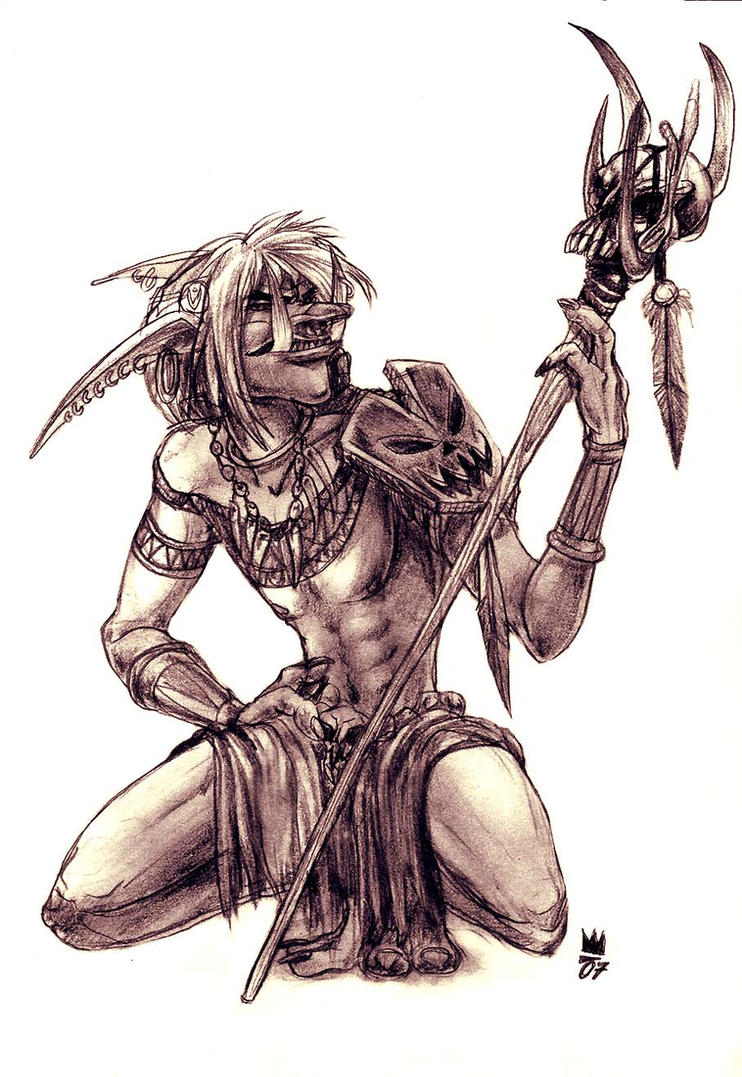
Trolls (Mihidir)
In Lingusia there are many different and usually terrifying breeds of troll. Trolls are known by certain scholars as “adaptomorphic.” They can literally change over time to adapt to stressful conditions in the environment. As a side effect of this trait they have notorious regenerative powers, and a keen ability to interbreed and absorb the heritage of other creatures. Trolls for the most part are also notorious for their wide-ranging looks. The hulking barely-humanoid thargonids, theputrid and rotting agammites, the somewhat more humanoid and svelte mihidir and the immense amechian swamp trolls are all effectively the same species, despite being very different physiologically. They can interbreed, they understand the same language and they tend to think in the same way.
Of the many strange troll breeds, the mihidir of the Lower Dark are the most humanoid, and also the most suitable for an adventuring race. Mihidir have been strong denizens of the underworld caverns of Lingusia for countless eons; the oldest elvish tales speak of mihidir from when they were young, though in the ancient tales of the elves the trolls of that time were described as “perfect giants of form and mind,” a far cry from the multitude of beings called trolls today.
Mihidir tend to carry the same stock and look; they average seven feet in height, with pasty white, blue, or sometimes green and yellow skin. They have large eyes adapted to perpetual darkness, and the lean, goblinoid facial features most common in the male mihidir. They have overly large hands, feet and noses, and are described by most humans as “constantly looking suspicious.” All mihidir have naturally serrated, shark-like teeth. Some have even suggested that they can regrow teeth over time, just like a shark; some mihidir seemt o have mouths full of these vicious pointed teeth, practically filled to the brim. Mihidir males often have little body hair, or obsessively shave it if they do.
Female mihidir are surprisingly short, averaging only fix feet in height and usually being leaner and even more human looking. They have fewer teeth, but usually have longer, more wicked claws than the males. Females have much more body hair than males.
The Mihidir Kingdom is the dominant region of trollish occupation and control in the Lower Dark. The city of the trolls, called Nel’hagon, is located a mile beneath the surface of the human city of Lancaster in central Octzel. The Mihidir have often warred against the humans and dwarves above, often for pure pleasure, using armies of thrall goblins and other denizens of the lower deep as their cannon fodder.
Mihidir are exceptional for their known cruelty and cunning. Most mihidir, growing up in the deeps of Nel’hagon, undergo a childhood process that almost guarantees they grow up with minds not unlike professional serial killers. Some mihidir escape this process of thought, but they are rare and often leave trollish society as soon as possible.
Other known mihidir lands include the Kam’garit of Amech, where the mihidir are comprised largely of dedicates to the dark god Belphegor, and the Skidarask of the Bluesky Mountains in southern Hyrkania. Several mihidir tribes can be found in the Throne Mountains and the Mountains of Madness as well, though these tribes are not united and seem to spend more of their time causing trouble in local underworld politics for other beings.
Mihidir Troll Adventurers
Average Height: 7’ to 7’6” tall (males) or 6’ to 6’6” for females
Average Weight: 250-350 lbs.
Languages: Trollish, plus one other (usually Tradespeak or Deep Speech)
Ability Scores: +2 Intelligence and +2 Constitution or +2 Strength
Size: medium
Speed: 6 squares
Vision: Dark Vision
Skill Bonuses: +2 Intimidation, +2 Endurance
Regeneration: Mihidir trolls heal at an amazingly fast rate. A Mihidir troll gains the Trollish Regeneration power, below.
Claws and Teeth: Mihidir are well armed with natural attacks; gain the tooth and nail at-will basic attack below.
Wicked Cunning: Mihidir are notorious for their sense of cruelty and spite, and gain access to the Wicked Cunning racial encounter power, below.
Trollish Regeneration - Troll Racial Ability
You can heal unnaturally quickly.
Encounter – Minor – Racial
Effect: Expend one healing surge; you gain regeneration 1 until the end of the encounter.
Level 11: increase to regeneration 3
Level 21: increase to regeneration 5
Special: This effect ends if you take fire or acid typed damage.
Tooth and Nail - Troll Racial Basic Attack
You have hideously sharp, long black claws and an even more terrifying mouth full of cerrated teeth.
At-Will – Standard – Martial, Melee or Unarmed
Special: Choose tooth or claw attack
Target: one foe; Reach 1; Attack: Strength+2 vs. AC
Hit: 1D6+Strength damage (claws) or 1D8+Strength damage (teeth)
Special: Your teeth and claws are melee weapons for purposes of any exploits, and may be used two-weapon style (two fists or a claw and bite) for exploits such as Twin Strike that require two melee weapons.
Wicked Cunn ing – Troll Racial Ability
You do not play fair, and will take any opportunity you can to rub salt in to the wounds of your enemies.
Encounter – Free – Martial, Melee or Unarmed
Trigger: you inflict damage on an enemy
Effect: do additional ongoing damage to your opponent equal to your Int modifier (save ends).
Mihidir Troll Racial Feats
Mihidir Trap Mastery
Mihidir trolls are notorious for their expertise at setting deadly traps.
Prerequisite: mihidir troll, Int or Dex 13+
Benefit: You gain a +5 racial bonus to any thievery check to set or reset a trap. If you successfully set the trap, you may add your Int modifier to the damage the trap deals.
Mihidir Bloodlust
Some mihidir trolls find the blood of humans and other fair races to be intoxicating; some find any blood at all to drive them in to a crazed bloodlust.
Prerequisite: mihidir troll, Con 13+
Benefit: you gain the Mihidir Bloodlust power, below:
Mihidir Bloodlust – Troll Racial Ability
You taste blood and go mad with rage.
Daily – Free – Racial
Trigger: you inflict damage on an enemy with your Tooth and Nail attack using a bite.
Effect: you go in to a bloodlust-filled rage. You automatically gain a +2 bonus to attack and damage for the remainder of the encounter (but could end sooner; see below), and armor class and reflexes are reduced by -2. You gain Resist Psychic 5. You must make at least one melee basic attack or melee exploit on your turn if you start or end your round adjacent to a target; you must move to the nearest target (either friend or foe) on your turn if you do not start adjacent to one and immediately make a melee basic attack or equivalent melee exploit. The bloodlust ends at the end of your first turn in which you can not begin and/or end the turn adjacent to a target against which you can execute an attack.
Adaptomorphic Heritage
Trollish physiology is especially good at dealing with strange environmental conditions. You have found that you can adapt rapidly to changing environments.
Prerequisite: mihidir troll, Con 13+, Level 3+
Benefit: you gain one of the following adaptomorphic modifications each time you choose this feat. You may choose this feat multiple times, once for each option below:
Environmental Adaption: you may choose one type of difficult terrain and ignore it (you have learned or changed to walk on it at normal speed). This can’t apply to heat/fire based terrain types.
Elemental Adaptation: choose one form of elemental type (except for fire and acid) and gain Resist equal to your Con modifier against it.
Huge Claws: Your claws grow one size larger for purposes of damage (1D6 claws become 1D8 claws).
More Teeth: Your mouth full of cerrated teeth has expanded, much to the amazement of your fellow trolls. Your bite damage is raised from 1D8 to 1D10.
Fast-Sealing Flesh: You can recover more quickly from repeating damage; gain a +2 save bonus to ongoing untyped bleeding damage.
Monday, March 21, 2011
Sol Station

Stumbled across Sol Station while looking for up-to-date information on known stars in our local galactic neighborhood. Seems like a useful site for information on known local stars and what we've observed about orbiting bodies around them...pretty cool stuff.
I've decided it is time to devise a new hard SF campaign for later this year, and as is traditional I've decided that GURPS Space will do the job best, so I'm planning to construct a detailed "future history" using what we known about local space. The themes for this campaign involve a remote colony (perhaps founded on the 1.5X earth mass body around Xi Scorpii A) that weathered through a long dark age during which the old era of colonial expansion mysteriously ended and about which very little is known. The colony prospered and resumed local space exploration; the campaign opens up with the recovery of lost FTL tech, and the many possibilities it opens up. The premise of course is that the colony wants to figure out exactly what happened to Earth and the other forty-odd colonies that were known to exist at the time all contact was lost and the FTL ships dropped off the grid...and why. Naturally, the Scorpian Colony wants answers, but needs a dedicated organization that's also discreet to handle the job; the absolute and total lack of information about the loss of contact could mean anything: war disrupting the FTL transit lanes permanently, an extraterrestrial influence, natural distaster of some unknown capacity which prevented the use of FTL drives, or some specific agency or conspiracy to drop the Scorpian Colony off the grid...the only thing they know for sure is that no radio communications have been received from any colonies close enough and capable enough of transmitting, and no FTL ships have appeared in 80 years.
Anyway, this is a work in progress, so more to come! I considered several possible games for this campaign, including Traveller, Stars Without Number and BRP, but decided that once again GURPS really does have the best suite of tools for this sort of job.
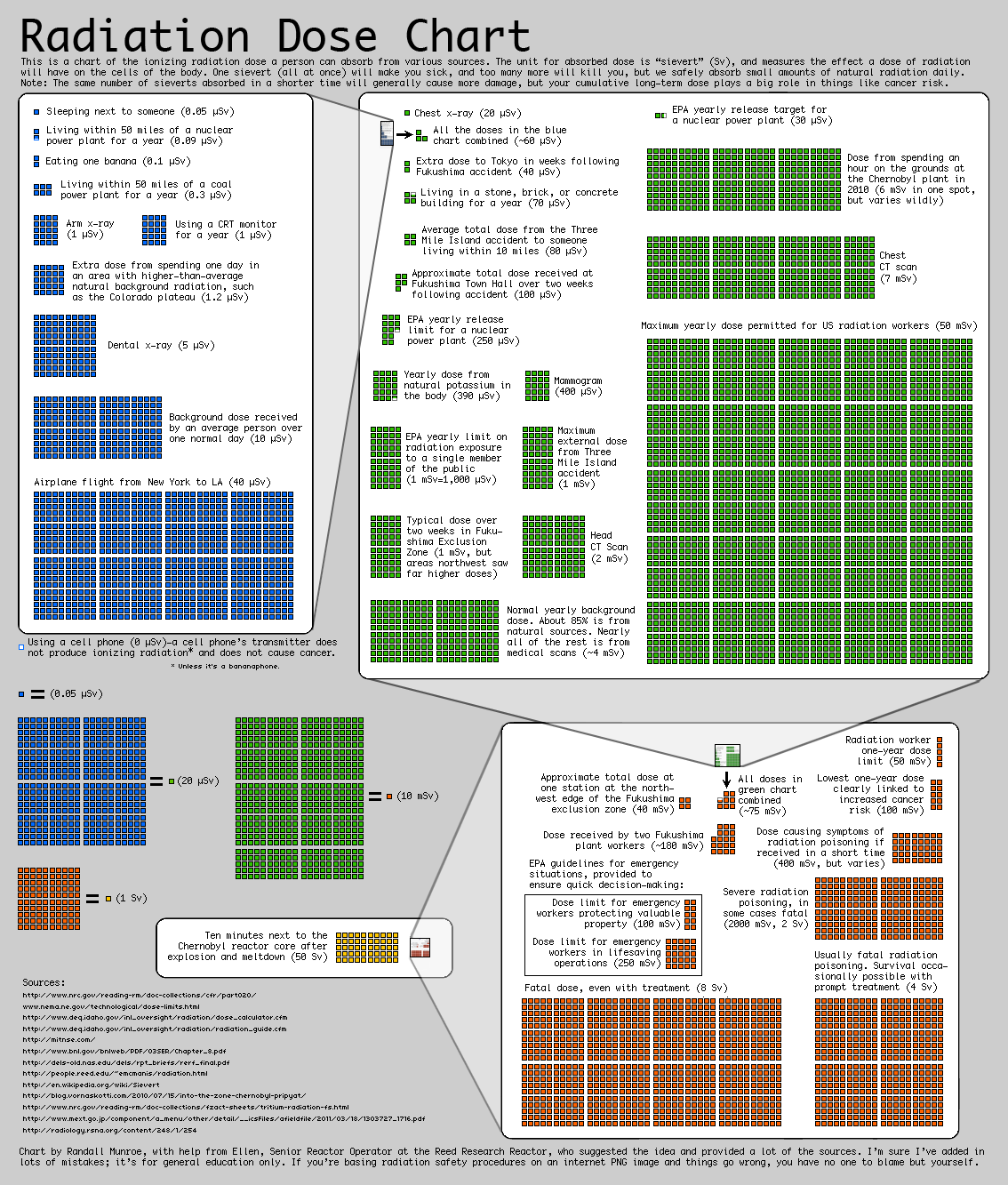
Radiation Dosage Chart from XKCD
Randall Munroe does it again with a handy and informative visual representation of a topic that is often misunderstood or misrepresented.
Monday, March 14, 2011
Oh boy...or girl....!
Just got word today that it looks like Jody and I will be parents, deadline approximately November-ish. More news to come! We are both terrified and excited.
I guess my barbarian days are over....sort of....

I guess my barbarian days are over....sort of....

Friday, March 11, 2011
Goons
It's been a busy week at work, so naturally I haven't had much free time to post anything...and the work overload has spilled in to the evenings. Plus, just dogged tired!
Although I've written a lot lately on the OSR and Swords & Wizardry, today I am going to rest entirely in the Bleeding Edge camp of current game mechanics in all their strange glory...so today's micro-feature:

Goons in 4E (Or, bigger than a minion, smaller than a proper monster)
I was mulling over ideas on how to handle encounter combat in D&D 4th when the idea came to me that the minion idea (which I love) actually meshes well with the elite idea (which I also love) and the solo idea (which I am less fond of), but one step is missing: something in between a goon and a normal monster, we need a "half hit points" entry for "foes that offer a modest difficulty but which are still speed bumps, albeit a bit larger than the average minion."
In prior editions of D&D, DMs actually had one very useful tool for managing monster hit points: the hit dice. You could play it straight and roll for hit dice, letting the results fall as they might, or you could use the hit dice to assign certain monsters of a given type slightly tougher or weaker positions. By 3rd edition they standardized the idea of including "average hit points" in stat blocks so DMs could optionally simply pick the average HPs for a monster from the get-go.
In 4th edition, monster hit points are, like PC hit points, pretty much calculated from a formula that would translate (compared to prior editions) in to assuming everyone has maximum hit points, more or less (assumign the old standard of D8 for hit dice). Of course, you can make things tougher by doubling hit points (elites) or quadrupling (solos), or reducing them to 1 whole hit point (one hit kill wonders, minions).
So: a common problem in 4E combat is that it takes too long. This isn't always the case, however. The real problem is that all combat situations in 4E take equally long, on average, when in fact many combats should necessarily be shorter. I've heard lots of interesting work-arounds for this, and tried a few myself.
My new work-around is to introduce a new concept: the goon. The goon fills the space between a normal monster and a minion, having one half the hit points and being worth one half the XP of a regular monster. A goon is basically easier to kill, but otherwise has all the features and functions of a regular monster. It's subject to ongoing damage and effects, it deals damage with dice rolls, and so forth. It's main advantage is: it will die twice as quickly on the battlefield, and two goons are worth one standard monster, so you can bulk up your encounter with more bodies; they are technically going to be deadlier than a single monster, because two goons means two attacks where there used to be one. This will actually make them slightly more challenging, and an especially kind DM would probably not be without precedent to maybe mke them worth slightly more than half the XP value of a regular monster.
So, I'm going to try out some goon-driven encounters the next time I run a game. My theory is that goons will solve a few problems by virtue of their presence:
Speed up Combat: goons will die twice as quickly, meaning you are less likely to have that long, lingering stench of a battle past its prime. More specifically, goons are ideal for average or "incidental" encounters that are meant to be fun, offer some challenge, but not last very long. Wandering monsters could benefit from some goons on the chart.
Bigger Threat: as two goons offer two attacks but with the same HP value as one monster, then the overall threat from damage and attacks by the encounter can as much as double, making goons a bigger (if more readily eliminated) threat to PCs.
Substitute for Minions as Appropriate: I've found minions serve three neat purposes: to make wizards feel empowered, to scare the bejeezus out of the players when you put out all the minion minis (at least until they figure out they're minions) and to help replicate the classic moments of zerg-driven mob attacks typical of fantasy fiction, cinema and video games. Helms Deep, anyone? Goons, however, provide one more layer of options for DMs who want foes that will drop fairly quickly while still offering a challenge. Instead of an EL1 encounter with 5 level one orcs, say, you could make that same encounter with 10 goon orcs and the PCs will both be more challenged and still find it easier to dispatch their foes.
This is all theory for the moment! Gotta go, but hopefully I'll have an opportunity to test it out in a 4E game shortly.
Although I've written a lot lately on the OSR and Swords & Wizardry, today I am going to rest entirely in the Bleeding Edge camp of current game mechanics in all their strange glory...so today's micro-feature:

Goons in 4E (Or, bigger than a minion, smaller than a proper monster)
I was mulling over ideas on how to handle encounter combat in D&D 4th when the idea came to me that the minion idea (which I love) actually meshes well with the elite idea (which I also love) and the solo idea (which I am less fond of), but one step is missing: something in between a goon and a normal monster, we need a "half hit points" entry for "foes that offer a modest difficulty but which are still speed bumps, albeit a bit larger than the average minion."
In prior editions of D&D, DMs actually had one very useful tool for managing monster hit points: the hit dice. You could play it straight and roll for hit dice, letting the results fall as they might, or you could use the hit dice to assign certain monsters of a given type slightly tougher or weaker positions. By 3rd edition they standardized the idea of including "average hit points" in stat blocks so DMs could optionally simply pick the average HPs for a monster from the get-go.
In 4th edition, monster hit points are, like PC hit points, pretty much calculated from a formula that would translate (compared to prior editions) in to assuming everyone has maximum hit points, more or less (assumign the old standard of D8 for hit dice). Of course, you can make things tougher by doubling hit points (elites) or quadrupling (solos), or reducing them to 1 whole hit point (one hit kill wonders, minions).
So: a common problem in 4E combat is that it takes too long. This isn't always the case, however. The real problem is that all combat situations in 4E take equally long, on average, when in fact many combats should necessarily be shorter. I've heard lots of interesting work-arounds for this, and tried a few myself.
My new work-around is to introduce a new concept: the goon. The goon fills the space between a normal monster and a minion, having one half the hit points and being worth one half the XP of a regular monster. A goon is basically easier to kill, but otherwise has all the features and functions of a regular monster. It's subject to ongoing damage and effects, it deals damage with dice rolls, and so forth. It's main advantage is: it will die twice as quickly on the battlefield, and two goons are worth one standard monster, so you can bulk up your encounter with more bodies; they are technically going to be deadlier than a single monster, because two goons means two attacks where there used to be one. This will actually make them slightly more challenging, and an especially kind DM would probably not be without precedent to maybe mke them worth slightly more than half the XP value of a regular monster.
So, I'm going to try out some goon-driven encounters the next time I run a game. My theory is that goons will solve a few problems by virtue of their presence:
Speed up Combat: goons will die twice as quickly, meaning you are less likely to have that long, lingering stench of a battle past its prime. More specifically, goons are ideal for average or "incidental" encounters that are meant to be fun, offer some challenge, but not last very long. Wandering monsters could benefit from some goons on the chart.
Bigger Threat: as two goons offer two attacks but with the same HP value as one monster, then the overall threat from damage and attacks by the encounter can as much as double, making goons a bigger (if more readily eliminated) threat to PCs.
Substitute for Minions as Appropriate: I've found minions serve three neat purposes: to make wizards feel empowered, to scare the bejeezus out of the players when you put out all the minion minis (at least until they figure out they're minions) and to help replicate the classic moments of zerg-driven mob attacks typical of fantasy fiction, cinema and video games. Helms Deep, anyone? Goons, however, provide one more layer of options for DMs who want foes that will drop fairly quickly while still offering a challenge. Instead of an EL1 encounter with 5 level one orcs, say, you could make that same encounter with 10 goon orcs and the PCs will both be more challenged and still find it easier to dispatch their foes.
This is all theory for the moment! Gotta go, but hopefully I'll have an opportunity to test it out in a 4E game shortly.
Friday, March 4, 2011
Lulu OSR Goodies, POD and the Curious Business of Game Publishing Online
I was looking at The Lair of the Evil DM when I discovered this amazingly questionable but still cool book:

Legal? Seems unlikely. I've been to Bill Logan's site before and figured that either he had connections or was testing the temerity of Wizards of the Coast regarding an otherwise all-but-abandoned property they inherited from the legacy of TSR. Admittedly Star Frontiers has seen a bit of action in print, most specifically in some non-specific alien adaptations in D20 Future a few years back, but that's about it. The spirit, the legacy of this game remains untapped. Anyway, I decided I'd better order a copy before a Hasbro lawyer got all excited about this (although maybe, just maybe their list of "things to issue a takedown on" burped when it came to this particular property....who knows...!) and will letcha all know more when I see it. I'm pretty sure Bill's not making any money on this; the cost of admission is about right for Lulu's base printing/handling costs.
I also spotted this, which I'll be ordering just as soon as I have more free cash floating around:

Matt Finch must have vetted the test copy (something I guess I need to do more often as well!) as it is now up! Looking forward to finally getting the print edition compilation...PDF's still hurt my eyes over time.
Finally, Lulu informed me that my first print effort for The Rising Dark had some sort of burp; apparently something to do with the PDF files being combined. It's fixed now, I believe; my previous test print was issued just fine, so I'm not sure what exactly happened....this is the second time that a print-ready PDF on Lulu's end "stopped working" despite having functioned just fine for many copies, so not entirely sure what that's all about.
Meanwhile, The Realms of Chirak is on its way to my door with a proof copy from Rpgnow. I am very excited about this; I've bought a couple other books in POD format from rpgnow's new service and they are in my opinion of better overall quality than Lulu. Even better, the operating/production costs are cheaper than Lulu, and Rpgnow has the added benefit of a much higher level of visibility to the target audience. Once I've got the POD copy of Chirak in hand and it looks good, then I may just turn to getting all of my other works worth doing up on POD there as well.
Legal? Seems unlikely. I've been to Bill Logan's site before and figured that either he had connections or was testing the temerity of Wizards of the Coast regarding an otherwise all-but-abandoned property they inherited from the legacy of TSR. Admittedly Star Frontiers has seen a bit of action in print, most specifically in some non-specific alien adaptations in D20 Future a few years back, but that's about it. The spirit, the legacy of this game remains untapped. Anyway, I decided I'd better order a copy before a Hasbro lawyer got all excited about this (although maybe, just maybe their list of "things to issue a takedown on" burped when it came to this particular property....who knows...!) and will letcha all know more when I see it. I'm pretty sure Bill's not making any money on this; the cost of admission is about right for Lulu's base printing/handling costs.
I also spotted this, which I'll be ordering just as soon as I have more free cash floating around:
Matt Finch must have vetted the test copy (something I guess I need to do more often as well!) as it is now up! Looking forward to finally getting the print edition compilation...PDF's still hurt my eyes over time.
Finally, Lulu informed me that my first print effort for The Rising Dark had some sort of burp; apparently something to do with the PDF files being combined. It's fixed now, I believe; my previous test print was issued just fine, so I'm not sure what exactly happened....this is the second time that a print-ready PDF on Lulu's end "stopped working" despite having functioned just fine for many copies, so not entirely sure what that's all about.
Meanwhile, The Realms of Chirak is on its way to my door with a proof copy from Rpgnow. I am very excited about this; I've bought a couple other books in POD format from rpgnow's new service and they are in my opinion of better overall quality than Lulu. Even better, the operating/production costs are cheaper than Lulu, and Rpgnow has the added benefit of a much higher level of visibility to the target audience. Once I've got the POD copy of Chirak in hand and it looks good, then I may just turn to getting all of my other works worth doing up on POD there as well.
Thursday, March 3, 2011
Highly Eccentric Extrasolar Systems
Thought I would share this post about the Kepler Space Telescope and the amazing data it is providing on just how bizarre extrasolar orbits can get! Some baffling stuff here....starting to sound like there really isn't a good standard of orbital rotation in the universe.
Subscribe to:
Posts (Atom)